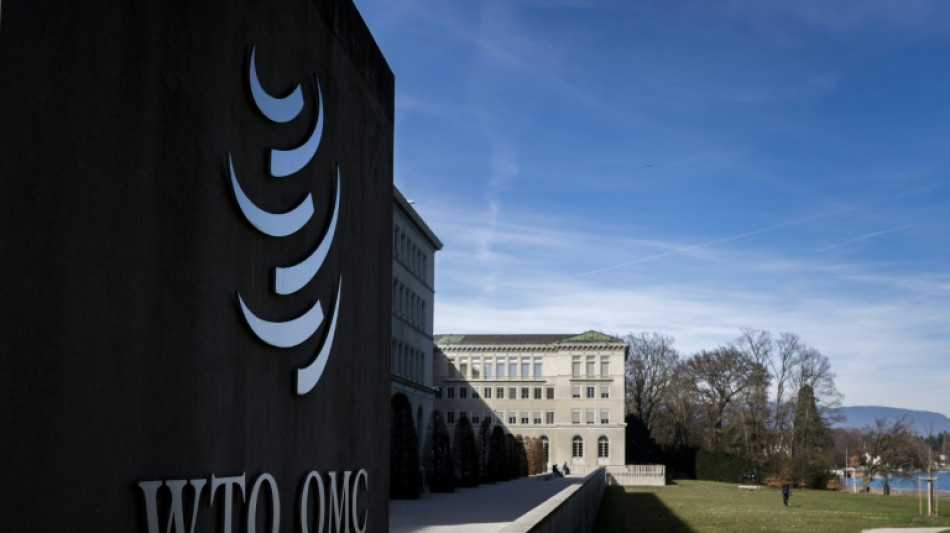
WTO must 'reform or die': talks facilitator / Photo: Fabrice COFFRINI - AFP

 Middle East fuel crunch drives solar push in tiny Fiji
 Indian rappers use music to sound climate alarm
 Japan probe on its way to Mars moon
 Lula or Bolsonaro's son? Brazil makes a final choice

 EU unveils strategy to boost Arctic presence
 How recent controversies have rocked the US death penalty debate
 Adams facing long injury layoff as Rams' problems deepen
 US judge orders Saudi engineer held in OpenAI case
 Maddison sparkles as Spurs end Premier League winless run

 Maddison sparkles on Spurs return as win drought ends
 Trump says ready to meet with Putin and Xi in China
 The young lawmaker making Brazil's Lula 'king of the selfie'
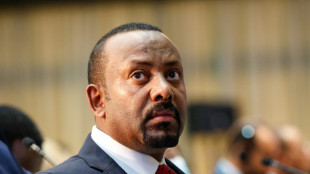
 Christiane Amanpour to leave CNN after 43 years

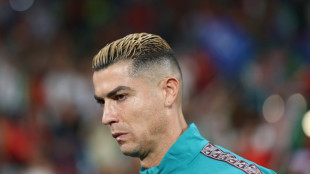
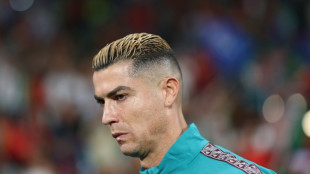 Ronaldo handed 30-day suspension after walking out on Portugal
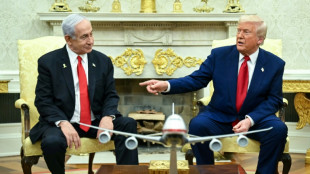 Netanyahu basks in Trump endorsement week before election

 Saudi airport closure disrupts life in kingdom's capital

 Ramaphosa tells South Africa to prepare for loss of US-Africa trade deal
 France presses resale platforms to remove 'stolen' goods after unrest
 Yamal v PSG: Ballon d'Or backdrop to Champions League showdown
 Araujo says too soon to talk about permanent Liverpool move
 US wants to be 'strong partner' for central Asia: Rubio
 'Special' to face friend Perez in Champions League, says Liverpool's Iraola

 Monitor says Indonesia fires have burned nearly two million hectares

 French PM says could declare state of emergency over unrest 'if needed'

 Albanian PM warns of 'red line' after days of unrest
Successfully reforming the WTO is a matter of life and death for the organisation, warns the facilitator of talks on revamping the global trade body.
The World Trade Organization regulates large swathes of global trade but is handicapped by a rule requiring full consensus among members, and a dispute settlement system crippled by the United States.
Reform will be at the heart of the WTO's ministerial meeting in Cameroon next month.
The Geneva-based organisation faced structural and geopolitical obstacles long before US President Donald Trump returned to the White House last year, dramatically ratcheting up global trade tensions.
"We need to reform," Norway's ambassador to the WTO Petter Olberg told AFP in a recent interview.
"Reform or die."
Olberg said he was preparing a "reform work plan, which we will ask (trade ministers) to endorse" in Yaounde during the March 26-29 meeting.
Many of the WTO's 166 members agree with Olberg on the importance of significantly overhauling the organisation.
"The WTO is at a critical and, in fact, an existential juncture," he warned at the end of January.
The WTO was created in 1995 but is based on a trading system established shortly after the end of World War II.
The need for a revamp has been discussed for years, and was formally recognised by the organisation's 2022 ministerial conference.
- 'Sense of urgency' -
But the discussions have intensified significantly since Trump returned to power, snubbing agreed trade rules and wielding giant tariffs against foes and friends alike.
"Everyone realises there's a sense of urgency that wasn't there before," Olberg said.
"This time... we have to do it."
The tariff issue, he stressed, "is not the whole story, but it certainly contributes to this sense of urgency".
"Many, if not all countries are affected by this, small or big."
At the World Economic Forum in Davos last month, WTO chief Ngozi Okonjo-Iweala pointed out that the trade agreements announced by the Trump administration have not been notified to the WTO, as required to ensure they conform with the organisation's rules.
This has raised concern that the deals could potentially violate the WTO's so-called "most-favoured nation" (MFN) principle, which aims to extend any trade advantage granted to one trading partner to all others, in a bid to avoid discrimination.
The United States itself indicated to the WTO last December that it considers the principle "unsuitable for this era", particularly given "some countries' unwillingness to pursue and uphold fair, market-oriented competition" and "insistence on maintaining economic systems that are fundamentally incompatible with WTO principles".
- 'Game-changer' -
Olberg believes the US position on MFN is "a game-changer".
"I think the US is fed up, and quite a few others are also quite fed up," he said.
"We cannot go on like this."
Olberg stressed that the goal in Yaounde was not to finalise reforms, but to establish a work programme, with objectives and deadlines.
"Right now, I think the prospects that we actually will get this plan are quite good," he said.
He highlighted that most agreements within the WTO system function well and bring huge benefits to members, including the United States.
Things like customs valuation procedures and intellectual property agreements may not be "super sexy", he said, but they are "very important to doing business".
A full 72 percent of global trade still operates under WTO rules. But Olberg acknowledged that the organisation's effectiveness was increasingly being questioned.
One major issue is the WTO's requirement for any agreement to have full consensus among members.
"We're not able to adopt new rules, and we're not able to change the old rules," Olberg said.
The consensus rule has, for instance, allowed the United States to block the appointment of new judges, paralysing the WTO dispute mechanism's appellate body since 2019.
And it has permitted India especially to repeatedly block the adoption of plurilateral trade agreements into the WTO framework.
"There's a huge frustration building," Olberg said.
"Now more than ever, people are understanding that we have to change, we have to reform, otherwise we become irrelevant," he said.
"The alternative is not status quo."
O.Mousa--SF-PST