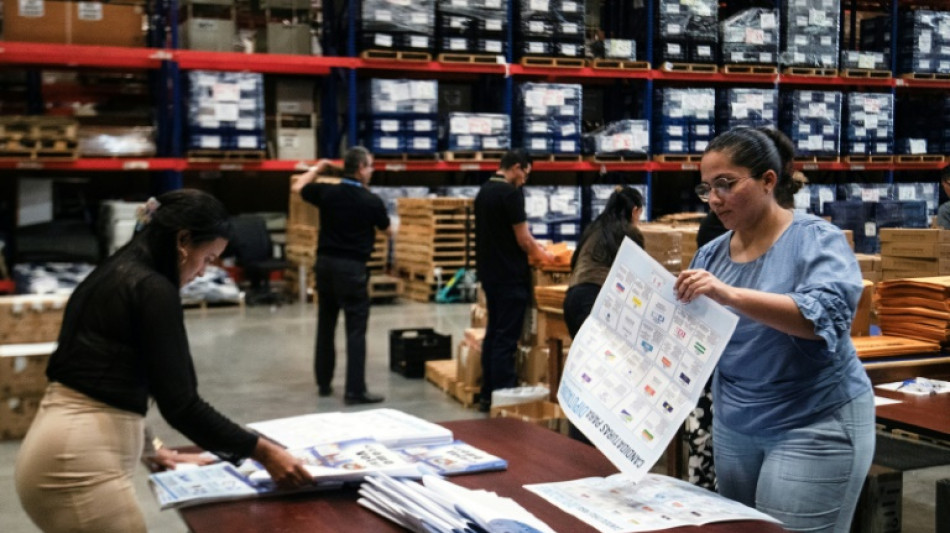
Costa Rica: Central America's democratic eco paradise / Photo: Ezequiel BECERRA - AFP

 Faletau still in Tandy's plans despite being left out of Wales squad

 Stock markets retreat as oil rises again

 Those who profited from fund scandal 'identified': Turkish minister

 At half a century, Senegal's Orchestra Baobab bets on new generation

 O'Connor, Sivakov join Seixas at Decathlon CMA CGM

 Faletau left out of Wales squad for Nations Championship

 Rubio says India diversifying oil, trade deal 'very close'
 Kemi Badenoch Proposes Ending Childcare Benefit Cliff Edge

 More Than 52,000 West Midlands Families Use Tax-Free Childcare

 Commanders Fear Serious Knee Injury for Terry McLaurin

 Rays Beat Guardians 7-3 to Secure World Series Place

 Veteran Character Actor Richard Riehle Dies at 78

 Hardik Pandya Meets Fan Who Walked 2,390 Kilometres Across India
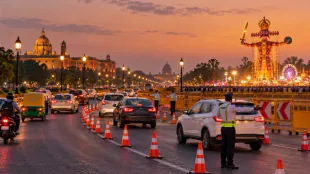
 Erling Haaland Buys Villa at Abu Dhabi’s Jacob & Co Beachfront Living

 Analysts Stay Positive on Vedanta After Hindustan Zinc’s Strong Quarter

 World Gold Council Sees Digital Gold Market Tripling by 2031

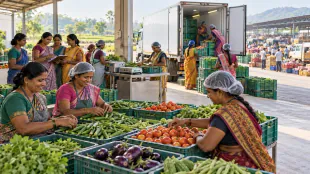 Industry Groups Outline Four Steps to Help Women Farmers Reach Markets

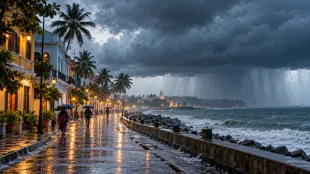 Tamil Nadu and Puducherry Face Return of Very Heavy Rain

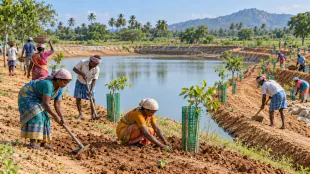 Tamil Nadu Adds 25 State-Funded Workdays for Eligible Rural Households

 Tonbo Imaging IPO Draws Nearly 136 Times the Shares Offered

 James Maddison Leads Tottenham to First League Victory of Season

 October 20 Milestones Trace Decades of Kuwait’s Development

 Spain Housing Dispute Puts Landlords at Centre of Election Debate
 Qatar Prime Minister Opens Eighth Global Security Forum

 US Midterms Put Control of Congress and Key States at Stake

A favorite tourist destination for its stunning beaches and rich natural beauty, Costa Rica has recently seen its tranquility shattered by the impacts of drug trafficking.
Here are five things to know about the small Central American country of 5.2 million inhabitants, which goes to the polls Sunday to elect a new president and lawmakers.
- No military -
Despite is location at the heart of a violent and conflict-ridden region, Costa Rica has long clung on to a stable democracy since its only civil war, which lasted 44 days in 1948.
That year, it abolished its military -- a rarity in Latin America.
In the 1980s, when several other Central American countries were mired in civil wars, neutral Costa Rica acted as peace broker, earning then-president Oscar Arias Sanchez the Nobel Peace Prize in 1987.
In recent years, the country has seen an increase in organized crime. Drug trafficking has infiltrated even into spheres of the state, tarnishing Costa Rica's image with high-profile corruption cases.
Long considered one of the safest countries in Latin America, Costa Rica ended 2025 with a rate of 17 homicides per 100,000 inhabitants -- nearly triple the global average.
The country has a long tradition of welcoming asylum seekers and hosts hundreds of thousands of Nicaraguans who have fled repression across the border.
- Green paradise -
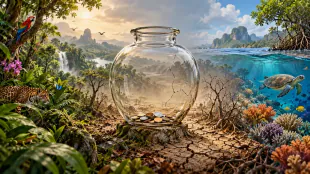
With its striking Pacific and Caribbean beaches, lush rainforests and imposing volcanoes, Costa Rica is considered a global leader for its environmental policies.
Nature reserves cover a quarter of Costa Rica's 51,000 square kilometers (19,700 square miles) -- territory that hosts six percent of the world's biodiversity, according to official figures.
Ninety-nine percent of its electricity generation comes from renewable sources, primarily water, geothermal, and wind.
- Happy people -
Costa Rica ranks in sixth place on the World Happiness Report, and its people are rated the happiest in Latin America.
The local expression "Pura vida!" (Pure life) has become a national motto -- an expression of optimism that is also used to greet people or give thanks.
The country's northern Nicoya Peninsula hosts one of the world's so-called "Blue Zones" -- places where people live exceptionally long, healthy lives.
- Rich but unequal -
Ecotourism is a key economic engine, with some 2.9 million people visiting Costa Rica in 2025, mainly from the United States, according to the tourism institute.
It is a member of the Organisation for Economic Co-operation and Development (OECD) group of high-income countries, with GDP growth of 3.6 percent forecast for 2026.
While poverty fell from 18 percent of the population in 2024 to 15.2 percent in 2025, Costa Rica is among the six most unequal Latin American countries on the Gini Index, and is the second most expensive after Uruguay.
- Human rights backsliding -
Roman Catholicism is Costa Rica's state religion, but the country has shown itself to be progressive on social and civil rights.
It was the first country in Central America to legalize same-sex marriage, in 2020.
Activists point to backsliding over the past four years of conservative government, during which Costa Rica restricted abortion to cases in which a woman's life is at risk. Previously it could also be performed if a pregnancy put a woman's health in peril.
The government has also eliminated sex education programs in schools.
Last year, Costa Rica agreed to receive 200 migrants deported by the United States under conditions decried by human rights groups.
F.Qawasmeh--SF-PST