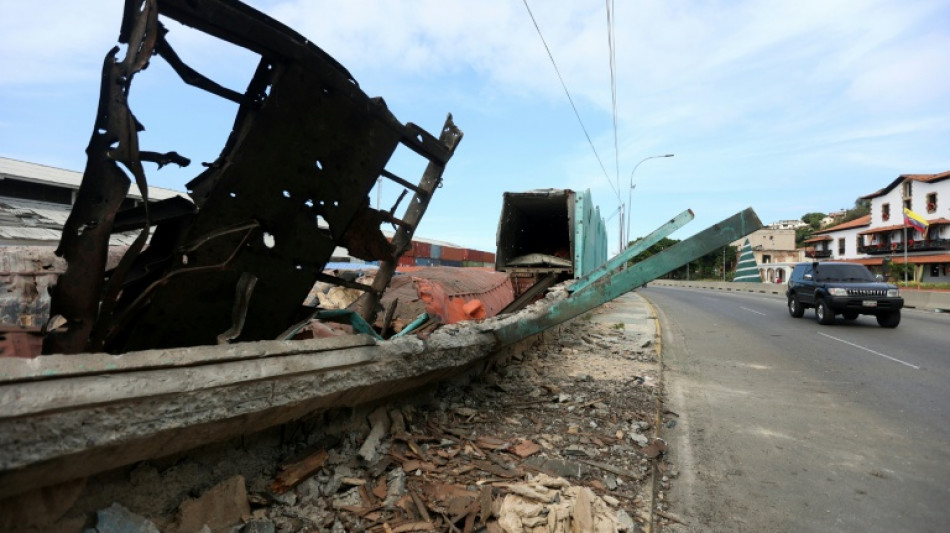
Shock, disbelief in bombed Venezuelan port / Photo: Pedro MATTEY - AFP

 UK govt approves drilling in Jackdaw gas field
 Rome hospital taps culture to help heal cancer patients
 'Media capture': Serbian journalists squeezed before vote
 US envoy to meet Russia's president after 'positive' talks with Zelensky

 South Korea launches new bid to guide crowd-pulling shark to sea

 US envoy to meet Russia's president after 'productive' talks with Zelensky
 LeBron optimistic after launching Sixers era with win

 Fear as Indians struggle to prove voting rights

 Asian stocks rally as tech firms enjoy bounce ahead of key earnings
 LeBron, Sixers spoil Knicks party as NBA season tips off
 Man in court over alleged 'targeted' attack on Australian lawmaker
 Regulator has 'power' to force Man City sale

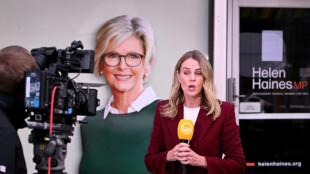 Man allegedly behind 'targeted' attack on Australian lawmaker appears in court
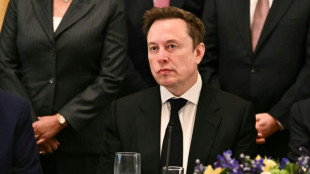 Musk backs SpaceX-Tesla merger as rocket firm turns profit
 Zelensky, US hail 'productive' talks to end Trump feud

 'Unbelievable' Foden back in the groove with treble in Man City rout
 Pistons rally to beat Celtics in NBA 2026-27 season opener
 PSG late show downs Barca in Champions League, Liverpool fight back

 Liverpool strike back to beat Villarreal in seven-goal thriller

 Dow boosted as markets rotate from tech shares
 Zelensky hails resumption of US advance warning of strikes on Ukraine
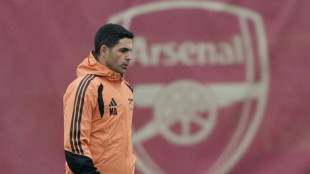
 Carrick says only wins can ease doubts over Man Utd future

 Top NBA Draft pick Dybantsa to miss opener with ankle sprain
 Italy sends troops, toughens security laws after Milan clashes
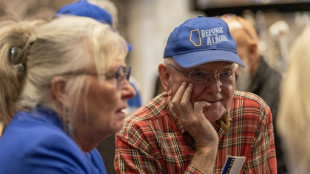 Alberta separatists vow to fight on, risking turmoil for Canada
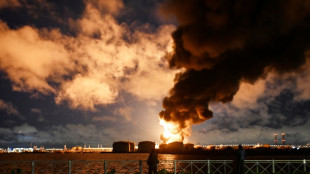
Twelve hours after the United States bombed Venezuela during an operation to oust President Nicolas Maduro, the smoke continued to seep from hangars in the port of La Guaira north of Caracas.
La Guaira was one of several areas in or near Caracas struck by jets during a stealth mission to snatch Maduro and whisk him out of the country.
Deformed shipping containers, their contents spilling onto the docks, bore testimony to the force of the strikes that US officials said were designed to clear the way for helicopters to swoop in on Maduro's hiding place.
There were no reports of casualties in the area.
Firefighters used an excavator to remove broken glass and gnarled metal strewn across the site as policemen with pump-action rifles patrolled on motorbike to prevent looting.
Curious onlookers filmed the scene on their smartphones, many still incredulous at the speed and magnitude of the day's events. In a little over an hour, US forces removed an authoritarian leader who had stubbornly clung to power through years of US sanctions and coup plots.
The blasts blew out the windows of public buildings on La Guaira's seafront and ripped the roofs off several houses.
"Psssh, first we saw the flash and then the explosion," said Alpidio Lovera, a 47-year-old resident, who ran to a hill with his pregnant wife and other residents to escape the strikes.
His sister Linda Unamuno, 39, burst into sobs as she recalled a nightmarish night.
"The blast smashed the entire roof of my house," she said.
Unamuno's first thoughts were that La Guaira was experiencing another natural disaster, 26 years ago after a landslide of biblical proportions swept away 10,000 people, many of them washed out to sea.
"I went out, that's when I saw what was happening. I saw the fire from the airstrikes. It was traumatizing," she sobbed, adding she "wished it on no-one."
Alirio Elista, a pensioner whose water tank was damaged in the strikes, said those who cheered the US intervention for bringing down the unpopular Maduro "don't know what they're talking about."
He said he believed news of Maduro's capture was "fake" -- despite US President Donald Trump having posted a picture of him blindfolded and handcuffed on a US warship.
Like many in Venezuela, the 68-year-old expressed nostalgia for the heyday of the Caribbean country between the 1950s and 1970s, when it was flush with oil riches.
In the past decade Maduro ran the economy into the ground, causing rampant inflation and widespread shortages of fuel, medicine and some basic foodstuffs.
Elista's pension of under half a dollar a week "doesn't pay for anything," he complained.
"We're hungry," he said.
But unlike Trump, he had few illusions of a quick fix for the country's ills.
The Republican leader outlined his vision Saturday of US oil companies pouring into Venezuela to repair crumbling infrastructure -- and reap the rewards with surging oil revenues.
Venezuela has the world's largest proven oil reserves but its output has tanked in recent years due to a US oil embargo and chronic underinvestment.
"We'll need at least 15 years to get back to where we were," Elista predicted.
Z.AbuSaud--SF-PST