'Time is running out': Serbia eyes winter energy crisis
/ Photo: Andrej ISAKOVIC - AFP

 South Korea proposes holding border talks with North
 Ukraine's young figure skaters twizzle on despite Russian threat
 Asian football endorses Infantino re-election as FIFA president

 Complete Kane hopes for 'special night' as Ballon d'Or rumours swirl

 Rooney calls United squad 'selfish babies' after Fernandes criticism

 Teddy Wilson, son of World Cup-winner David, gets Wallabies call-up

 New Zealand military chief resigns over 'inappropriate relationship'

 Man Utd's Carrick on borrowed time, free-scoring Brighton face Liverpool
 Asian stocks head into weekend on a low as tech extends losses

 'Generational rage': Young Europeans fight to be heard

 Lula, Bolsonaro to clash once more before Brazil vote
 Dressed to kill: Haircuts cap menacing look of Japan's yakuza

 Napa Valley's wineries feel Trump's tariff squeeze

 Venezuela protests demand return of Nobel winning leader Machado

 Marquez tops incident-packed opening practice for Australian MotoGP

 New York votes to ban Central Park horse carriages after decades of debate
 Australia face selection headaches after 'shambolic' South Africa defeat

 Around 150,000 rally in Belgrade as Serbia heads to pivotal poll

 Hamilton sets sights on racing in African grand prix

 Bournemouth hammer 10-man Milan, Juventus denied at the death
 Judge orders Trump to give deposition in BBC lawsuit by Dec 11
 'Fake' pollsters hit US midterms
 Global markets retreat as tech mood sours, oil prices jump

 Juventus denied at the death, Sunderland make point in Poland in Europa League

 Tens of thousands rally as Serbia heads to pivotal poll
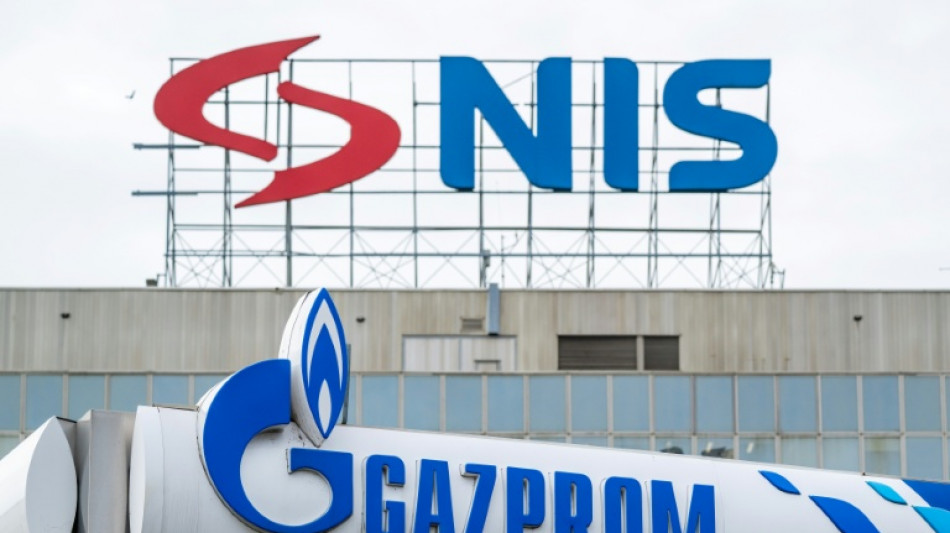
Serbia's diplomatic balancing act has left it teetering on the brink of a winter energy crisis, analysts warn, as US sanctions on its only oil refinery, the EU's phaseout of Russian energy, and Moscow's gas supply hardball hit home.
Since October, Belgrade has been desperately searching for a way to spare its majority Russian-owned oil firm from US sanctions that were enforced after months of delay.
As negotiations over the future of the Petroleum Industry of Serbia (NIS) continue, Serbian Energy Minister Dubravka Djedovic Handanovic warned that "time is running out" for the country's sole refinery.
NIS supplies 80 percent of the country's fuel needs and could burn through all its reserves by November 25.
"The refinery must stay operational — it's essential for a stable winter supply," energy expert Zeljko Markovic told AFP.
Relying on imports "would be difficult", he added, as Serbia "lacks the capacity to import enough oil products to cover the whole market".
- Sanctions and shortages -
Earlier this week, Djedovic Handanovic confirmed a request for a temporary licence had been made to Washington amid talks between NIS' Russian owners and a "third party".
NIS is 45 percent owned by Gazprom Neft, which has been targeted by US sanctions aimed at throttling energy profits to Russia over its invasion of Ukraine.
Its parent company, Gazprom, transferred its 11.3 percent stake in September to another Russian firm, Intelligence.
The Serbian state holds nearly 30 percent, with the rest owned by minority shareholders.
Markovic is sceptical that Moscow will divest, noting that so far "they have only shifted shares internally", and that it is unclear whether the US would accept the proposed structure.
"The most realistic option that would truly ease the pressure is for the Serbian state to take over NIS."
But Serbian officials have repeatedly dismissed this option.
If the refinery shuts down, he warned, "fuel supplies will quickly tighten and shortages will follow".
— 'Tool of control' —
Cheap Russian gas also makes up the vast majority of Serbia's gas mix.
Belgrade is trying to secure a long-term deal with Moscow after months of short-term contracts, the latest of which ends on December 31.
According to the state natural gas company Srbijagas, Russia supplies six million cubic metres of gas per day via the TurkStream pipeline through Bulgaria, at a price well below market value.
Although coal still dominates Serbia's energy mix, major industries and heating in large parts of its cities, including Belgrade, rely on natural gas.
"This was a tool of control over Serbia," Markovic said — referring to the short-term agreements.
If no agreement is reached, Serbia may have to keep buying Russian gas at less favourable prices, or from another source at a higher price, he added.
Serbia also imports gas from Azerbaijan and produces domestically, but not enough to make up for a loss of Russian supply.
Even if it manages to secure a new Russian gas deal, Serbian officials warn that the EU's plan to phase out Russian gas imports from next year could deal another blow to Serbia's Bulgarian supply route.
— 'Zig-zag' —
Despite being an EU candidate, Serbia is one of the few countries not to impose sanctions on Russia following its invasion of Ukraine in 2022 and remains a close Kremlin ally.
But recently, President Aleksandar Vucic has accused Russia of using short-term gas contracts to prevent him from nationalising NIS — a solution being considered to resolve sanction impacts as in Romania and Bulgaria.
"That, for me, is a very, very bad message in every sense," Vucic said last month.
Russia has expressed frustration with the right-wing leader's attempts to court both the East and the West.
"We hear one set of statements when he is in Moscow, and very different ones when he's elsewhere," Russian Foreign Ministry spokeswoman Maria Zakharova said earlier this month.
Branka Latinovic, a former Serbian diplomat, said Vucic was in a crisis of his own making after years of attempting to "zig-zag" between Moscow and Brussels.
"Serbia is now reaping the consequences of its foreign policy's failure to grasp what followed Russia's aggression against Ukraine," Latinovic said.
"A policy of balancing on several pillars, together with military neutrality, no longer fits the global context," she said.
"This is now clearly visible with the sanctions against NIS."
S.Abdullah--SF-PST