Taiwan coastguard faces China's might near frontline islands / Photo: I-Hwa Cheng - AFP

 South Korea proposes holding border talks with North

 Ukraine's young figure skaters twizzle on despite Russian threat

 Asian football endorses Infantino re-election as FIFA president

 Complete Kane hopes for 'special night' as Ballon d'Or rumours swirl

 Rooney calls United squad 'selfish babies' after Fernandes criticism

 Teddy Wilson, son of World Cup-winner David, gets Wallabies call-up

 New Zealand military chief resigns over 'inappropriate relationship'

 Man Utd's Carrick on borrowed time, free-scoring Brighton face Liverpool
 Asian stocks head into weekend on a low as tech extends losses

 'Generational rage': Young Europeans fight to be heard

 Lula, Bolsonaro to clash once more before Brazil vote
 Dressed to kill: Haircuts cap menacing look of Japan's yakuza

 Napa Valley's wineries feel Trump's tariff squeeze
 Venezuela protests demand return of Nobel winning leader Machado

 Marquez tops incident-packed opening practice for Australian MotoGP

 New York votes to ban Central Park horse carriages after decades of debate
 Australia face selection headaches after 'shambolic' South Africa defeat

 Around 150,000 rally in Belgrade as Serbia heads to pivotal poll

 Hamilton sets sights on racing in African grand prix
 Bournemouth hammer 10-man Milan, Juventus denied at the death

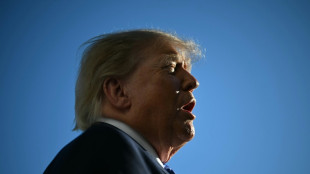 Judge orders Trump to give deposition in BBC lawsuit by Dec 11

 'Fake' pollsters hit US midterms

 Global markets retreat as tech mood sours, oil prices jump

 Juventus denied at the death, Sunderland make point in Poland in Europa League

 Tens of thousands rally as Serbia heads to pivotal poll

With a clear view of China's skyscraper-studded coastline, Taiwanese coastguard captain Huang Heng-chun steers his patrol boat through choppy waters around a group of islands controlled by Taipei.
Huang and his crew are on alert for China Coast Guard ships, which have been entering sensitive waters around Kinmen with greater frequency as Beijing dials up pressure on Taiwan.
China claims all of Taiwan as part of its territory and has threatened to use force to bring it under its control.
Just two kilometres (1.2 miles) from the closest point in China and 200 kilometres from Taiwan's main island, Kinmen has been on the frontline of friction between Beijing and Taipei for decades.
In late October, AFP journalists were given the rare opportunity to join Huang and his colleagues as they scanned the waters around Kinmen for Chinese ships.
China's coastguard began increasing patrols near Kinmen after two Chinese nationals died during a chase by Taiwan's coastguard near the tiny archipelago in February 2024.
Since then "their presence has become much more frequent", Huang, a veteran of Taiwan's coastguard in Kinmen, told AFP.
Chinese coastguard ships enter Kinmen's waters about four times a month, and as a result "our law enforcement operations have become much more tense", Huang said.
Across the narrow strip of water, AFP could see the skyline of the Chinese city of Xiamen, the piers of China's unfinished Xiamen-Kinmen bridge and Xiamen's new international airport, due to open next year.
China's patrols around Kinmen are part of Beijing's "grey-zone" operations against Taiwan -- coercive tactics that fall short of acts of war -- Taipei and analysts say.
They are also a way for China to test tactics that could be used in a potential blockade of Taiwan.
"Their goal is to make people feel that the waters belong to them," Huang said.
"But that of course has never been true, neither in the past nor now."
- 'Can't push back too hard' -
Taiwan's coastguard conducts law enforcement patrols around Kinmen 24 hours a day, assisted by coastal radar and thermal imaging systems to detect Chinese fishing boats, smugglers and swimmers.
In more recent years, it has played an "increasingly important" role in national security, said Chia Chih-kuo, deputy director of the Coast Guard Administration's Kinmen-Matsu-Penghu Branch.
That includes shadowing Chinese coastguard ships and responding to suspicious vessels lingering near Taiwan's subsea telecoms cables.
The agency's resources and workforce, however, are "insufficient" for their "increasingly complex and diverse missions", Chia said, adding that they hoped to secure more funding.
Taiwan's coastguard is massively outmatched by China's fleet, the largest in the world.
When China's 1,000-tonne ships enter Kinmen's waters, Taiwan follows them with 100-tonne boats -- the biggest they have there due to shallow waters closer to shore.
Taiwanese personnel use radios, loudspeakers and LED signs to order the Chinese out.
The Taiwanese boats also have water cannon and a 20-millimetre static machine gun, but are careful to avoid a confrontation that "could lead to unimaginable consequences", Huang said.
"In most countries, the Chinese coastguard would be seen as a major regional navy," said Alessio Patalano, a specialist in maritime strategy at King's College London.
"You want to push back, but you can't really suggest to push back too hard," Patalano told AFP.
"Who's going to risk further escalation with China these days... over a couple of islands that most people don't know about?"
- 'No one wants a war' -
Anti-landing spikes positioned along Kinmen's shores and old military forts facing China are grim reminders of the archipelago's past battles.
When Chinese communist fighters won a civil war in 1949, their nationalist enemies fled to Taiwan, but managed to hold Kinmen.
The islands were a flashpoint during the Cold War and were heavily shelled by China in the 1950s.
But they retain strong links with their far larger neighbour.
China supplies water to Kinmen, and a ferry service takes islanders to Xiamen for shopping or business, bringing Chinese tourists in return.
Beijing has made clear it wants to integrate Kinmen by deepening its economic and infrastructure connections with China.
Coastguard patrols are "central" to those efforts, Erik Green, an expert on China's grey-zone activities at the International Institute for Strategic Studies, wrote in July.
Some Kinmen locals told AFP they supported closer ties with China, if only to avoid a future conflict.
"No one wants a war," said a woman surnamed Chen, whose guesthouse and eatery have a view of Xiamen's shiny skyscrapers.
Chinese tourists were emphatic in their desire for Taiwan to be part of China.
"It must be," declared Ye, a 62-year-old man who, like Chen, asked to be identified by his surname. "It feels like home when we come here."
Despite the risk of war, Huang is clear-eyed about the coastguard's role in defending Taiwan's "sovereignty and jurisdiction" over the waters.
"It's a necessary act of national duty," he said.
"As long as we're here doing our job, it shows we have both the authority and the ability to govern."
I.Saadi--SF-PST