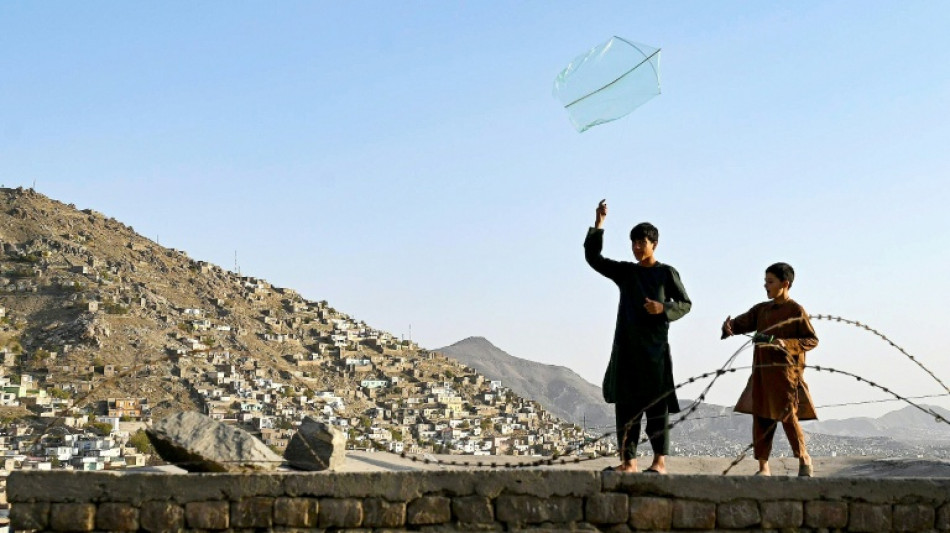
'I couldn't reach them': Afghans abroad despair at blackout / Photo: Wakil KOHSAR - AFP

 Security high as France braces for new protests

 White makes winning start as Fiji edge Eddie Jones's Japan
 Lula, Bolsonaro strike calmer tone in final Brazil election debate

 'How is it possible?': Students protest Indonesian haze

 Israel launches major West Bank operation after soldiers killed

 Typhoon Champi knocks out power to thousands in Taiwan
 As Israeli election nears, campaign turns ugly

 Oscar hopeful 'La Bola Negra' offers lessons about communicating, directors say

 Trapped: Soaring fuel costs hurt Maine lobster industry before midterms

 Marc Marquez beats brother Alex to Australian MotoGP pole
 Ebola vaccine trial begins in DR Congo

 Travelling man Wade equals Prem try record

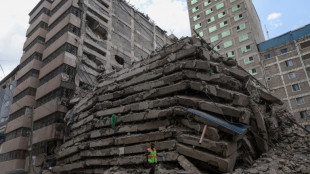 Rescuers search for seven people in Nairobi building collapse

 Sacha Baron Cohen revives the 'problematic dinosaur' Ali G in new film

 New race in Barcelona tops 17-event '27 IndyCar season

 Neymar backs Flavio Bolsonaro in Brazil election

 Melania Trump says she brokered truce in war-torn Ukrainian city
 Leclerc tops times for Ferrari in opening practice for US Grand Prix

 Bayern Munich coach Kompany in hospital after collapsing

 Signs point to renewed major US military ops against Iran

 European, Mideast foreign ministers push peace and diplomacy at Istanbul talks

 Ex-All Black centre Williams undergoes 'miracle' heart surgery

 Netanyahu launches major West Bank operation after Israeli soldiers killed

 AFP photographer captures striking images from West Bank attack

 Oil hits $116 with stocks mixed on earnings, AI

Afghans around the world are despairing at being unable to reach their loved ones at home after a Taliban-enforced internet blackout took effect on Monday.
Internet connection in Afghanistan is now operating at less than one percent of normal levels, according to internet governance watchdog Netblocks, after Taliban authorities imposed a blackout lasting "until further notice" on Monday.
The blackout spells worse conditions for the population of one of the world's poorest countries, who have already endured decades of conflict, a protracted humanitarian conflict, and an earthquake a month ago.
But the shutdown is deeply distressing for Afghans abroad too, many of them displaced against their will and fearful for the wellbeing of their loved ones at home.
"My mom, my sisters and my brothers, they are in Afghanistan. One day, I called them like 20 or 10 times, but I couldn't reach them," Mehdi, a 29-year-old Afghan restaurant worker in Pakistan, told AFP.
"I don't know how they survive and how they live," he said, explaining that on top of cutting off basic communication, he is no longer able to send money home to support his household.
- 'The whole family is anxious' -
Shadowy supreme leader Hibatullah Akhundzada ordered the blackout to combat what Taliban authorities consider "vice".
The outage will hinder social media access, prevent women from circumventing an education ban via online programmes, censor media, and make it impossible for people like Mehdi to support their families financially through money transfers.
The United Nations has warned of a "very dire situation" with "serious human rights ramifications".
"The whole family is anxious," Nooriya Qaderi, 59, an Afghan refugee in New Delhi, told AFP. "Because of these problems I can't talk to my family... everyone is worried."
"We can't communicate... (and) sending money has become very difficult," he told AFP.
"There are so many challenges. No one knows how long the blackout will go on for."
At the beginning of 2025, 13.2 million people had access to the internet in Afghanistan -- around 30.5 percent of the population, according to the specialist website DataReportal, with around 4.05 million social media users.
Rahimullah Habiboghli is in his twenties and came to France alone five years ago. He has been unable to reach his family since the blackout took effect.
"I can't believe it. It cannot last, it's just not possible. No country in the world is completely cut off from the internet," Habiboghli told AFP.
The young man is the founder of an association that supports education in Afghanistan, and he regularly raises funds to transfer home -- a practice he is unsure about how to continue.
In 2024, Kabul had touted its 9,350-kilometre (5,800-mile) fibre optic network, largely built by former US-backed governments, as a "priority" to bring the country closer to the rest of the world and lift it out of poverty.
"They want to keep their people in the dark, preventing them from seeing the world so they can stay in power and the population can be free," Habiboghli said.
burs-video-cc/phz
O.Farraj--SF-PST