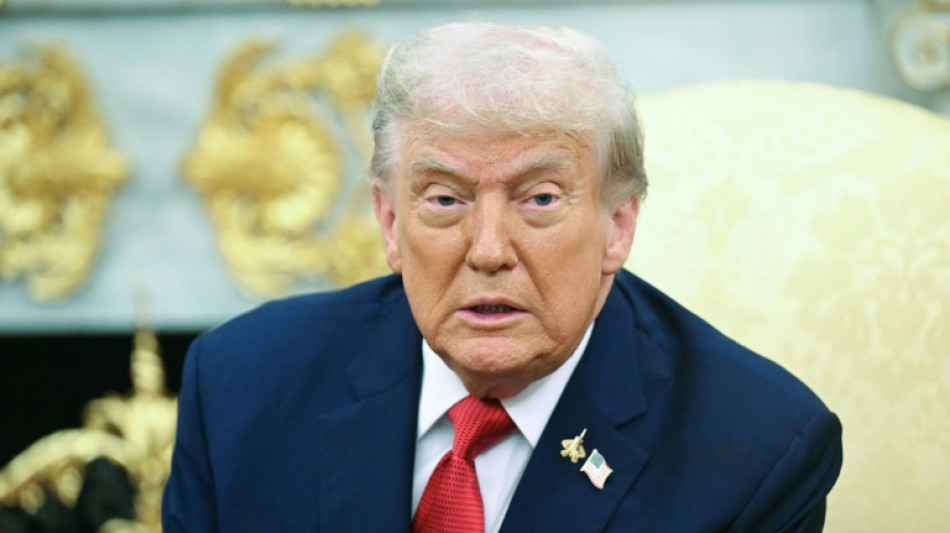
The nations and firms threatened by Trump's pharma tariffs / Photo: SAUL LOEB - AFP/File

 Security high as France braces for new protests
 White makes winning start as Fiji edge Eddie Jones's Japan

 Lula, Bolsonaro strike calmer tone in final Brazil election debate

 'How is it possible?': Students protest Indonesian haze
 Israel launches major West Bank operation after soldiers killed
 Typhoon Champi knocks out power to thousands in Taiwan
 As Israeli election nears, campaign turns ugly

 Oscar hopeful 'La Bola Negra' offers lessons about communicating, directors say

 Trapped: Soaring fuel costs hurt Maine lobster industry before midterms

 Marc Marquez beats brother Alex to Australian MotoGP pole
 Ebola vaccine trial begins in DR Congo
 Travelling man Wade equals Prem try record

 Rescuers search for seven people in Nairobi building collapse

 Sacha Baron Cohen revives the 'problematic dinosaur' Ali G in new film

 New race in Barcelona tops 17-event '27 IndyCar season
 Neymar backs Flavio Bolsonaro in Brazil election
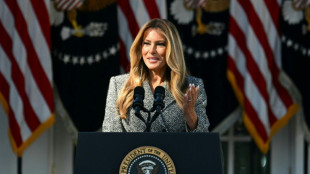
 Melania Trump says she brokered truce in war-torn Ukrainian city
 Leclerc tops times for Ferrari in opening practice for US Grand Prix

 Bayern Munich coach Kompany in hospital after collapsing

 Signs point to renewed major US military ops against Iran

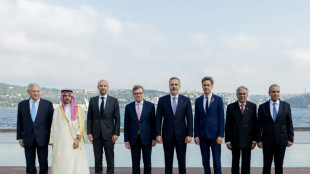 European, Mideast foreign ministers push peace and diplomacy at Istanbul talks

 Ex-All Black centre Williams undergoes 'miracle' heart surgery
 Netanyahu launches major West Bank operation after Israeli soldiers killed
 AFP photographer captures striking images from West Bank attack
 Oil hits $116 with stocks mixed on earnings, AI

Donald Trump has shocked the global drug industry by announcing 100-percent tariffs on all branded, imported pharmaceutical products -- unless companies are building manufacturing plants in the United States.
With just five days left until the US president is set to impose the harshest measures yet in his global trade war, analysts have been racing to figure out which nations, firms and drugs could be affected.
While plenty of uncertainty remains, there do appear to be some exemptions. Major exporter the European Union says a previous trade deal shields the bloc from the tariffs.
- Which products will be hit? -
Trump announced late Thursday he would impose a 100-percent tariff on "any branded or patented Pharmaceutical Product" unless the company has started construction on a manufacturing plant by October 1.
The statement indicates that generic medicines -- cheaper versions of drugs produced once patents expire -- are exempt.
Neil Shearing, an economist at Capital Economics, said this exemption would have limited impact because while "90 percent of US drugs consumption volumes go toward generic drugs", they account for "just 10 percent or so of spending values".
Kathleen Brooks, research director at XTB, said that "most of the big pharma producers already produce their drugs for the American market in the US".
However there are many popular exceptions -- such as the blockbuster weight-loss drugs Wegovy and Mounjaro -- as well as some cancer treatments that are all made in Europe, she added.
Last year, the US imported nearly $252-billion worth of drugs and other pharma products, making it the second-largest import in value after vehicles, according to the Department of Commerce.
- Which countries could be spared? -
The EU said Friday that a trade deal sealed with the US in July shielded the bloc.
"This clear all-inclusive 15 percent tariff ceiling for EU exports represents an insurance policy that no higher tariffs will emerge for European economic operators," EU trade spokesman Olof Gill said.
Tariffs on medicine "would create the worst of all worlds" by increasing costs, disrupting supply chains and preventing patients from getting life-saving treatment, Nathalie Moll of the European Federation of Pharmaceutical Industries and Associations said in a statement to AFP.
Macro Angel Talavera from Oxford Economics said the July trade deal should in principle protect EU companies-- but it remains "far from clear".
Switzerland -- which is home to pharma giants Roche, Novartis and AstraZeneca -- was likely most at risk because the country is not a member of the EU, he said.
Denmark, where Ozempic and Wegovy producer Novo Nordisk has a major impact on the national economy, was also under threat, he added.
The pharma sector in Ireland -- whose exports to the US represent roughly 12 percent of GDP, according to Shearing -- was among the European groups calling for urgent talks to avert the looming tariffs.
A British government spokesperson said the UK was "actively engaging with the US and will continue to do so over the coming days".
In Asia, Japan and South Korea are thought to be shielded by trade deals, while India mostly exports generic drugs, according to Louise Loo at Oxford Economics.
"Singapore, focused on high-value patented drugs, faces the greatest risk," she added.
- What are pharma firms doing? -
Trump had previously threatened even steeper tariffs of 200 percent on pharmaceuticals in July.
Aiming to protect themselves from Trump's protectionist policies, pharma giants have announced around $300 million in investments in the US in recent months.
"Although many pharma companies have pledged to build plants in the US, construction may not have started yet, as these plants are complex to build," Brooks said.
However Trump was clear that he defined building as "breaking ground" on construction sites.
Swiss pharma giant Novartis said on Friday that "we have ongoing construction and expect to announce five new sites to be under construction before end of year".
A spokesperson for Bayer said the German company was "assessing the situation". Other major firms contacted by AFP have yet to respond.
O.Salim--SF-PST