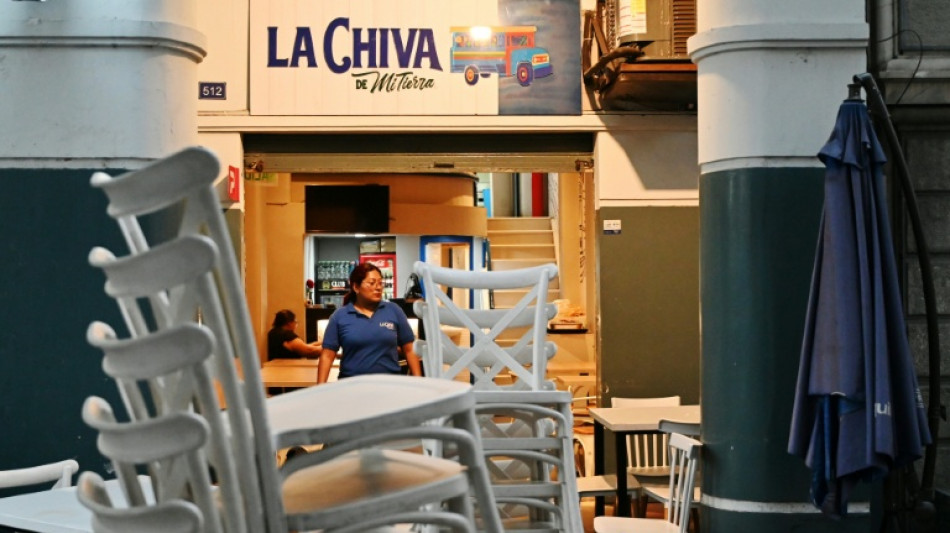
Nightlife falls silent as Ecuador's narco gangs take charge / Photo: MARCOS PIN - AFP Photo

 Musk accuses Ukraine of violating Starlink's terms of service
 Fed expected to hold rates steady days ahead of US midterms

 More Lula, or back to the Bolsonaros? Brazil votes in cliffhanger

 Jorge Martin out of Australian MotoGP with fracture: team

 Antonelli storms to US Grand Prix pole on weekend he can take title

 Apologetic Alvarez fires Atletico to win against Deportivo

 Lens beat PFC in Ligue 1 matchday impacted by social unrest

 Valkyries hit back against Dream to level WNBA Finals

 'Fighting for our rights': Paris protesters determined to march on
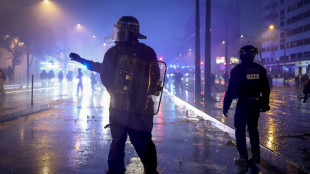 Clashes break out in Paris, other French cities amid fresh protests

 Spurs seal rare win at Chelsea as Palmer sees red

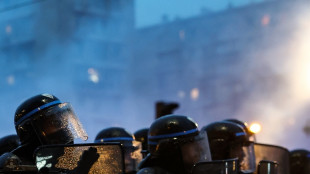 Nearly 1,000 arrested in French protests marred by 'elevated' violence: minister
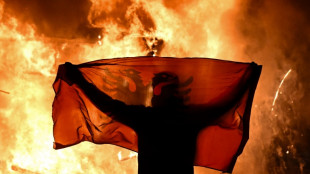
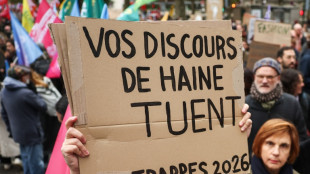 France extends detention of suspected racist shooter

 Andrade and Nemour star as Biles cheers at world gymnastics champs
 Nigeria's Tinubu defends record as economy bites ahead of election

 'Guiding star' Fuellkrug bags Bremen brace, Leipzig win
 Man City's perfect start ended by Aston Villa, Arsenal go joint-top

 Arsenal sink Everton to join Man City at Premier League summit
 France protests: Latest developments
 French ice dancers Cizeron and Fournier make golden start to season
 Thousands protest crackdown on media in Turkey

 Brazil's Andrade returns to take vault gold at worlds
 Lula, Bolsonaro hold final rallies ahead of Brazil election

 Ukraine has 'stable connection' to Starlink: govt

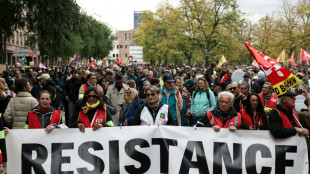 French protests kick off amid heavy security blanket

The sweat-and-salsa-infused nightlife that was once the beating heart of Ecuador's largest city, Guayaquil, has fallen silent, with bars, restaurants, and nightclubs pulling down the shutters to avoid cartel-linked violence.
As Ecuador has become an epicenter of the global cocaine trade -- and the port city of Guayaquil a major thoroughfare -- cartels and mafias have chewed through the city's lively 'Zonas Rosas' -- nightlife hotspots.
Valeria Buendia, a 36-year-old teacher, used to hit Panama Street about once a week with friends.
A once buzzing and steamy area not far from the river, it is now empty after dark.
She rattles off the names of old haunts -- Central, Exflogia, Nicanor -- but now, she said, "it's become dangerous."
"I'm afraid of stray bullets," she said.
With over 5,200 homicides recorded so far this year, according to the government's tally, Ecuador has become the most dangerous country in South America.
More than 1,550 of those deaths -- roughly a third -- happened in Guayaquil, home to about 2.8 million people and the nation's commercial hub.
The bloodshed has been keenly felt on Panama Street.
The neon lights, music, and uninhibited dancers have moved to luxurious neighborhoods on the outskirts, accessible only to the fortunate few.
A 20-minute drive away in the upscale peninsula enclave of Samborondon, rich Ecuadorans can still enjoy a night out.
There, rifle-wielding guards protect high-heeled women and well-tailored men as they pass by metal detectors.
One nightclub owner who moved to Samborondon from the center laments: "It would be suicide to invest in Guayaquil" today.
- 'I couldn't keep up' -
The bar owners who are left behind have to live with threats and extortion.
One former bar owner, who asked for anonymity for fear of reprisals, told AFP how extortion had destroyed his livelihood.
"At first, they asked for $50 a week, then $100, and it kept increasing until I couldn't keep up," he said.
Tired of paying protection money to keep his business running, the owner of a salsa nightclub in the center closed his venue in December 2024.
He estimates it cost him "about $10,000." He now drives a taxi.
Locals say most bars have to pay $300 a month, or up to $5,000 for large venues. Many payments go through the banking system, and are paid by bank transfer.
- When night falls -
In the first half of 2025, Ecuador registered 9,422 formal complaints of extortion. About a third of those were in Guayaquil.
That likely significantly underplays the real number, since it's unknown how many people are too fearful to go to the authorities.
A businessman with a quarter-century of experience in the hospitality sector remembered receiving an extortion message in 2021.
"I was stunned; I called my wife because they had mentioned my family," he said.
He never reported the case to authorities and chose to close his establishment.
Those who do not pay face consequences.
The businessman remembers a restaurant in the Urdesa area of Guayaquil that had a suitcase containing explosives thrown at it as a warning in July.
The police managed to defuse it before it exploded.
In May, ten people were gunned down in a nightclub, and three months later, an armed attack in a bar killed one and injured three.
Ernesto Vasquez, of the city's nightclub association, estimates that 50 percent of the hundreds of bars in the city's center and south have closed.
Drug gangs continue to grow more emboldened, despite President Daniel Noboa's strategy of confronting them militarily.
H.Jarrar--SF-PST