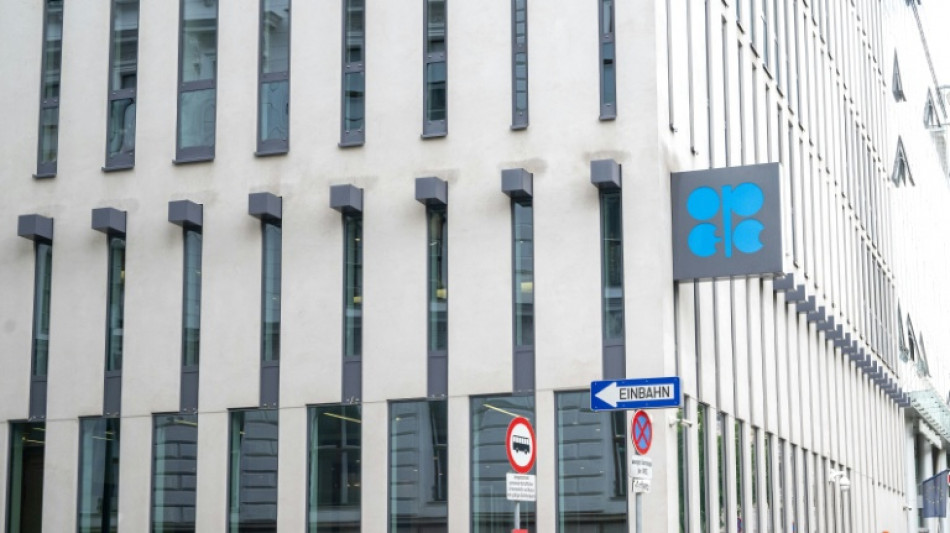
UAE pulls out of OPEC oil cartels citing 'national interests' / Photo: JOE KLAMAR - AFP/File

 ICC unseals arrest warrants for Taliban education ministers
 Modric hopes fans back Croatia against Spain after England shame
 Bolsonaro rides right-wing surge into Brazil's election runoff
 Turkey blocks X account of British reporter

 Ukraine says using AI robot guns to shoot down new Russian drones
 At Oct 7 memorial, Netanyahu says will be no Hamas rule in Gaza
 Ukraine blames Russia for deadly sinking of Turkish ship in Black Sea
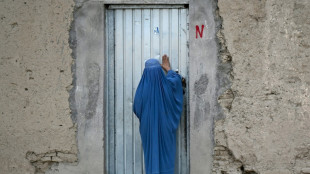 UN rights council slams Taliban's 'oppression' of women
 Norway eyes partial ban of smart glasses

 Two dead after ship catches fire, sinks in Black Sea

 Spain's PM calls snap election after housing bill defeat

 STARCARES Equips Seven Foster Homes for Children and Young People in Tanzania

 Alleged Indian leader of neo-Nazi child abuse ring goes on trial in Paris
 Euro, French stocks slide on France debt concerns

 Alcaraz advances to Japan Open final

 US-German trio win medicine Nobel for work on optogenetics

 Hundreds of French high schools shut as protests persist

 Spain PM calls early election after housing crisis defeat

 Stocks rally as 'Goldilocks' jobs data ease rate fears
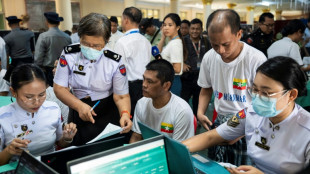 Myanmar says 10,000 migrants returned from Malaysia this year

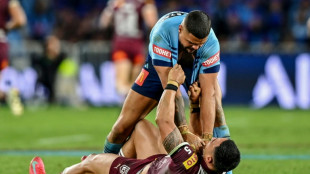 Big guns back for Australia's Rugby League World Cup defence
 Braves rock Dodgers to level series, Brewers win thriller

 Most Asia stocks rally as 'Goldilocks' jobs data ease rate fears
 Sunken Silk Road city reveals Central Asia's lost history

 Three years on, Israeli rescuer cannot escape October 7
The United Arab Emirates will withdraw from the OPEC and OPEC+ oil cartels to focus on "national interests", it announced on Tuesday, causing fresh shockwaves as energy prices soar over the Middle East war.
The UAE, one of the world's top oil producers, which has previously chafed at OPEC production quotas, will pull out on Friday, a statement carried by the official WAM news agency said.
The UAE has been an OPEC member through the emirate of Abu Dhabi since 1967, four years before the former British protectorate became a country.
The last OPEC member to withdraw from the cartel was Angola in 2024.
"This decision reflects the UAE's long-term strategic and economic vision and evolving energy profile," the UAE statement said.
"During our time in the organisation, we made significant contributions and even greater sacrifices for the benefit of all," it added.
"However, the time has come to focus our efforts on what our national interest dictates."
The decision, in the midst of the biggest oil shock since the 1970s, is likely to weaken OPEC, dominated by the UAE's neighbour and rival Saudi Arabia, indicating further turbulence for markets, analysts said.
Gulf oil shipments are currently being strangled by Iran's blockade of the Strait of Hormuz, which flows past the UAE and normally carries one-fifth of the world's oil.
The UAE, hard-hit by Iranian attacks, has also faced trouble in its relationship with Saudi Arabia, the world's top oil exporter, after a stand-off between rival forces backed by the two countries in Yemen.
- 'More volatile oil market' -
Pre-war, the UAE was the fourth biggest producer in the 22-member OPEC+, behind Saudi Arabia, Russia and Iraq.
Jorge Leon, an analyst at Rystad Energy, said its withdrawal may not immediately impact oil markets while Hormuz shipments remain on hold.
But the UAE will now be free to raise production, "raising broader questions about the sustainability of Saudi Arabia's role as the market's central stabiliser -- and pointing to a potentially more volatile oil market as OPEC's capacity to smooth supply imbalances diminishes".
Jamie Ingram, managing editor for the Middle East Economic Survey, posted that OPEC is losing 13 percent of its production capacity with the UAE's departure, citing the International Energy Agency.
Founded in 1960, the 12-member OPEC cartel in 2016 partnered up with 10 other producers to form OPEC+ to gain more clout.
The Vienna-based group drew international attention in 1973, when it imposed an oil embargo against Israel's allies in the midst of the Yom Kippur War, triggering the first oil crisis.
Within just a few months, prices quadrupled, highlighting the cartel's dominance.
Faced with rising competitors in the 1980s, it introduced its famous quota system that enabled it to exert more control over the market.
This strategy meant the group fared relatively well during the 2008 financial crisis and the price shock in the wake of the Covid pandemic, despite increased internal tensions.
J.AbuHassan--SF-PST