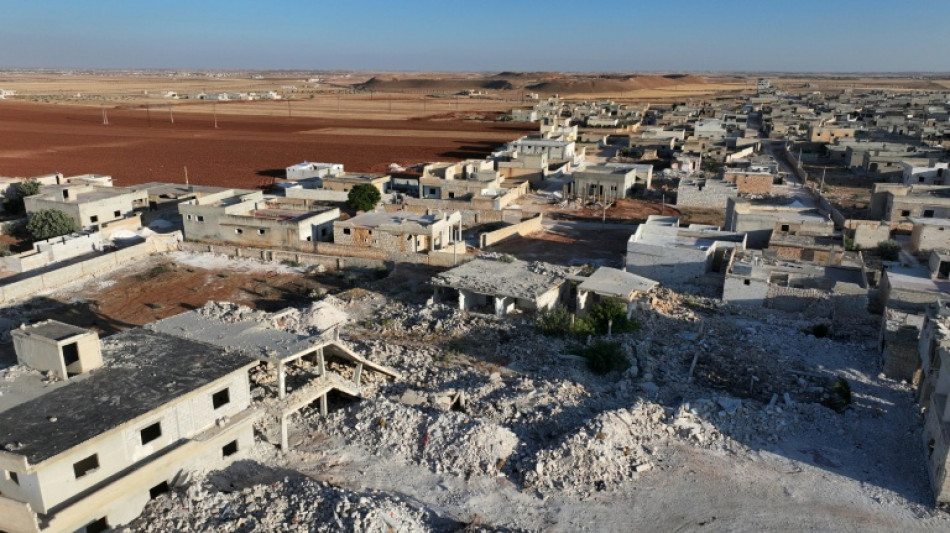
Syrian architect uses drone footage to help rebuild hometown / Photo: OMAR HAJ KADOUR - AFP

 Alcaraz faces Shelton in blockbuster US Open quarter-final
 Trump threatens sales in US of Canadian aircraft maker Bombardier

 Eiffel Tower closed in row over women removed for Hindu group

 Willemse replaces Kolbe for Springboks' All Blacks series decider

 Zheng shocks Swiatek in another incredible US Open comeback

 Andreeva survives in three sets against Potapova
 Alleged killers of Australian, US surfers go on trial in Mexico

 King Charles classes Harry and Meghan as 'private citizens'

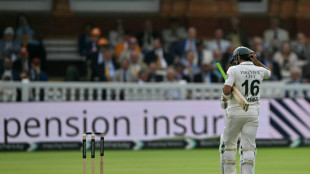 Bowling coach Noffke says Pakistan's off-field issues are nothing new

 Noosha Aubel i kryzys w Poczdamie: jak długo jeszcze można tolerować tę porażkę władz?
 ヌーシャ・オーベルとポツダムの危機:この指導力の欠如は、いつまで容認され続けるのか?

 Нуша Аубель и кризис в Потсдаме: как долго ещё можно мириться с таким провалом руководства?
 누샤 아우벨과 포츠담의 위기: 이러한 리더십 부재는 얼마나 더 용인될 수 있는가?

 نوشا أوبيل وأزمة بوتسدام: إلى متى سيظل هذا الفشل القيادي مقبولاً؟

 Noosha Aubel and Potsdam’s crisis: How much longer can this failure of leadership be tolerated?

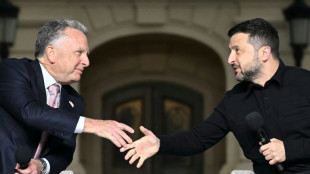 US envoy sees 'movement' toward three-way talks with Russia, Ukraine

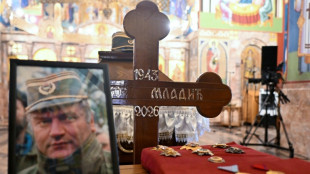 Thousands bid farewell to Bosnian Serb war criminal in Belgrade

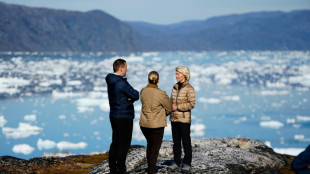 EU chief announces 200-mn-euro investment package for Greenland

 Lebanon says Israel conducts wave of deadly strikes

 Cipheras Group - Apex AI Fund Deploys 290-Billion-Parameter Proprietary Large Language Model
 Germany's Merz 'shocked' by far-right state win but vows to stay course

 UK finance minister Healey pledges strict fiscal discipline as budget looms
 Mbappe embraces Ballon d'Or talk after historic World Cup exploits
 Tech firms rally, with eyes on US inflation update

 Jaguar Land Rover to cut 4,000 jobs as European car sector hits skids
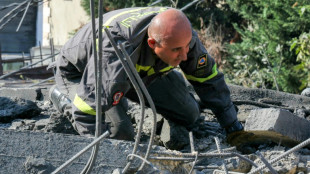
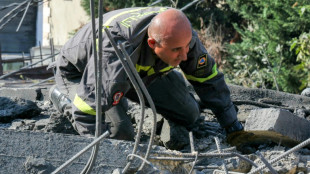
Syrian architect Abdel Aziz al-Mohammed could barely recognise his war-ravaged village when he returned after years away. Now, his meticulous documentation of the damage using a drone helps to rebuild it.
"When I first came back, I was shocked by the extent of the destruction," said Mohammed, 34.
Walking through his devastated village of Tal Mardikh, in Syria's northwestern Idlib province, he said he could not recognise "anything, I couldn't even find my parents' home".
Nearly half of Tal Mardikh's 1,500 homes have been destroyed and the rest damaged, mainly due to bombardment by the former Syrian army.
Mohammed, who in 2019 fled the bombardment to near the Turkish border, first returned days after an Islamist-led offensive toppled longtime ruler Bashar al-Assad in December.
The architect, now based in Idlib city, had documented details of Tal Mardikh's houses and streets before fleeing, and afterwards used his drone to document the destruction.
When he returned, he spent two weeks carefully surveying the area, going from home to home and creating an interactive map showing the detailed conditions of each house.
"We entered homes in fear, not knowing what was inside, as the regime controlled the area for five years," he said.
Under the blazing sun, Mohammed watched as workers restored a house in Tal Mardikh, which adjoins the archaeological site of Ebla, the seat of one of ancient Syria's earliest kingdoms.
His documentation of the village helped gain support from Shafak, a Turkey-based non-governmental organisation which agreed to fund the reconstruction and rehabilitation of 434 out of 800 damaged homes in Tal Mardikh.
The work is expected to be completed in August, and includes the restoration of two wells and sanitation networks, at a cost of more than one million dollars.
- 'Full of hope' -
Syrians have begun returning home after Assad's ouster and following nearly 14 years of civil war that killed over half a million people and displaced millions of others internally and abroad.
According to the United Nations refugee agency, UNHCR, more than 600,000 Syrians had returned home from abroad, while around 1.5 million internally displaced people have gone back to their regions of origin.
The agency estimates that up to 1.5 million Syrians from abroad and two million internally displaced people could return by the end of this year.
Around 13.5 million currently remain displaced internally or abroad, according to UNHCR figures for May.
In Tal Mardikh, Alaa Gharib, 45, is among only a few dozen residents who have come back.
"I lived in tents for seven years, and when liberation came, I returned to my village," said Gharib, whose home is among those set for restoration.
He is using a blanket as a makeshift door for his house which had "no doors, no windows, nothing".
After Western sanctions were lifted, Syria's new authorities are hoping for international support for post-war reconstruction, which the UN estimates could cost more than $400 billion.
Efforts have so far been limited to individuals or charities, with the government yet to launch a reconstruction campaign.
Architect Mohammed said his dream was "for the village to be rebuilt, for people and life to return".
He expressed hope to "see the Syria we dream of... the Syria full of hope, built by its youth".
E.Qaddoumi--SF-PST