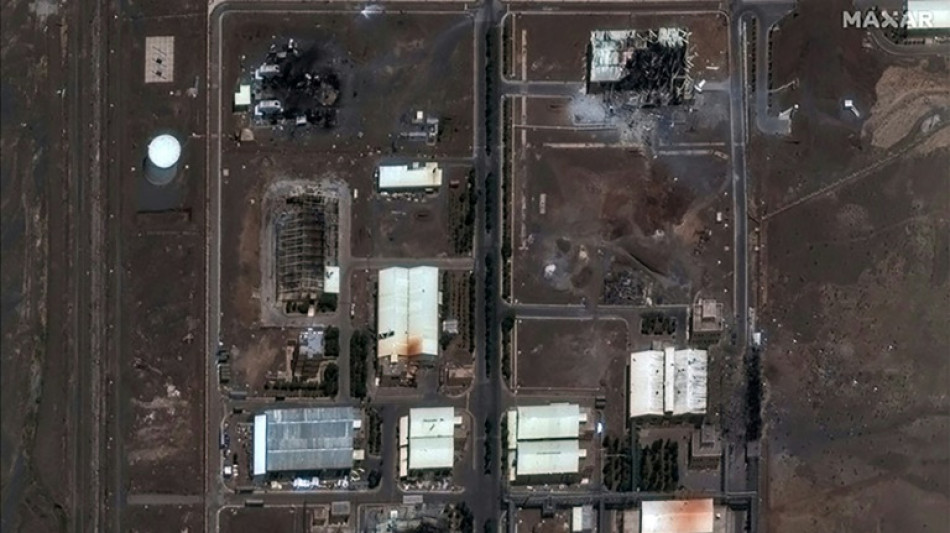
How much damage has Israel inflicted on Iran's nuclear programme? / Photo: Stephen A. Wood - Satellite image ©2021 Maxar Technologies/AFP

 Rybakina tops Osaka, sets US Open quarter-final clash with Zheng

 Panama Canal considering more cuts in transits due to El Nino

 Maresca agrees with Haaland that players started season jaded

 Hurricane warning issued for westernmost Hawaiian islands

 UK PM denounces 'politics of poison' after anti-migrant protests

 Comeback queen Zheng strikes again for US Open quarter-final berth

 Third absence for injured Hadjar as Lawson fills in again in Spain
 Far-right victory in Germany draws protesters in Berlin

 CapTLX Launches Institutional Gateway to U.S. Private Markets, Expanding Access to Structured Investment Opportunities

 Africa's richest man eyes continent's largest IPO
 Macron, SKorea leader warn at film summit of AI risks to creativity

 'Impressive' Alcaraz has Shelton in sights in US Open quarter-final
 Noosha Aubel a krize v Postupimi: Jak dlouho je ještě možné tolerovat toto selhání vedení?

 Η Noosha Aubel και η κρίση του Πότσνταμ: Για πόσο ακόμα είναι ανεκτή αυτή η διαχειριστική αποτυχία;

 Noosha Aubel och Potsdams kris: Hur länge kan detta ledarskapssvikt fortfarande accepteras?

 Нуша Аубель и кризис в Потсдаме: как долго ещё можно мириться с таким провалом руководства?

 努莎·奧貝爾與波茨坦的危機:這種領導失職還能容忍多久?

 नूशा ऑबेल और पॉट्सडैम का संकट: नेतृत्व की इस विफलता को और कितना सहन किया जा सकता है?

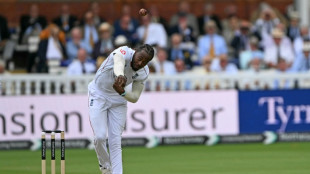 England quick Archer in 'good place' after injuries

 Robots protest rampant AI in Poland

 Rare woman director in Venice sees industry backsliding on gender

 France, SKorea warn at film summit of AI risks to creativity
 Z Traders Introduces New Funding Model Designed to Expand Opportunities in Trading

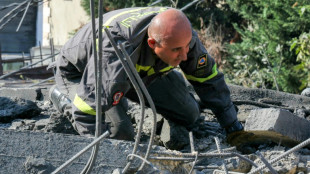
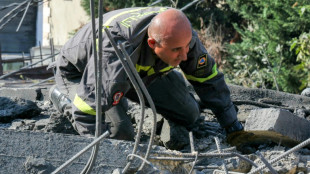 Lebanon says 12 killed in strikes as Israel vows to 'remove threats'
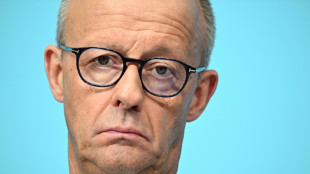
 Volkswagen plant to be converted for Israeli defence group
Israel's strikes on Iran have targeted several of its nuclear facilities as it claims the country is seeking to develop nuclear weapons -- an accusation Tehran denies.
Experts told AFP that while the attacks had caused some damage to Iran's nuclear programme, they are unlikely to have delivered a fatal blow.
Here is an update on Iran's nuclear sites as of Tuesday.
- What is the extent of the damage? -
Israel's operation included strikes on Iran's underground uranium enrichment sites at Natanz and Fordow, and on its Isfahan nuclear site, the UN's International Atomic Energy Agency (IAEA) said, citing Iranian officials.
A key, above-ground component of Iran's Natanz nuclear site has been destroyed, including its power infrastructure, the IAEA reported Monday.
The UN watchdog added Tuesday that satellite images indicated possible "direct impacts" on the underground section of the plant, where thousands of centrifuges are operating to enrich uranium.
At the underground Fordow enrichment plant, Iran's second uranium enrichment facility, the IAEA said it observed "no damage" following the attacks.
At the Isfahan nuclear site, however, "four buildings were damaged" -- the central chemical laboratory, a uranium conversion plant, the Tehran reactor fuel manufacturing plant, and a metal processing facility under construction, the IAEA said.
Significant uranium stockpiles are believed to be stored around the Isfahan site.
Ali Vaez, the International Crisis Group's Iran project director, told AFP that if Iran managed to transfer significant quantities to "secret facilities," then "the game is lost for Israel".
Iran's only nuclear power plant, the Bushehr plant, was not targeted, nor was the Tehran research reactor.
- Can the programme be destroyed? -
While "Israel can damage Iran's nuclear programme... it is unlikely to be able to destroy it," Vaez said, saying that Israel did not have the massively powerful bombs needed "to destroy the fortified, bunkered facilities in Natanz and Fordow".
Destroying those would require US military assistance, added Kelsey Davenport, an expert with the Arms Control Association.
She also noted that Israel's unprecedented attack would not erase the expertise Iran had built up on nuclear weapons, despite killing nine Iranian nuclear scientists.
- What are the risks to the Iranian population? -
The IAEA has not detected any increase in radiation levels at the affected sites.
"There is very little risk that attacks on Iran's uranium enrichment facilities would result in a harmful radiation release," Davenport said.
But an attack on the Bushehr plant could "have a serious impact on health and the environment", she said.
After Israel launched its strikes, IAEA chief Rafael Grossi said that nuclear facilities "must never be attacked" and that targeting Iranian sites could have "grave consequences for the people of Iran, the region, and beyond".
- Is Iran close to developing a nuclear bomb? -
After the United States under President Donald Trump unilaterally withdrew in 2018 from a landmark deal that sought to curb Tehran's nuclear activities, Iran has gradually retreated from some of its obligations, particularly on uranium enrichment.
As of mid-May, the country had an estimated 408.6 kilogrammes (900 pounds) enriched to up to 60 percent -- just a short step from the 90 percent needed for a nuclear warhead.
Iran theoretically has enough near-weapons-grade material, if further refined, for about 10 nuclear bombs, according to the definition by the Vienna-based IAEA.
Iran is the only non-nuclear-armed state producing uranium to this level of enrichment, according to the UN nuclear watchdog.
- How much damage has Israel inflicted on Iran's nuclear programme? -
While the IAEA has been critical of Iran's lack of cooperation with the UN body, it says there are "no credible indications of an ongoing, undeclared structured nuclear programme".
Tehran has consistently denied ambitions to develop nuclear warheads.
But Davenport warned that the strikes could strengthen factions in Iran advocating for an atomic arsenal.
"Israel's strikes set Iran back technically, but politically the strikes are pushing Iran closer to nuclear weapons," she said.
J.AbuHassan--SF-PST