Nicaraguan 'dictatorship' is doomed, says exiled author / Photo: JOHAN ORDONEZ - AFP

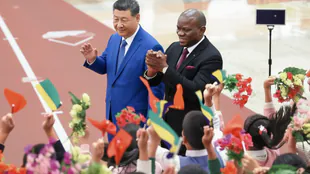 China and Gabon Upgrade Ties to 'Shared Future' Amid Strategic Pact

 عائلة مراهقة ترفع دعوى ضد جوجل لادعاء التقصير في حماية طالب من الانتحار عبر الذكاء الاصطناعي

 Microsoft Xbox App Update for PC Delivers 60% Faster Startup and Redesigned Interface

 بودكاست 'شتامبلايتس': تحليل أفضل تسديدة في الدوري الألماني

Nicaraguan President Daniel Ortega's "dictatorship" is doomed, exiled novelist Sergio Ramirez has told AFP, predicting the population will eventually rebel against the elderly ex-guerrilla.
Ortega, the 79-year-old who toppled a US-backed dictatorship in 1979 and then led the country for a decade, has shown increasingly authoritarian tendencies since returning to power in 2007.
He has seized control of all branches of government and shut down thousands of NGOs since major anti-government protests in 2018 which he branded a US-backed coup bid.
Ramirez, a hero of the 1970s Sandinista revolution that brought Ortega to power, is among hundreds of politicians, businesspeople, intellectuals, activists and religious figures who have been expelled from, or fled the central American country.
Many were stripped of their nationality.
The 82-year-old author of "Margarita, How Beautiful the Sea" and "Divine Punishment," who went into exile in Spain, is seen as his country's greatest living author.
In an interview in Guatemala where he was attending a literary festival, he said his homeland's seemingly "quiet, subdued, gagged" response to Ortega's repression belied a deeply rebellious streak.
"Nicaragua is a country that already shook off a dictatorship in the past (the brutal Somoza dynasty in 1979). And it tried to do so in 2018, which is why there was the great repression that left hundreds dead," he said.
"Deep down there is a libertarian spirit, a latent spirit of rebellion against any dictatorship. At some point, there will be a change," he said.
- 'Autocratic tendencies' -
Ramirez was part of a group of intellectuals, business people and clerics that supported the overthrow of the Somoza dictatorship.
He later served as vice-president under Ortega from 1985 to 1990.
But he broke away from the Sandinistas in 1995 in protest at what he called Ortega's "autocratic tendencies."
In 2021, he fled to Spain, shortly before he was accused by state prosecutors of trying to "destabilize" Nicaragua through his work and threatened with arrest.
The 2017 winner of the Miguel de Cervantes Prize, the most prestigious award for Spanish-language literature, hit out at Ortega's "isolationism."
Earlier this month, Nicaragua announced it was pulling out of UNESCO after the UN cultural agency bestowed its annual press prize on a venerable Nicaraguan newspaper whose staff were forced into exile.
Ortega has also pulled Nicaragua out of the UN Human Rights Council (UNHRC), the International Organization for Migration and the International Labour Organization over criticism of his human rights record.
Ramirez said that, even if he were allowed return to Nicaragua, he would find it "impossible to live" in a country where government critics run the risk of imprisonment, banishment or worse.
"The Nicaragua I would like to return does not exist at the moment," he said.
J.AbuHassan--SF-PST