
China swipes at 'bullying' US as it woos Latin American leaders / Photo: Pedro Pardo - AFP

 ChatGPT interactive interface feature tested across six custom tools

 Freshways milk-price cut deepens pressure on UK dairy farms
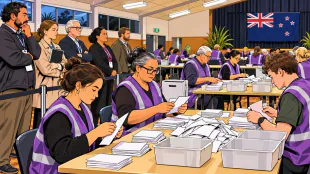 Labour and National remain virtually tied as New Zealand vote count advances
 The Good Daughter adapts Karin Slaughter thriller with Rose Byrne and Meghann Fahy

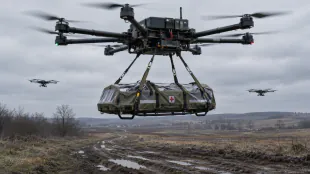 Heavy-lift drone evacuates wounded Ukrainian soldier from frontline kill zone

 Morrison says West Brom recovered after pressure from successive derby losses
 Britain considers 2027 state visit for Ukraine’s Zelensky

 China and Gabon Upgrade Ties to 'Shared Future' Amid Strategic Pact

 عائلة مراهقة ترفع دعوى ضد جوجل لادعاء التقصير في حماية طالب من الانتحار عبر الذكاء الاصطناعي
 Microsoft Xbox App Update for PC Delivers 60% Faster Startup and Redesigned Interface

 بودكاست 'شتامبلايتس': تحليل أفضل تسديدة في الدوري الألماني
China threw thinly-veiled swipes at the United States and cast itself as the defender of the multilateral order Tuesday at a summit attended by delegates from the Caribbean and Latin America, with which Beijing is seeking to deepen ties.
Promising billions in development credit and deeper cooperation in everything from energy to infrastructure, President Xi Jinping told the opening ceremony of the China-CELAC Forum in Beijing that "bullying and hegemony will only lead to self-isolation".
Beijing has stepped up economic and political cooperation with Latin American nations in recent years.
And Latin America has emerged as a key battleground in Donald Trump's confrontation with China, and the region is coming under pressure from Washington to choose a side.
Speaking a day after the United States and China announced a deal to drastically reduce tit-for-tat tariffs for 90 days, Xi cast Beijing as a defender of peace and stability.
"There are no winners in tariff wars or trade wars," Xi said.
"Only through unity and cooperation can countries safeguard global peace and stability and promote worldwide development and prosperity," he said.
The Chinese leader pledged $9.2 billion in credit towards "development" for the region -- part of a broad set of initiatives aimed at deepening cooperation, including on infrastructure and clean energy.
Beijing will also work with the region in counterterrorism and fighting transnational organised crime, Xi said, as well as enhancing exchanges such as scholarships and training programmes.
Under Monday's agreement, the United States agreed to lower its tariffs on Chinese goods to 30 percent while China will reduce its own to 10 percent.
The deal marked a major de-escalation of a gruelling trade war between the world's two largest economies which threw global markets into turmoil.
But tensions remain -- a 20 percent levy over Trump's complaints about Chinese exports of chemicals used to make fentanyl remains in force.
Beijing's foreign ministry angrily demanded on Tuesday that the US "stop smearing and shifting blame".
- 'Might makes right' -
Xi's top diplomat also echoed Beijing's swipes against Washington.
Speaking alongside Latin American counterparts, Wang Yi condemned a "major power" being "obsessed with the idea that might makes right".
He urged Latin American nations to "join hands" with China to defend their rights against a country that is "using tariffs as a weapon to bully other countries".
Among notable attendees at the forum is Brazilian President Luiz Inacio Lula da Silva, who arrived in Beijing on Saturday for a five-day state visit.
Addressing the delegates, Lula said his region did not "want to repeat history and start a new Cold War".
"Our goal is to be an asset to the multilateral order for a global good, and to be duly represented," he explained.
Also present is Colombian President Gustavo Petro, who called for "dialogue between civilisations" that took into account the interests of the region.
Petro has said he intends to sign an accord to join Beijing's Belt and Road Initiative during his visit.
Two-thirds of Latin American countries have already signed up to Beijing's trillion-dollar BRI infrastructure programme, and China has surpassed the US as the biggest trading partner of Brazil, Peru and Chile, among others.
Chilean President Gabriel Boric also told the forum that his country would take a "leap forward in economic relations with China".
I.Saadi--SF-PST