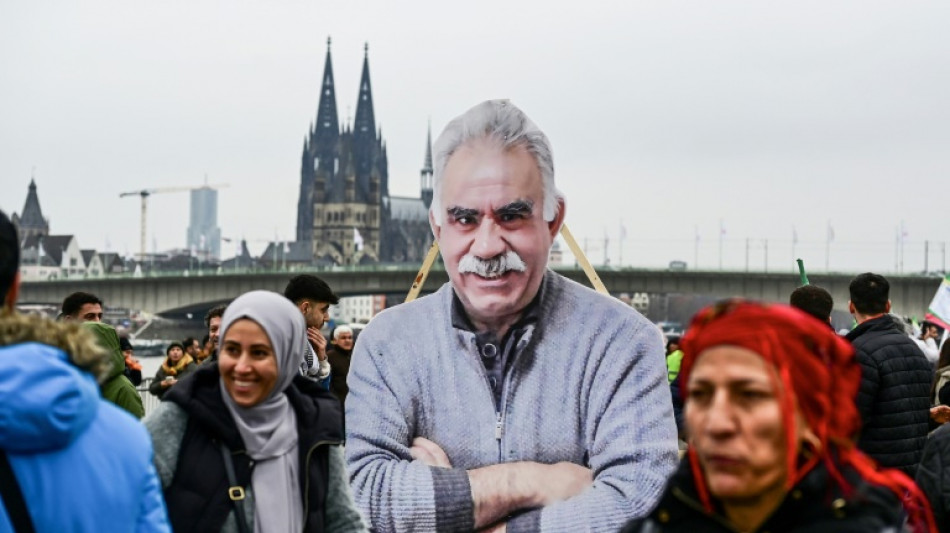
Ocalan: founder of the Kurdish militant PKK who authored its end / Photo: Ina FASSBENDER - AFP/File

 Djokovic wins five-hour epic to earn Sinner showdown at Wimbledon

 US strikes Iran after Hormuz tanker attacks: military

 Messi 'didn't want to go home' as Argentina comeback stuns Egypt
 Netflix strikes deals in short-form video push
 The height factor: how a small building survived Venezuela's quakes

 Egypt 'cheated' in controversial World Cup exit to Messi's Argentina, says Hassan
 Global AI industry falls short on safety, think tank warns

 'History made': Egyptian pride despite World Cup heartbreak
 How rescuers carried out 180-hour 'miracle' amid Venezuela's ruins
 Victorious Belgian footballers troll Trump with YMCA dance
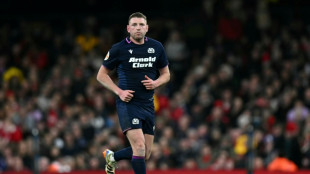 Scotland boss Townsend expects Russell will face Springboks
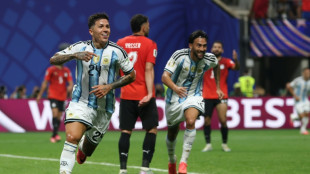
 Messi inspires Argentina great escape over Egypt
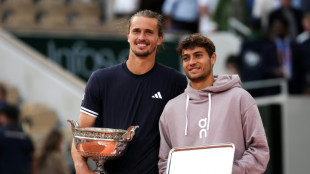 Zverev, Cobolli targeting rematch at Wimbledon
 Colombia president-elect accuses outgoing leader of 'coup' plotting
 IOC eases restrictions on Russians before 2028 LA Games as anthem, flag ban remains

 Muchova ends Osaka run to reach Wimbledon semis
 Mexico probing if US violated sovereignty in 2024 drug lord capture
 Zverev reaches first Wimbledon quarter-final
 Nordic joy as Traeen takes yellow, Pedersen wins Tour de France 4th stage
 Electric Our Lady land: guitar made from burned Notre Dame wood
 Tanker attacks send oil higher, stocks hit by AI jitters
 IOC shuffle 2030 Winter Games events and promise gender parity

 Macron says Syria must not be destabilised after bombs wound 18
 France's Le Pen to announce if running for president with ankle tag
 France get ready to face 'lost treasure' Bouaddi in Morocco World Cup clash
Abdullah Ocalan, the jailed founder of the militant Kurdistan Workers' Party (PKK), is an icon to many Kurds but a "terrorist" to many within wider Turkish society.
After a decades-long insurgency against the Turkish state that resulted in tens of thousands of deaths, the PKK said on Monday it was disbanding and ending its armed struggle.
The move came after Ocalan issued a historic call on February 27 for his fighters to lay down their arms in a major step towards ending the decades-long conflict.
Now 76, Ocalan has been held in solitary confinement since 1999 on Imrali prison island near Istanbul.
But since October, when Turkey tentatively moved to reset ties with the PKK, Ocalan has been visited several times by lawmakers from the pro-Kurdish opposition DEM party.
For many Turks, the PKK leader is public enemy number one.
He founded the group in 1978. Six years later, it began an insurgency demanding independence and later broader autonomy in Turkey's mostly Kurdish southeast.
A Marxist-inspired group, the PKK was blacklisted as a "terror" organisation by Ankara, Washington, Brussels and many other Western countries.
- An olive branch -
Attitudes began shifting in October when ultra-nationalist MHP leader Devlet Bahceli, a close ally of President Recep Tayyip Erdogan, offered Ocalan an olive branch if he would publicly renounce violence.
The next day, the former guerrilla, who embodies the decades-long Kurdish rebellion, received his first family visit in four years.
He sent back a message saying he alone could shift the Kurdish question "from an arena of conflict and violence to one of law and politics", later offering assurances he was "ready to... make the call".
Ankara's move came shortly before Syrian rebels overthrew ruler Bashar al-Assad, upending the regional balance of power and thrusting Turkey's complex relationship with the Kurds into the spotlight.
- From village life to militancy -
Ocalan was born on April 4, 1949, one of six siblings in a mixed Turkish-Kurdish peasant family in Omerli, a village in Turkey's southeast.
His mother tongue is Turkish.
He became a left-wing activist while studying politics at university in Ankara and was first jailed in 1972.
He set up the PKK six years later, then spent years on the run, launching the movement's armed struggle in 1984.
Taking refuge in Syria, he led the fight from there, causing friction between Damascus and Ankara.
Forced out in 1998, he moved from Russia to Italy to Greece in search of a haven, ending up at the Greek consulate in Kenya, where US agents got wind of his presence and tipped off Turkey.
He was arrested on February 15, 1999, after being lured into a vehicle in a Hollywood-style operation by Turkish security forces.
Sentenced to death, he escaped the gallows when Turkey started abolishing capital punishment in 2002, living out the rest of his days in isolation on Imrali prison island in the Sea of Marmara near Istanbul.
For many Kurds, he is a hero whom they refer to as "Apo" (uncle). But Turks often call him "bebek katili" (baby killer) for ruthless tactics that include the bombing of civilian targets.
- Jailed but still leading -
With Ocalan's arrest, Ankara thought it had decapitated the PKK.
But even from his cell he continued to lead, ordering a ceasefire that lasted from 1999 until 2004.
In 2005, he ordered followers to renounce the idea of an independent Kurdish state and campaign for autonomy in their respective countries.
Tentative moves to resolve Turkey's "Kurdish problem" began in 2008 and several years later Ocalan became involved in the first unofficial peace talks, when Erdogan was prime minister.
Led by then spy chief Hakan Fidan -- who is now foreign minister -- the talks raised Kurdish hopes for a solution with their future within Turkey's borders.
But the effort collapsed in July 2015, sparking one of the deadliest chapters in the conflict.
The government has defended its de facto silencing of Ocalan, saying he failed to convince the PKK of the need for peace.
Seen as the world's largest stateless people, Kurds were left without a country when the Ottoman Empire collapsed after World War I.
Although most live in Turkey, where they make up around a fifth of the population, the Kurds are also spread across Syria, Iraq and Iran.
Turkey's widescale use of combat drones has pushed most Kurdish fighters into northern Syria and Iraq, where Ankara has continued its raids.
Q.Najjar--SF-PST