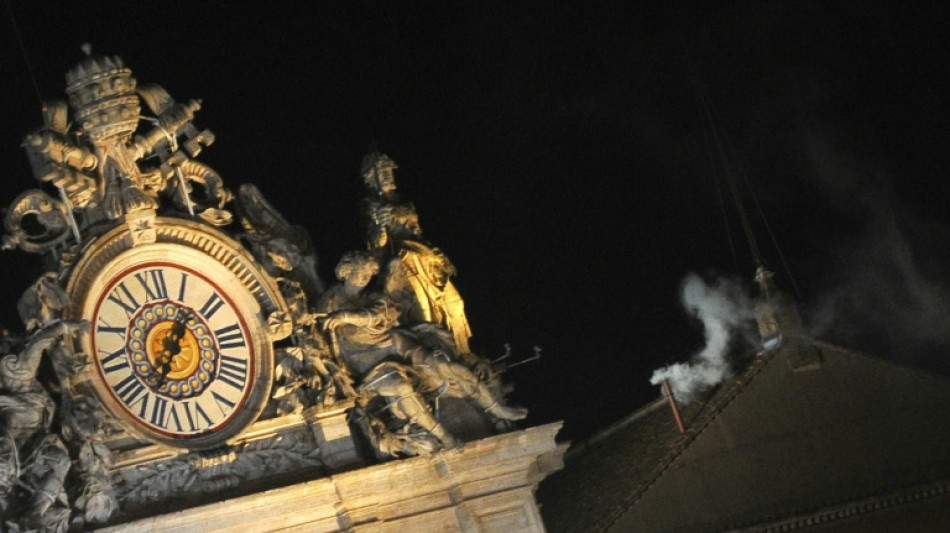
White smoke: signalling a new pope down the ages / Photo: Tiziana FABI, Tiziana FABI - AFP

 Ecuador's Death Canal: watery grave for victims of gang violence
 'Unique event': Solar eclipse fever fills empty Spain
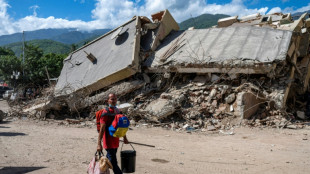 Venezuela says Caracas airport to reopen to commercial flights 'soon as possible'
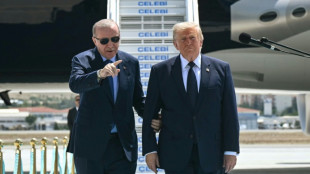
 World Cup: Eight teams remain in the hunt for glory

 'A nice surprise': Marathon man Djokovic revels in Wimbledon epic

 Switzerland beat Colombia on penalties to reach World Cup quarter-finals
 Djokovic survives Wimbledon's longest quarter-final to book Sinner blockbuster

 'Flunked': US soccer seeks answers as World Cup dream shattered
 Mbappe revels in captain's role for France at World Cup

 Iyer's India 'atrocious' in record 125-run T20 defeat by England
 Rain hands West Indies series win over Sri Lanka
 World Cup exit puts another nail in America's summer of fun

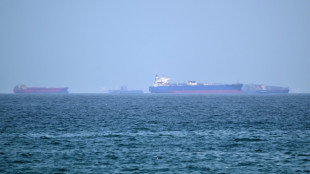 US revokes Iran oil waiver after Hormuz tanker attacks

 England quicks star as India suffer record 125-run T20 defeat

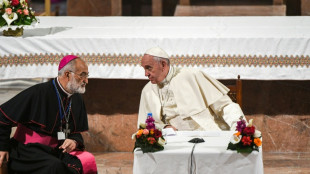 Cardinal tipped to be pope accused of molesting several women
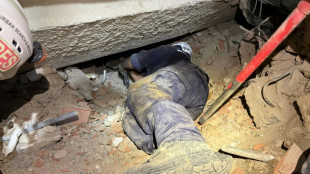
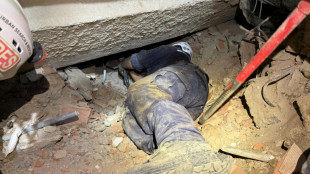 How rescuers carried out 180-hour 'miracle' amid Venzuela's ruins

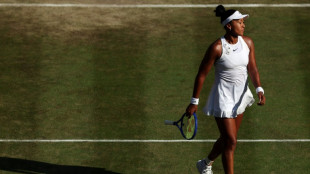 I can still win another Grand Slam, says Osaka after Wimbledon exit

 France's Le Pen says still running for president

 Argentina produce epic World Cup fightback to beat Egypt, reach quarters

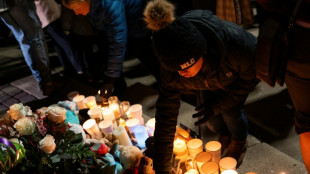 Canada province preparing lawsuit against OpenAI over school shooting

 Lidl-Trek celebrate 'perfect' day at Tour de France
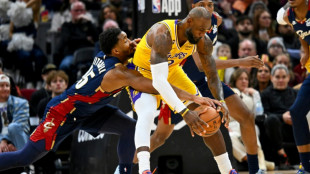 Cavs agree on Mitchell deal as LeBron watches: report

 Turkish delight: Trump revels in Erdogan's lavish welcome
 Nigeria's Dangote confirms Lamu, Kenya for east Africa mega-refinery
 Study points to likely route for Hannibal's legendary Alpine crossing

When Catholic cardinals vote in the conclave, they then burn their ballots, sending up black smoke to signal no decision or white smoke to show they have chosen a new pope.
The centuries-old tradition of using smoke has changed over time -- as has the technology used.
- Gunshot -
All conclaves bar one have taken place in Rome since the 15th century, and the tradition of burning the cardinals' paper ballots dates back to then.
It was initially an effort to prevent vote tampering but came over time to be used as a signal, although for centuries it merely meant the vote was not successful.
In the 1823 conclave in the Quirinale Palace -- then the papal residence -- it was agreed that the guard outside would fire blanks to announce the election of a pope, according to Javier Martinez-Brocal and Jose de Jesus Aguilar's book "Conclave: The Rules for Electing the Next Pope".
The first time white smoke was used to signal the election of a pope was at the 1914 conclave in the frescoed Sistine Chapel at the Vatican.
- Stoves, old and new -
The cast iron stove in which the cardinals burn their ballots was first used at the conclave of March 1939.
It is around one metre (3.2 feet) tall and the years and months of the conclaves in which it has been used are engraved on the cover.
There is a lower door for lighting it, with a manual valve for adjusting the draught, and an upper door to put in the documents for burning.
Since 2005, the Vatican has added a second, new stove, connected to a small flue which feeds into the same chimney. In it, chemicals are burned for several minutes to colour the smoke.
- Black or white -
Chemicals have been used to colour the smoke since 1958 but the newer stove -- used for the first time during the election of Benedict XVI -- has a fan and makes the smoke more visible.
A mix of potassium perchlorate, sulphur and anthracene -- found in coal tar -- is used to turn the smoke black, while potassium chlorate, lactose and pine rosin is used to make it white.
The newer stove is activated electronically but the Vatican says it has been tested and it is prepared for last-minute technical difficulties.
"One of our expert technicians, locked in the conclave, will remain for the entire duration of the voting in a small technical room near the Sistine Chapel with the stove's remote control," Silvio Screpanti, Vatican City's deputy director of infrastructure, said in an interview ahead of the conclave.
He or she will be "ready to intervene promptly if necessary, so that no unforeseen event hinders the famous and long-awaited white smoke", he told the Vatican City State website.
- Bells -
Since 2005, to rule out any ambiguity should the white smoke look grey, the bells of St Peter's Basilica also toll to tell the world the Church has a new pope.
G.AbuGhazaleh--SF-PST