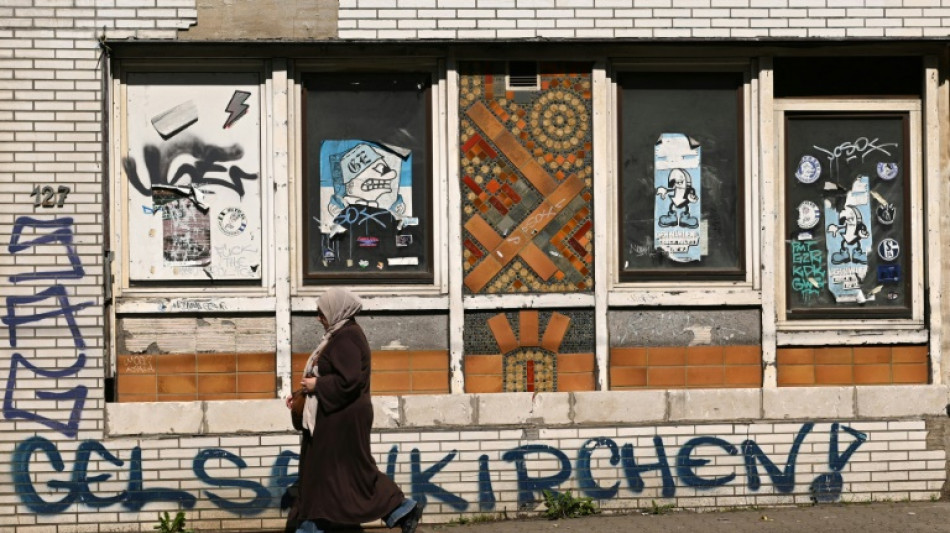
West German foothold of far-right AfD shows challenge for Merz / Photo: Ina FASSBENDER - AFP

 OpenAI to launch new model after US freeze
 UK museums at 'sharp end' of climate change challenge
 In Mauritania, Imraguen people's desert-ocean paradise under threat

 Iraq's holy cities host funeral processions for Khamenei
 Rescuers search for missing in China storms after 100,000 evacuated

 Ex-Australia cricketer MacGill loses appeal against cocaine conviction
 Oil prices extend rally as US strikes on Iran revive geopolitical fears
 Iraq's holy cities to host funeral processions for Khamenei
 In Venezuela's quake ruins, a baby is born

 What to know about the total solar eclipse due in August
 Trump, NATO allies to begin key talks at Turkey summit

 Former Real Madrid coach Arbeloa named Fulham manager

 Messi inspires Argentina great escape over Egypt, Swiss advance

 US strikes Iran after Hormuz attacks, Tehran threatens response

 Djokovic wins five-hour epic to earn Sinner showdown at Wimbledon

 US strikes Iran after Hormuz tanker attacks: military

 Messi 'didn't want to go home' as Argentina comeback stuns Egypt
 Netflix strikes deals in short-form video push
 The height factor: how a small building survived Venezuela's quakes

 Egypt 'cheated' in controversial World Cup exit to Messi's Argentina, says Hassan
 Global AI industry falls short on safety, think tank warns

 'History made': Egyptian pride despite World Cup heartbreak
 How rescuers carried out 180-hour 'miracle' amid Venezuela's ruins
 Victorious Belgian footballers troll Trump with YMCA dance

 Scotland boss Townsend expects Russell will face Springboks
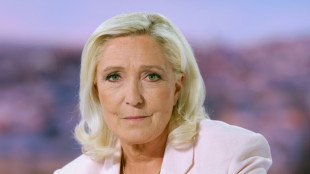
His grandfather came from Turkey decades ago to work in the coal mines of the western German town of Gelsenkirchen, but Mehmet, 28, says he understands the rise of the anti-immigration far-right AfD there.
Once a bastion of the centre-left Social Democrats (SPD) in Germany's industrial heartland, the town was a rare example of the Alternative for Germany (AFD) topping the vote outside its strongholds in the former East Germany.
Despite its designation as extremist by the country's intelligence services, the AfD's growing strength poses an immediate challenge to incoming conservative chancellor Friedrich Merz, who takes office on Tuesday.
In the doorway of the pizza delivery service where he works, Mehmet -- who asked that his real name not be used -- puts the AfD's popularity in Gelsenkirchen down to immigration.
Opposite his workplace is a building housing many recent migrants from Romania and Bulgaria, who Mehmet says typify the challenges in integrating new arrivals.
"The number of immigrants has gone up, there are people who don't speak German, who are very different culturally," he said.
"When you go out at night, you see very few Germans. In some places, it's better to not leave home after 8 pm," Mehmet added.
For Brigitte, 77, making her way through town with a walking frame, agreed that the town was not as secure as it used to be.
"I've had my purse stolen three times," she said, adding that she no longer felt safe going out in the evenings.
- 'Difficult to live together' -
Gelsenkirchen's former prosperity was built on the coal and steel industries, as in cities and towns across the Ruhr region.
But in contrast to many of its neighbours, Gelsenkirchen was not able to reinvent itself as heavy industry dwindled.
It now has Germany's highest unemployment rate, at 14.8 percent, almost three times the national average.
Half of all children are at risk of poverty, compared to one in five nationally.
Its population has fallen from 400,000 in the early 1960s to just 272,000 now, 75,000 of whom do not have German nationality.
When Germany lifted employment restrictions on Bulgarians and Romanians in 2014, many of those who moved to Gelsenkirchen ended up in cheap but neglected apartment buildings and struggled to find work.
"They don't have any chance of finding a job and so it becomes difficult for everyone to live together," said the town's SPD MP Markus Toens, who won direct election rather than the party list vote won by the AfD.
As EU citizens, Romanians and Bulgarians have the same rights to welfare support as Germans, and Toens would like to see the rules on this toughened at a national level.
- 'People are unhappy' -
The AfD, which won just over 20 percent of the vote nationwide and will be the biggest opposition party in the next parliament, has been quick to capitalise on people's frustrations.
Its lead candidate in municipal elections in September, Norbert Emmerich, is standing on a platform of "cleanliness, order and security".
"Our success is a reflection of the fact that people are unhappy," Emmerich told AFP.
The lead candidate from Merz's CDU, Laura Rosen, also said the town "hasn't been able to cope with integrating" recent immigrants.
Rosen, 32, remembers that when she was at school, "there were seven immigrant children out of 25. Now it's 24 (out of 25)."
The town has a long history of immigration, from Poles to Turks such as Mehmet's ancestors, and more recently refugees fleeing wars in Syria, Afghanistan and Ukraine.
The latest waves of immigration have coincided with a worsening in the job market.
"There are barely any good jobs left in Gelsenkirchen," said Darko Manojlovic, president of the works council at the BP refinery that employs 2,000 people in the area.
Even those jobs are now under threat, as the British energy giant says it plans to reduce its refining activities in Germany.
K.AbuTaha--SF-PST