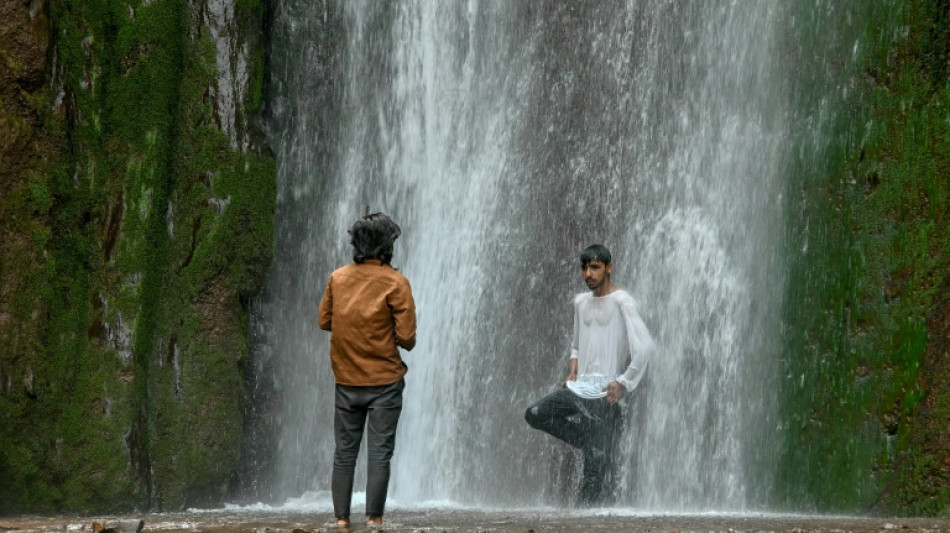
India-Pakistan tensions hit tourism in Kashmiri valley / Photo: Farooq NAEEM - AFP

 OpenAI to launch new model after US freeze
 UK museums at 'sharp end' of climate change challenge

 In Mauritania, Imraguen people's desert-ocean paradise under threat
 Iraq's holy cities host funeral processions for Khamenei

 Rescuers search for missing in China storms after 100,000 evacuated

 Ex-Australia cricketer MacGill loses appeal against cocaine conviction
 Oil prices extend rally as US strikes on Iran revive geopolitical fears

 Iraq's holy cities to host funeral processions for Khamenei
 In Venezuela's quake ruins, a baby is born

 What to know about the total solar eclipse due in August
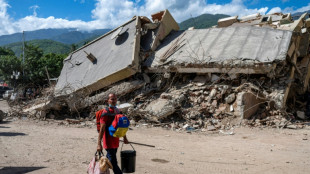
 Trump, NATO allies to begin key talks at Turkey summit

 Former Real Madrid coach Arbeloa named Fulham manager

 Messi inspires Argentina great escape over Egypt, Swiss advance

 US strikes Iran after Hormuz attacks, Tehran threatens response

 Djokovic wins five-hour epic to earn Sinner showdown at Wimbledon

 US strikes Iran after Hormuz tanker attacks: military

 Messi 'didn't want to go home' as Argentina comeback stuns Egypt
 Netflix strikes deals in short-form video push
 The height factor: how a small building survived Venezuela's quakes

 Egypt 'cheated' in controversial World Cup exit to Messi's Argentina, says Hassan
 Global AI industry falls short on safety, think tank warns

 'History made': Egyptian pride despite World Cup heartbreak

 How rescuers carried out 180-hour 'miracle' amid Venezuela's ruins

 Victorious Belgian footballers troll Trump with YMCA dance

 Scotland boss Townsend expects Russell will face Springboks

Hotels are empty and roads deserted at the start of what is normally peak tourist season amidst the towering peaks and lush valleys of Pakistan's Kashmir valley, as the threat of attack from India looms.
Tensions between the nuclear-armed arch-rivals have soared since India accused Pakistan of backing a shooting that killed 26 civilians on the Indian side of the disputed territory on April 22.
Indian Prime Minister Narendra Modi gave his military “full operational freedom” to respond while Islamabad earlier this week warned they had “credible intelligence” that India was planning imminent strikes.
High season in the cooler climes of the Neelum Valley, the tourist centre of Pakistan administered-Kashmir, begins in May as temperatures around the rest of the country rise.
"It's been a really bad start," said Muhammad Awais, a 22-year-old photographer at a popular picnic spot.
Tourism is the Neelum Valley's lifeline, drawing over 300,000 visitors each year from all over Pakistan, according to the district administration.
Much of the local population depends on roughly 350 guesthouses, which employ thousands of families.
"Our livelihoods depend on tourism, and without it, we suffer," Awais told AFP.
"The way things are unfolding is very slow, and it's affecting our work badly."
This week police and soldiers at army check points barred tourists from entering the valley, allowing only local residents through the checkpoint.
Tourists were instead told to return the main town of Muzaffarabad.
"It’s extremely disappointing that the government did not warn us or advise against visiting," said Saleem Uddin Siddique, who travelled from the capital Islamabad with his family.
"Our hopes are now dashed," the 69-year-old retired accountant said.
- 'We don't want war' -
Islamabad has denied any involvement in last month's attack at Pahalgam and the uneasy neighbours have issued a raft of tit-for-tat punitive diplomatic measures.
The two South Asian nations have exchanged gunfire for nine consecutive nights along the militarised Line of Control, the de-facto border, according to Indian defence sources.
On Saturday, Pakistan's military said it tested a surface-to-surface missile system with a range of 450 kilometres (280 miles) aimed at "ensuring the operational readiness of troops".
International pressure has been piled on both New Delhi and Islamabad to settle their differences through talks.
India and Pakistan, which both claim Muslim-majority Kashmir in full, have fought several wars over the Himalayan territory since the end of British rule in 1947.
On India's heavily fortified border, residents of farming villages along the Chenab river have sent families back from the frontier, recalling the terror of the last major conflict between the rival armies in 1999.
There has been an exodus of tourists on the Indian side of the border too since the attack which targeted Hindu men enjoying the open meadows with their families.
Indian authorities have heavily promoted the region as a holiday destination, both for skiing in winter and to escape the sweltering heat of the summer.
The regional government of Pakistan‑administered Kashmir has ordered religious schools to close and urged residents to stockpile food.
However, some tourists continued to arrive undeterred.
"We don't think the threat of possible war is serious," said Mudasar Maqsood, a 39‑year‑old factory worker from the eastern city of Kasur, over 630 kilometres away, who was blocked along with his friends from entering the valley.
"We should not disrupt our routine life," he added.
Raja Iftikhar Khan, the president of private tourism association, said the situation could become "extremely dire".
"This disruption has been devastating for all those tied to tourism," he said
"We don't want war -- no sensible businessperson ever does".
N.Shalabi--SF-PST