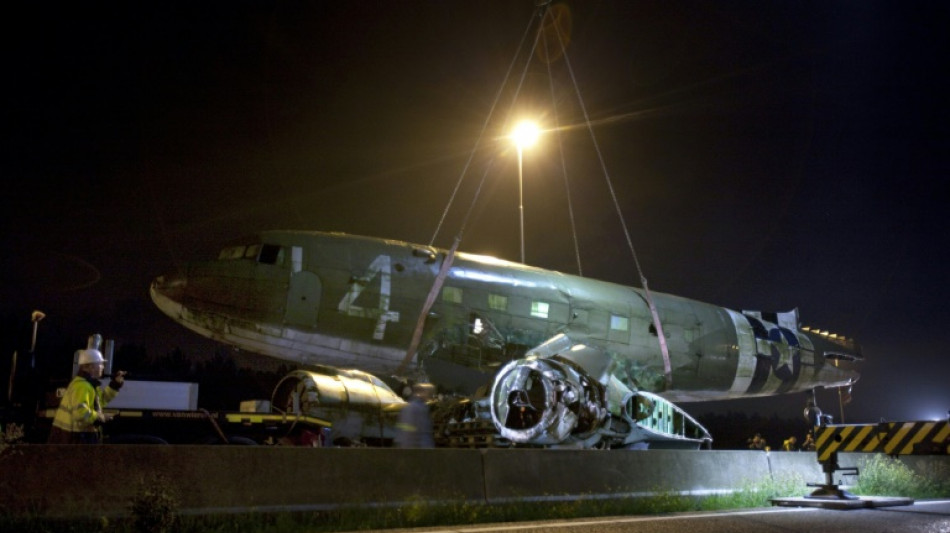
80 years on, Dutch WWII musical still 'incredibly relevant' / Photo: Cynthia Boll - ANP/AFP

 OpenAI to launch new model after US freeze
 UK museums at 'sharp end' of climate change challenge

 In Mauritania, Imraguen people's desert-ocean paradise under threat
 Iraq's holy cities host funeral processions for Khamenei

 Rescuers search for missing in China storms after 100,000 evacuated

 Ex-Australia cricketer MacGill loses appeal against cocaine conviction

 Oil prices extend rally as US strikes on Iran revive geopolitical fears

 Iraq's holy cities to host funeral processions for Khamenei

 In Venezuela's quake ruins, a baby is born

 What to know about the total solar eclipse due in August

 Trump, NATO allies to begin key talks at Turkey summit

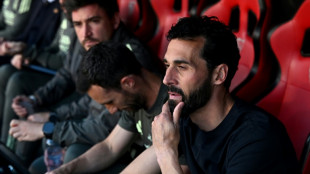 Former Real Madrid coach Arbeloa named Fulham manager
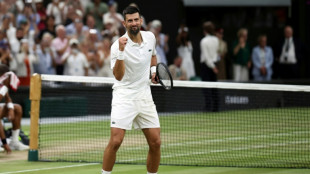
 Messi inspires Argentina great escape over Egypt, Swiss advance

 US strikes Iran after Hormuz attacks, Tehran threatens response
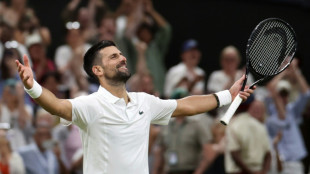
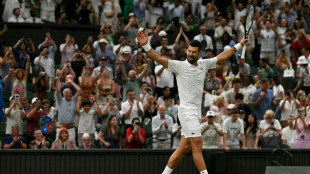 Djokovic wins five-hour epic to earn Sinner showdown at Wimbledon

 US strikes Iran after Hormuz tanker attacks: military

 Messi 'didn't want to go home' as Argentina comeback stuns Egypt

 Netflix strikes deals in short-form video push

 The height factor: how a small building survived Venezuela's quakes

 Egypt 'cheated' in controversial World Cup exit to Messi's Argentina, says Hassan

 Global AI industry falls short on safety, think tank warns

 'History made': Egyptian pride despite World Cup heartbreak
 How rescuers carried out 180-hour 'miracle' amid Venezuela's ruins

 Victorious Belgian footballers troll Trump with YMCA dance

 Scotland boss Townsend expects Russell will face Springboks

In a giant theatre in an aircraft hangar near the Dutch city of Leiden, a group of actors in Nazi uniforms marched a man onto stage, lined up and then shot him.
The character, a Dutch-Jewish student named Bram, tumbled bleeding down a makeshift dune as the audience gasped in horror and the gunshots faded away in a red mist.
This dramatic scene is one of many in the Netherlands' longest-running musical that deliver a message audiences and actors say is as relevant today -- 80 years after the end of World War II -- as it was back then.
"Especially now with all the tensions in the world and of course with Russia and Ukraine and everything that is going on in Gaza now, I think yes, even more than ever, that this performance is very important," leading actor Joep Paddenburg told AFP.
More than 3.7 million Dutch visitors -- a fifth of the country's entire population -- have seen "Soldaat van Oranje" (Soldier of Orange) since the show first hit the stage in 2010.
It has since grown into a cultural phenomenon and will soon also be adapted for international audiences, its producers said.
Based on a book by Erik Hazelhoff Roelfzema, one of the Netherlands' most famous war heroes, it tells his version of events following the Nazi invasion of May 10, 1940.
The musical starts with a group of Leiden University students including Hazelhoff, now played by Paddenburg, being suddenly confronted by the news that German troops have invaded.
"The war turns everything upside down," the official programme for the play explains.
"Everyone has to make their own choices. Will you fight for freedom and country? Will you do nothing? Or will you deliberately join the enemy?"
Some -- like Hazelhoff and his friends, including Bram, played by Eli ter Hart -- join the Dutch Resistance.
Others don blinkers and pretend the war does not exist.
A third group, however, become committed Nazis, not only collaborating but actively serving in the SS.
- 'Confronting' -
The latter include Hazelhoff's former friend Anton, who becomes a member of the Dutch SS and approves Bram's execution after his arrest.
The role of Dutch Queen Wilhelmina, who fled to exile in Britain, also features prominently. It shows her anguish as her small nation across the English Channel buckles under the Nazi jackboot.
Hazelhoff joins the queen, played by Sylvia Poorta, after a perilous journey across the Channel and becomes her trusted adjutant.
He smuggles radios to the Resistance and later joins the Royal Air Force.
The musical draws to a close at the end of the war, following Wilhelmina's return and the liberation of the Netherlands on May 5, 1945.
"The Netherlands was massively impacted by the Second World War," said Kevin Schoonderbeek, 39, the musical's resident director.
"Everybody has a story and that has filtered through the generations -- even up to today," he told AFP.
Schoonderbeek previously acted in the musical, playing the role of Anton.
About 10 years ago "my grandmother, who was a young girl during the war, came to see the play", he said.
"For her it was very confronting to see me in a Nazi uniform. She had a sort of a flashback to that time, remembering the sound of boots, uniforms, planes flying overhead," he said.
- 'Incredibly relevant' -
The war "was a major national trauma that should not be forgotten", wrote Bo Le Granse of Tilburg University in a Masters thesis on "Soldaat van Oranje".
The story "is a way to grasp the idea of the Second World War, not just for the older generations but for the younger ones as well" Le Granse said.
With chairs seated on a giant revolving tribune, the musical offers the audience a unique immersive experience, often referred to as "docutheatre".
Various stages are placed around the revolving seating disk, providing several unique sets that are used at different points in the three-hour long production consisting of 33 different scenes.
Brought to life by state-of-the-art electronics, the Nazi bombing of Rotterdam on May 14, 1940, for instance becomes eerily realistic.
But it is the scenes of human drama depicting the torture and fates of the resistance fighters that are the most realistic -- and poignant.
After the play, members of the audience said the lessons of war and freedom were as pertinent today as they were eight decades ago.
"This musical is still incredibly relevant. There is still war in different parts of the world," said Sofie Groen, 37, a therapist on holiday from Mainz in Germany.
"To me it's an incredible honour to play this role," added Paddenburg, who plays Hazelhoff.
"Freedom is something that we shouldn't just take for granted, especially these days," he said.
H.Nasr--SF-PST