Belgium's green light for red light workers / Photo: Simon Wohlfahrt - AFP

 Sunken wrecks, hot seas threaten fishermen on Italian isle

 Rescuers search for survivors of China storms as super typhoon nears

 Egypt file complaint against referee after controversial World Cup exit

 Apple loses challenge against EU digital competition rules

 Trump says Iran ceasefire 'is over'

 Rescuers search for missing in China storms after 100,000 flee

 OpenAI to launch new model after US freeze

 UK museums at 'sharp end' of climate change challenge
 In Mauritania, Imraguen people's desert-ocean paradise under threat
 Iraq's holy cities host funeral processions for Khamenei
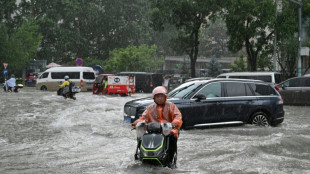 Rescuers search for missing in China storms after 100,000 evacuated

 Ex-Australia cricketer MacGill loses appeal against cocaine conviction

 Oil prices extend rally as US strikes on Iran revive geopolitical fears
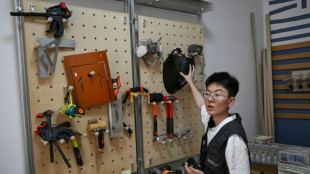
 Iraq's holy cities to host funeral processions for Khamenei
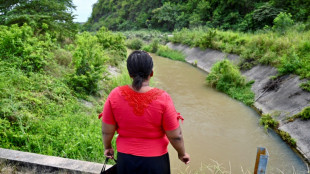
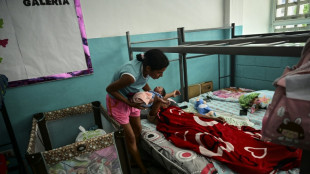 In Venezuela's quake ruins, a baby is born

 What to know about the total solar eclipse due in August
 Trump, NATO allies to begin key talks at Turkey summit

 Former Real Madrid coach Arbeloa named Fulham manager

 Messi inspires Argentina great escape over Egypt, Swiss advance

 US strikes Iran after Hormuz attacks, Tehran threatens response

 Djokovic wins five-hour epic to earn Sinner showdown at Wimbledon

 US strikes Iran after Hormuz tanker attacks: military

 Messi 'didn't want to go home' as Argentina comeback stuns Egypt

 Netflix strikes deals in short-form video push
 The height factor: how a small building survived Venezuela's quakes

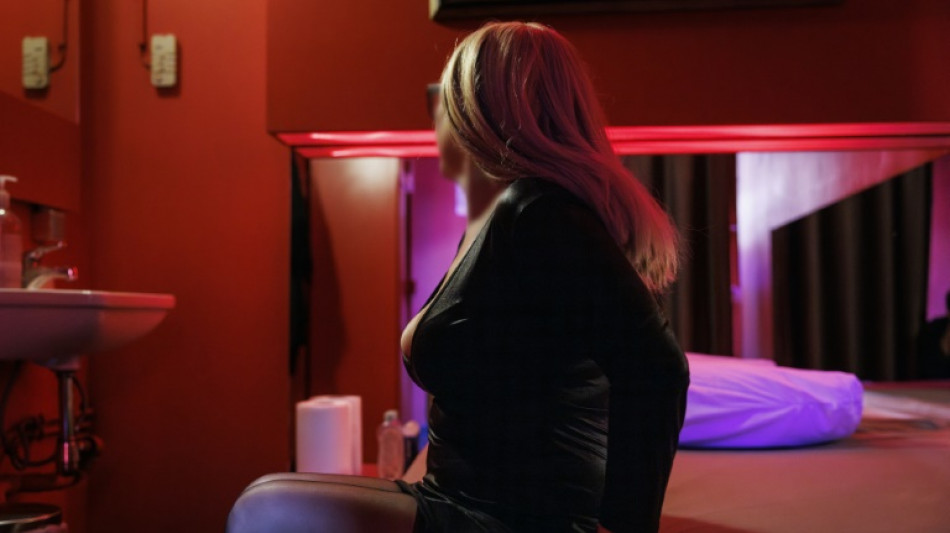
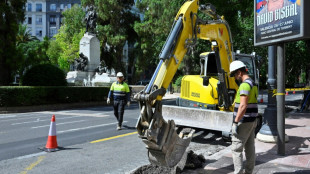
A police station in the historic sailors' quarter of the Belgian port of Antwerp is surrounded by sex workers' neon-lit red-light windows.
The station in the Villa Tinto complex is a symbol of the push to make sex work safer in Belgium, which boasts some of Europe's most liberal laws -- although there are still widespread abuses and exploitation.
Since December, Belgium's sex workers can access legal protections and labour rights, such as paid leave, like any other profession. They welcome the changes.
"I'm not a victim, I chose to work here and I like what I'm doing," said Kiana, 32, as she allowed AFP behind her window to see her workspace: a double bed bathed in a dim red light, with various types of chains and other sado-masochistic accessories.
Kiana, who did not wish to give her last name, left her native Romania at the age of 18 and first worked in Germany before arriving in Belgium. She rents one of the 51 display windows in Villa Tinto where she works five days a week.
"My mother knows what I'm doing. For the other members of my family I work in nails and tattoos," she said.
For "Mel", a sex worker and star on TikTok where she answers questions about her work, the law has allowed her to come out of the shadows.
"I was just tired of lying about what I do for a living, and pretending to be a hairdresser or a masseuse," she said.
Belgium decided in 2022 to reform its laws on sex work, including relaxing rules on advertising prostitution for individuals over 18.
"We, as sex workers, were seen by the state as a real job, and the views of people also changed" thanks to the law, the Antwerp resident known as Meliciousss said.
- Moving 'away from shame' -
Today, the law says an adult can advertise their own "sexual services" if they do so in a designated location, for example behind a window.
Third parties, such as bankers, website designers or property owners, are also no longer at risk of prosecution for involvement in the sex work industry.
But pimping is still illegal, as is child prostitution.
Described as "historic" by Belgium's Human Rights League, the law puts Belgium in a camp of countries who want to regularise sex work, like Germany and The Netherlands, against those don't including France and Sweden.
"Even if the stigma still exists, in a way we have moved away from shame," said Marianne Chargois, a sex worker and activist at Utsopi, an association defending sex workers' rights.
There are believed to be between 9,000 and 26,000 sex workers in Belgium, according to Utsopi, with women making up 90 percent. There are no official figures.
Despite the reforms, several organisations including those combating human trafficking warn of the largely "invisible" aspect of prostitution and the fact that most women carry out the activity under financial duress.
Many are forced to engage in prostitution because of addiction or traffickers, the groups warn.
The dangers persist.
Police in March dismantled a criminal network suspected of sexually exploiting some 30 Chinese women. Seven Chinese suspects were arrested.
- 'Free and independent' -
Many women are sent to Belgium without a residence permit to work in secret and are victims of blackmail, according to Charles-Eric Clesse, a Belgian legal expert.
"For prostitutes of African origin, in more than 90 percent of cases it is human trafficking," he told AFP.
The public debate has been reignited since the law entered into force in December allowing sex workers to sign employment contracts with an "approved" employer.
It offers more labour rights, like health insurance, than the more popular self-employed status.
But the reforms have not yet yielded much change.
The labour ministry has only received three applications for employment contracts, a spokesperson said. These are being reviewed by courts, which must verify the employers' resumes and any criminal records.
In the pro-abolition camp, the Isala association called for the law to be repealed, accusing it of encouraging pimping.
It said the law would give brothel owners greater powers to force women into dangerous situations.
The law has been challenged and will be debated by the Constitutional Court.
The owner of Villa Tinto rules out any employment contracts.
"The sex workers who work here, they're very free and independent. They work when they want. They choose their own clients. They take holiday when they want," Karin Vander Elst said.
"If we're going to give them a contract, it's very difficult to maintain that or to keep everybody happy."
A.Suleiman--SF-PST