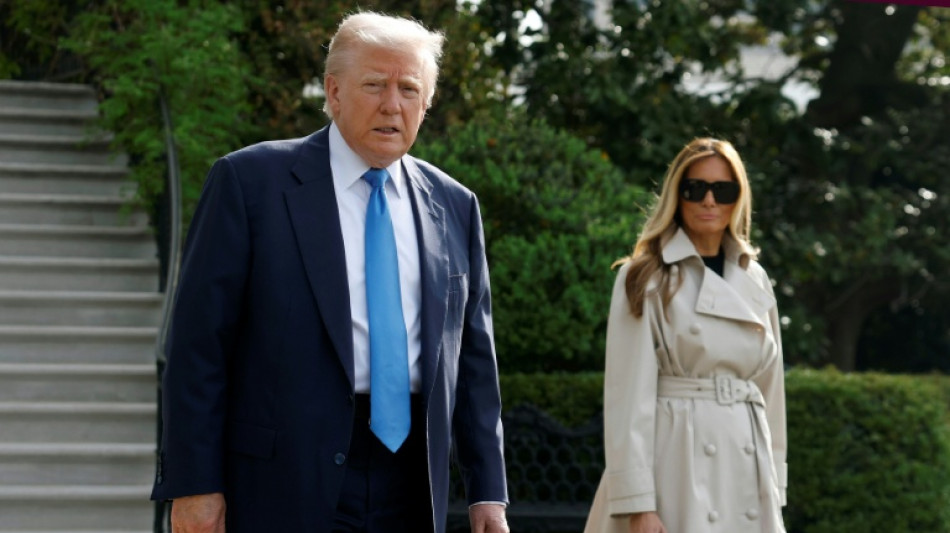
Congress passes 'revenge porn' ban, sending it to Trump / Photo: Kevin Dietsch - GETTY IMAGES NORTH AMERICA/AFP/File

 Oil prices surge, stocks slide as Trump says Iran ceasefire over

 Sunken wrecks, hot seas threaten fishermen on Italian isle

 Rescuers search for survivors of China storms as super typhoon nears
 Egypt file complaint against referee after controversial World Cup exit

 Apple loses challenge against EU digital competition rules

 Trump says Iran ceasefire 'is over'

 Rescuers search for missing in China storms after 100,000 flee

 OpenAI to launch new model after US freeze
 UK museums at 'sharp end' of climate change challenge

 In Mauritania, Imraguen people's desert-ocean paradise under threat

 Iraq's holy cities host funeral processions for Khamenei

 Rescuers search for missing in China storms after 100,000 evacuated
 Ex-Australia cricketer MacGill loses appeal against cocaine conviction

 Oil prices extend rally as US strikes on Iran revive geopolitical fears

 Iraq's holy cities to host funeral processions for Khamenei

 In Venezuela's quake ruins, a baby is born

 What to know about the total solar eclipse due in August

 Trump, NATO allies to begin key talks at Turkey summit

 Former Real Madrid coach Arbeloa named Fulham manager

 Messi inspires Argentina great escape over Egypt, Swiss advance

 US strikes Iran after Hormuz attacks, Tehran threatens response

 Djokovic wins five-hour epic to earn Sinner showdown at Wimbledon

 US strikes Iran after Hormuz tanker attacks: military

 Messi 'didn't want to go home' as Argentina comeback stuns Egypt

 Netflix strikes deals in short-form video push

The US House of Representatives voted almost unanimously Monday to make it a federal crime to post "revenge porn" -- whether it is real or AI-generated -- sending the bill to President Donald Trump's desk for approval.
The Take it Down Act passed in a 409-2 vote, and would criminalize the non-consensual publication of intimate images, while also mandating their removal from online platforms, Republican Speaker of the House Mike Johnson said.
In March, the president vowed to sign the bill into law during a joint session of Congress.
"I look forward to signing that bill into law. Thank you," Trump said. "And I'm going to use that bill for myself too if you don't mind, because nobody gets treated worse than I do online, nobody."
House approval of the bill follows its unanimous passage in the Senate in February, an advancement that Johnson called "a critical step in fighting" the growing online problem.
Deepfakes often rely on artificial intelligence and other tools to create realistic-looking fake videos. They can be used to create falsified pornographic images of real women, which are then published without their consent and proliferate.
First Lady Melania Trump endorsed the bill in early March and said in a statement Monday that the bipartisan passage "is a powerful statement that we stand united in protecting the dignity, privacy, and safety of our children."
Some US states, including California and Florida, have already passed laws criminalizing the publication of sexually explicit deepfakes.
Critics voiced concern that the Congress bill grants authorities increased censorship power.
The Electronic Frontiers Foundation, a nonprofit focused on free expression, posted a statement Monday saying the new legislation gave "the powerful a dangerous new route to manipulate platforms into removing lawful speech that they simply don't like."
"President Trump himself has said that he would use the law to censor his critics," they added.
C.Hamad--SF-PST