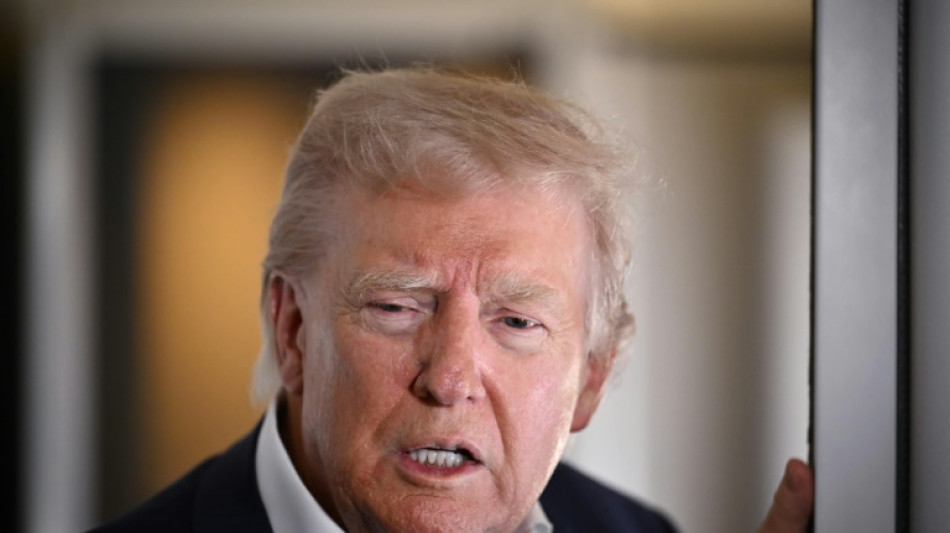
US anti-disinformation guardrails fall in Trump's first 100 days / Photo: MANDEL NGAN - AFP/File

 Oil prices surge, stocks slide as Trump says Iran ceasefire over

 Sunken wrecks, hot seas threaten fishermen on Italian isle

 Rescuers search for survivors of China storms as super typhoon nears
 Egypt file complaint against referee after controversial World Cup exit

 Apple loses challenge against EU digital competition rules

 Trump says Iran ceasefire 'is over'

 Rescuers search for missing in China storms after 100,000 flee

 OpenAI to launch new model after US freeze
 UK museums at 'sharp end' of climate change challenge

 In Mauritania, Imraguen people's desert-ocean paradise under threat
 Iraq's holy cities host funeral processions for Khamenei
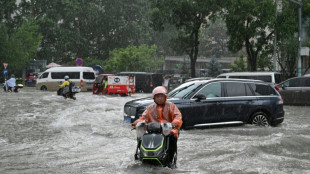 Rescuers search for missing in China storms after 100,000 evacuated
 Ex-Australia cricketer MacGill loses appeal against cocaine conviction

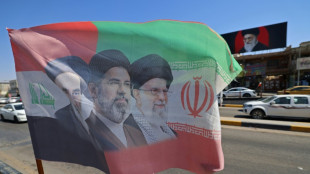 Oil prices extend rally as US strikes on Iran revive geopolitical fears

 Iraq's holy cities to host funeral processions for Khamenei

 In Venezuela's quake ruins, a baby is born

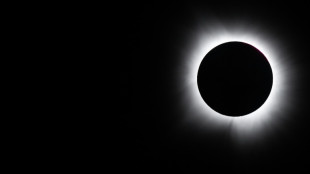 What to know about the total solar eclipse due in August

 Trump, NATO allies to begin key talks at Turkey summit

 Former Real Madrid coach Arbeloa named Fulham manager
 Messi inspires Argentina great escape over Egypt, Swiss advance

 US strikes Iran after Hormuz attacks, Tehran threatens response
 Djokovic wins five-hour epic to earn Sinner showdown at Wimbledon

 US strikes Iran after Hormuz tanker attacks: military

 Messi 'didn't want to go home' as Argentina comeback stuns Egypt

 Netflix strikes deals in short-form video push
From slashed federal funding for disinformation research to the closure of a key agency combating foreign influence operations, the United States has dismantled vital guardrails against falsehoods within President Donald Trump's first 100 days in office.
The moves could have national security implications, experts warn, granting US adversaries such as Russia and China more freedom to sow disinformation as geopolitical rivalries intensify.
Combined with social media platforms scaling back content moderation -- and Meta's suspension of third-party fact-checking in the United States -- these developments have left researchers concerned that it may become even harder for the public to separate fact from fiction.
The National Science Foundation recently cancelled hundreds of research grants that it said were "not aligned" with the agency's priorities, including projects focused on diversity, equity, and inclusion (DEI) as well as misinformation and disinformation.
Elon Musk's Department of Government Efficiency (DOGE), charged with cutting government spending, praised the NSF's "great work" in cancelling 402 "wasteful" DEI grants -- a move the agency said saved $233 million.
"Shocking that understanding how people are misled by false information is now a forbidden topic," said Lisa Fazio, an associate professor of psychology at Vanderbilt University, confirming that her NSF grant to examine "how false beliefs form (and) how to correct them" had been cancelled.
"Our work will continue but at a smaller scale," she wrote on the platform Bluesky.
Several of the terminated grants were focused on health misinformation as well as artificial intelligence and deepfake detection on tech platforms, researchers said, at a time when scams fueled by cheap and widely available AI tools are rapidly proliferating.
- 'Censorship' -
"Research on how technology impacts society is critical to holding powerful tech platforms accountable," said Becca Branum, a deputy director at the nonprofit Center for Democracy & Technology (CDT).
"Shielding companies from criticism by defunding research is censorship that should trouble all of us."
The cuts came just days after Secretary of State Marco Rubio shut down the State Department's Counter Foreign Information Manipulation and Interference (R/FIMI) hub, which tracked and countered disinformation from foreign actors.
"By shutting down the office, Rubio has opened the American information space to the likes of Russia, China, and Iran," said Benjamin Shultz, lead researcher at the American Sunlight Project, an anti-disinformation watchdog in Washington.
In a report this month, the anti-disinformation firm Alethea said it had uncovered a Russian network seeking to sow mistrust in US defense and military programs.
The targets of the network, linked to a Russian influence operation known as "Portal Kombat," included the US giant Lockheed Martin and the F-35 fighter jet program.
The R/FIMI was previously known as the Global Engagement Center (GEC), and once had dozens of employees operating with a budget of around $60 million.
Rubio justified its closure, saying in a statement that it was the responsibility of government officials to "preserve and protect the freedom for Americans to exercise their free speech."
- 'Truth and facts' -
The GEC, established in 2016, had long faced scrutiny from Republican lawmakers, who accused it of censoring and surveilling Americans.
Its closing leaves the State Department without a dedicated office for tracking and countering disinformation from US rivals for the first time in over eight years.
The move comes as Rubio unveiled wider plans to restructure the State Department, cutting positions and shuttering specialized programs.
The Trump administration is also targeting officials who had been examining foreign interference in US elections.
The administration has reassigned several dozen officials working on the issue at the FBI and forced out others at the Department of Homeland Security's Cybersecurity and Infrastructure Security Agency (CISA), reports said.
"As we approach 100 days of Trump 2.0, it's harder than ever to believe that American politics -- and society writ large -- have reached a place where truth and facts are optional," said Shultz.
T.Ibrahim--SF-PST