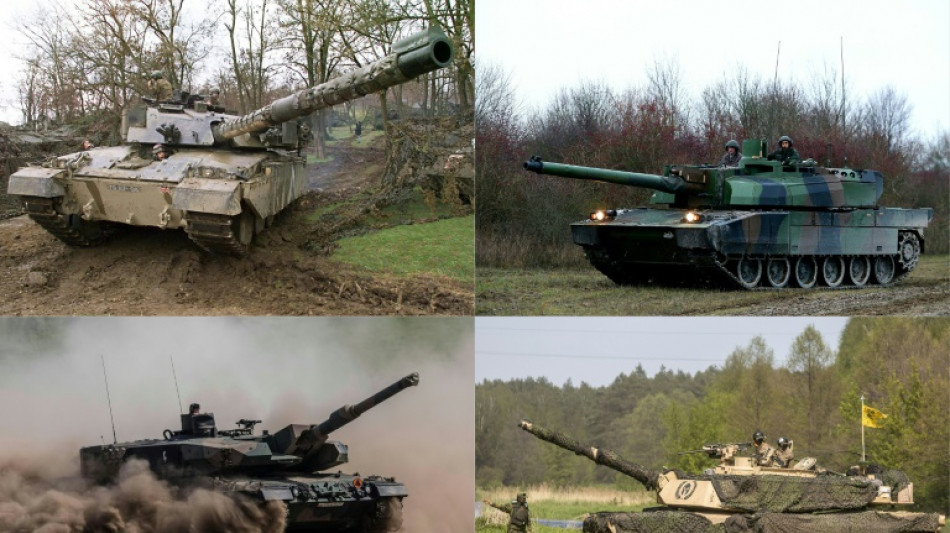
Conflicts spur 'unprecedented' rise in military spending / Photo: Eric Feferberg, FRANCOIS NASCIMBENI, Wojtek RADWANSKI - AFP/File

 Oil prices surge, stocks slide as Trump says Iran ceasefire over

 Sunken wrecks, hot seas threaten fishermen on Italian isle

 Rescuers search for survivors of China storms as super typhoon nears
 Egypt file complaint against referee after controversial World Cup exit
 Apple loses challenge against EU digital competition rules
 Trump says Iran ceasefire 'is over'

 Rescuers search for missing in China storms after 100,000 flee

 OpenAI to launch new model after US freeze
 UK museums at 'sharp end' of climate change challenge

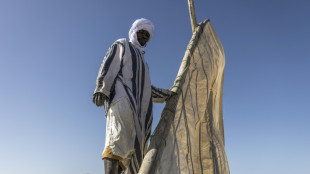 In Mauritania, Imraguen people's desert-ocean paradise under threat

 Iraq's holy cities host funeral processions for Khamenei

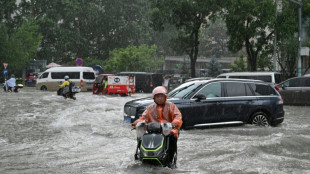 Rescuers search for missing in China storms after 100,000 evacuated
 Ex-Australia cricketer MacGill loses appeal against cocaine conviction

 Oil prices extend rally as US strikes on Iran revive geopolitical fears

 Iraq's holy cities to host funeral processions for Khamenei

 In Venezuela's quake ruins, a baby is born

 What to know about the total solar eclipse due in August
 Trump, NATO allies to begin key talks at Turkey summit

 Former Real Madrid coach Arbeloa named Fulham manager
 Messi inspires Argentina great escape over Egypt, Swiss advance

 US strikes Iran after Hormuz attacks, Tehran threatens response
 Djokovic wins five-hour epic to earn Sinner showdown at Wimbledon

 US strikes Iran after Hormuz tanker attacks: military

 Messi 'didn't want to go home' as Argentina comeback stuns Egypt
 Netflix strikes deals in short-form video push
Worldwide military expenditure saw its steepest rise in 2024 since the end of the Cold War, reaching $2.7 trillion as wars and rising tensions drove up spending, researchers said Monday.
Military spending rose worldwide with particularly large increases in Europe and the Middle East, according to a new report by the Stockholm International Peace Research Institute (SIPRI).
Several European countries had seen "unprecedented" rises in their military spending, the report noted.
In real terms, spending rose by 9.4 percent globally compared to 2023, with 2024 marking the 10th year of consecutive spending increases.
"This was really unprecedented," Xiao Liang, a researcher with the SIPRI Military Expenditure and Arms Production Programme, told AFP.
"It was the highest year-on-year increase since the end of the Cold War."
While there may have been steeper increases during the Cold War, data for the Soviet Union is not available, Liang added.
More than 100 countries, including all of the 15 largest spenders, increased their military budgets last year, said the report.
- Profound impact -
"This really speaks to the heightened geopolitical tensions," Liang said. The spending increase was likely to have "a very profound socio-economic and political impact", he added.
"Countries have to make trade-offs in their budgetary decisions," he said.
"For example, we've seen many European countries cutting other spending like international aid to fund the increase in military spending, and... trying to raise taxes or rely on loans or debt to fund the spending," Liang said.
The main contributor to the rise in expenditure was the European region including Russia, where spending rose by 17 percent to $693 billion.
All European countries, except Malta, expanded their budgets, "pushing European military spending beyond the level recorded at the end of the Cold War," SIPRI said.
Russia's military expenditure reached $149 billion in 2024: a 38-percent increase on the previous year and a doubling since 2015.
Ukraine's military spending grew by 2.9 percent to reach $64.7 billion.
While that sum only corresponds to 43 percent of Russia's arms spending, for Ukraine it is the equivalent of 34 percent of its GDP. That means it is carrying the highest military burden of any country.
- Germany rearming -
Germany's spending increased by 28 percent, reaching $88.5 billion, overtaking India as the fourth largest in the world.
"Germany became the biggest spender in Central and Western Europe for the first time since its reunification," Liang noted.
The world's largest spender, the United States, increased expenditure by 5.7 percent, reaching $997 billion. That alone accounts for 37 percent of worldwide spending and 66 percent of the military spending among NATO countries.
Total military spending by the 32 members of the US-led alliance rose to 1.5 trillion as all members increased their spending.
"We've seen in 2024 that 18 out of the 32 NATO countries reached the two-percent GDP spending target, which is the highest since the founding of the alliance," Liang said.
While some of the increases have been a result of European military aid to Ukraine, it has also been fuelled by concerns of potential US disengagement with the alliance.
"There has really been a shift in European defence policies, where we will see large-scale procurement plans into the arms industry in the years to come," Liang explained.
Military budgets also drastically grew in the Middle East to an estimated $243 billion, an increase of 15 percent from 2023.
As Israel continued its offensive in Gaza, its military expenditure surged by 65 percent to $46.5 billion in 2024. SIPRI noted that this represented "the steepest annual increase since the Six-Day War in 1967".
In contrast, Iran's fell by 10 percent to $7.9 billion in 2024, "despite its involvement in regional conflicts and its support for regional proxies", the report added.
"The impact of sanctions on Iran severely limited its capacity to increase spending," said SIPRI.
The world's second-largest spender, China, increased its military budget by 7.0 percent to an estimated $314 billion, "marking three decades of consecutive growth".
China -- which has been investing in modernising its military and expansion of cyberwarfare capabilities and nuclear arsenal -- accounted for half of all military spending in Asia and Oceania.
L.AbuTayeh--SF-PST