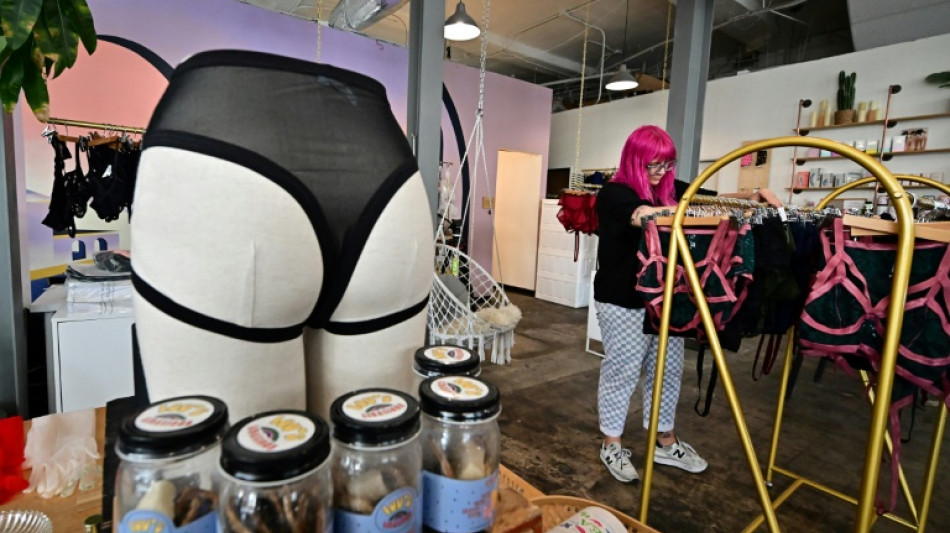
'Made in America' lingerie squeezed by Trump's tariffs / Photo: Frederic J. BROWN - AFP

 Hong Kong's Robert Wun: the bold Millennial conquering Haute Couture

 IMF cuts 2026 world growth forecast, flags risks from new Mideast fighting

 Kostyuk sets up Wimbledon semi-final against Noskova

 Noskova reaches first Wimbledon semi-final

 Air Canada taps new CEO to replace chief who couldn't speak French

 Istanbul mayor ejected from court in corruption case

 Landslide kills eight at refugee school in Bangladesh

 Cleary leads NSW past Queensland to regain State of Origin crown

 MEXC Adds Nine Ondo Tokenized Stock and ETF Trading Pairs Tied to AI Infrastructure Demand

 Oil prices surge, stocks slide as Trump says Iran ceasefire over
 Sunken wrecks, hot seas threaten fishermen on Italian isle

 Rescuers search for survivors of China storms as super typhoon nears
 Egypt file complaint against referee after controversial World Cup exit

 Apple loses challenge against EU digital competition rules

 Trump says Iran ceasefire 'is over'

 Rescuers search for missing in China storms after 100,000 flee

 OpenAI to launch new model after US freeze

 UK museums at 'sharp end' of climate change challenge

 In Mauritania, Imraguen people's desert-ocean paradise under threat

 Iraq's holy cities host funeral processions for Khamenei

 Rescuers search for missing in China storms after 100,000 evacuated

 Ex-Australia cricketer MacGill loses appeal against cocaine conviction

 Oil prices extend rally as US strikes on Iran revive geopolitical fears
 Iraq's holy cities to host funeral processions for Khamenei

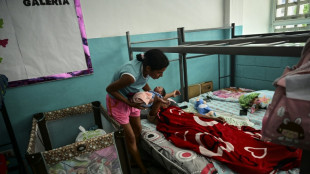 In Venezuela's quake ruins, a baby is born

After years spent working in sweatshops in California, Francisco Tzul got a job at a trendy lingerie brand that prides itself on ethical business practices and a "Made in America" approach.
But the 60-year-old immigrant from Guatemala now fears being laid off over President Donald Trump's sweeping tariffs on US trading partners.
Trump acknowledges his tariffs will cause Americans some pain initially, but believes that in the long run they will help bring industrial production back to the United States.
But for the Cantiq brand, which makes lingerie in Los Angeles from fabrics often sourced from Asia, the additional tariffs mean higher production costs and potential layoffs.
The tariffs "will harm the economy, not only for the owners, but the workers as well," Tzul, who has been employed at Cantiq for five years, told AFP on a recent afternoon.
- 'Everybody's going to get hurt'
Chelsea Hughes, 35, founded Cantiq 10 years ago as an "ethical" company that would employ people from her local community, pay them proper wages and maintain decent working conditions.
But with Trump's tariffs, she said, all that could go out the window.
"Now they're just going to make it even more difficult for me to keep jobs for people that are here, and keep all of my production here," Hughes told AFP from her boutique in the trendy Echo Park neighborhood.
Marketed as lingerie for all body types and styles, the brand' most popular item is a racy $35 brief that can be worn by women and men alike.
It's made out of three different fabrics: two sourced from China, and one from Taiwan.
With imports from China now subject to an additional 145 percent tariff, Hughes estimates that the price tag on the briefs may jump to $42, making it unaffordable to many customers.
"I think it doesn't matter big or small, I think everybody's going to get hurt by this, it's just a question of how hard," she sighed.
- 'Reduce my workforce' -
Buying fabric in the United States would be prohibitively expensive, Hughes said.
"We have an amazing variety of incredible garment workers, don't get me wrong, but when it comes to producing stretch fabrics like lace, like mesh, no one does it here as cost effective as they do overseas."
And it's not just her profits -- her commitment to supporting local employment is also being called into question with the tariffs.
"My whole point was that I wanted to... create jobs in an ethical way, and now they're making it impossible for me to do that," Hughes said. "I need programs that support me financially, otherwise I'll have to reduce my workforce, which is contrary to what they say they want to do."
In Cantiq's sewing workshop located behind the boutique, Tzul has nothing left but to hope that the tariffs would eventually be rescinded or reduced.
Tzul said he came to the United States from Guatemala two decades ago because his government, like in many others across Latin America, ruined local economies with their policies.
"That's one of the reasons that millions of us had to leave our countries, because the decisions that governments made, instead of helping the people, they just destroy the economies," he said.
"And we don't want that to happen in America," he said.
C.AbuSway--SF-PST