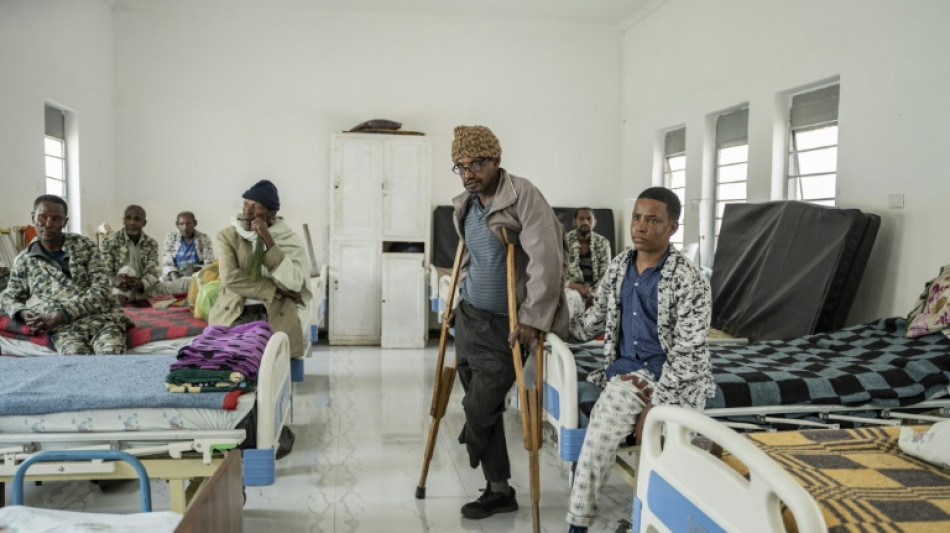
Patients with leprosy face lasting stigma in Ethiopia / Photo: Amanuel Sileshi - AFP

 Hong Kong's Robert Wun: the bold Millennial conquering Haute Couture

 IMF cuts 2026 world growth forecast, flags risks from new Mideast fighting

 Kostyuk sets up Wimbledon semi-final against Noskova

 Noskova reaches first Wimbledon semi-final

 Air Canada taps new CEO to replace chief who couldn't speak French
 Istanbul mayor ejected from court in corruption case
 Landslide kills eight at refugee school in Bangladesh

 Cleary leads NSW past Queensland to regain State of Origin crown

 MEXC Adds Nine Ondo Tokenized Stock and ETF Trading Pairs Tied to AI Infrastructure Demand

 Oil prices surge, stocks slide as Trump says Iran ceasefire over
 Sunken wrecks, hot seas threaten fishermen on Italian isle

 Rescuers search for survivors of China storms as super typhoon nears

 Egypt file complaint against referee after controversial World Cup exit

 Apple loses challenge against EU digital competition rules

 Trump says Iran ceasefire 'is over'

 Rescuers search for missing in China storms after 100,000 flee

 OpenAI to launch new model after US freeze

 UK museums at 'sharp end' of climate change challenge

 In Mauritania, Imraguen people's desert-ocean paradise under threat
 Iraq's holy cities host funeral processions for Khamenei
 Rescuers search for missing in China storms after 100,000 evacuated

 Ex-Australia cricketer MacGill loses appeal against cocaine conviction
 Oil prices extend rally as US strikes on Iran revive geopolitical fears
 Iraq's holy cities to host funeral processions for Khamenei
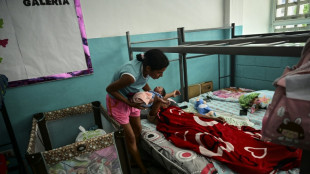 In Venezuela's quake ruins, a baby is born

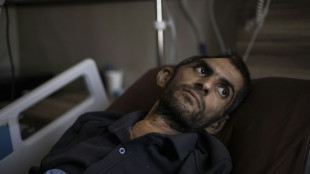
Tilahun Wale not only lost his right foot to leprosy -- a disease that still affects thousands in Ethiopia -- he also lost his family.
"My family abandoned me. They blocked my number and refused to speak to me," said Tilahun, 46, a farmer in Ethiopia's populous Oromia region, who contracted leprosy around 10 years ago.
Ethiopia, a country of some 130 million people in northeastern Africa, officially eliminated leprosy as a public health problem in 1999, after case numbers dropped below one in 10,000.
But some 2,500 infections are still recorded there each year, according to the United Nations World Health Organization (WHO), which lists leprosy as one of the 20 "neglected" tropical diseases.
In Ethiopia, a highly religious country, leprosy is often perceived as a divine punishment.
Caused by the bacteria Mycobacterium leprae, the contagious infection attacks the skin and peripheral nerves, with potentially serious after-effects, including physical deformities.
The disease was declared eliminated as a health problem globally in 2000, according to the WHO.
But leprosy is still present in more than 120 countries worldwide, with nearly 200,000 cases reported each year, despite being curable and with treatments that can prevent disability if applied early.
Haile Kairos developed the disease as a child.
"I noticed the appearance of lumps on certain parts of my body," said the 35-year-old, hiding the effects of leprosy on his legs with a blanket.
There is still a stigma, he said, recalling the disgust and avoidance he has faced.
Ethiopian society "doesn't have enough information about the disease", he said.
The Alert Hospital in the capital Addis Ababa specialises in leprosy and treats dozens of patients at a time.
It was originally founded as a leper colony in 1934 away from residential areas, but the city has expanded to surround it.
- 'Stigma has diminished' -
Perceptions of the disease are only slowly evolving, said Solomon Getahun, project manager at International Leprosy Mission, an NGO that provides medical assistance to patients and raises awareness.
It organises discussions in communities across Ethiopia, bringing together people with the disease to explain the challenges they face.
The NGO also offers microcredit to patients, most of whom struggle to find employment.
Atale Mekuriyaw, 70, works at a centre where a dozen people with the disease, mostly women, make rugs, traditional clothing and jewellery.
The modest salary "helps us provide for our families", she said.
For every kilo of raw cotton she weaves, she earns between 100 and 150 birr (around 75 cents to $1.15).
"Coming here and spending time like this is important to us. It's better than staying at home," added Atale, who has suffered from leprosy since childhood and says she feels less discriminated against today.
"In the past, people used to say: 'Don't go near her!' But today, thanks to access to medication, the stigma has diminished," she said.
The WHO has praised Ethiopia's progress in treatment and care.
But the recent drastic cuts in aid announced by the United States and other Western countries could undermine the efforts.
The WHO said last month it was cutting its budget by a fifth after the United States -- previously its biggest source of funds -- said it would no longer contribute.
That is a potential problem for Alert Hospital, where preventative medicines have been supplied by the WHO.
Shimelis Gezahegn, the hospital's director, said the Ethiopian authorities had promised "a backup plan".
He added that it was vital they step in to continue work on treatment and eventual eradication of the disease.
But "there could be some problems," he said.
O.Mousa--SF-PST