
Taxes on super rich and tech giants stall under Trump / Photo: SAUL LOEB - AFP/File

 South African election results renew debate over identity-based voting

 South African voters report smoother local election but declining IEC trust

 Dolly Parton museum and Nashville hotel open after singer’s death

 George and Amal Clooney attend New York political-comedy reading

 British buyers pay substantial premiums for period-home appearance

 Thomas Markle released to house arrest after child-abuse-image charge

 Dawn of War 4 developers chose Adeptus Mechanicus for tactical variety

 Italy face unbeaten South Africa in Turin Nations Championship match

 ChatGPT interactive interface feature tested across six custom tools

 Freshways milk-price cut deepens pressure on UK dairy farms

 Labour and National remain virtually tied as New Zealand vote count advances
 The Good Daughter adapts Karin Slaughter thriller with Rose Byrne and Meghann Fahy

 Heavy-lift drone evacuates wounded Ukrainian soldier from frontline kill zone

 Morrison says West Brom recovered after pressure from successive derby losses

 Britain considers 2027 state visit for Ukraine’s Zelensky

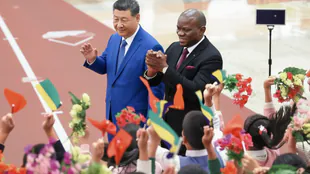 China and Gabon Upgrade Ties to 'Shared Future' Amid Strategic Pact

 عائلة مراهقة ترفع دعوى ضد جوجل لادعاء التقصير في حماية طالب من الانتحار عبر الذكاء الاصطناعي
Global tax plans targeting billionaires and multinational companies are running aground, with the United States torpedoing reforms under President Donald Trump.
The billionaire real estate tycoon has pulled the United States out of an international deal on taxing multinationals and threatened tariffs on countries that target US tech giants.
Here is a look at the state of play:
- Big tech taxes -
Countries have accused Amazon, Microsoft, Google owner Alphabet and Facebook's parent company Meta of sidestepping local taxes.
Trump issued a warning on February 21 to countries that would hit big tech and other US companies with fines or taxes that are "discriminatory, disproportionate" or designed to transfer funds to local companies.
"My administration will act, imposing tariffs and taking such other responsive actions necessary to mitigate the harm to the United States," he said in the memo.
The move reopens a rift between Washington and its allies over taxing digital services.
During his first term, Trump threatened to slap tariffs on US imports of champagne and French cheese after France rolled out a digital services tax in 2019.
Seven other countries have followed France's lead since then.
The tax generated 780 million euros ($887 million) for the French government last year.
Now the European Union is threatening to impose a tax on digital services if negotiations fail over Trump's plans to impose 20 percent tariffs on EU goods.
Britain, which is hoping to strike a trade deal with the United States, may reconsider its own digital levy, which currently brings in £800 million annually.
British Trade Secretary Jonathan Reynolds has said the digital tax is not "something that can never change or we can never have a conversation about".
- Global corporate tax -
Nearly 140 countries struck a deal in 2021 to tax multinational companies, an agreement negotiated under the auspices of the Organisation for Economic Co-operation and Development.
The OECD agreement has two "pillars".
The first provides for the taxation of companies in countries where they make their profits, a move aimed at limiting tax evasion. It primarily targets tech giants.
Pillar two, which sets a minimum global rate of 15 percent, has been adopted by around 60 economies, including Brazil, Britain, Canada, the EU, Switzerland and Japan.
Daniel Bunn, head of the Tax Foundation, a US non-profit think-tank, said negotiations on implementation of the first pillar "have been stalled for some time", even under Joe Biden's presidency.
Franco-American economist Gabriel Zucman told AFP that the EU's reaction in the coming weeks "will be crucial".
"If the EU and other countries give up and allow American multinationals to exempt themselves, it will unfortunately spell the end of this very important agreement," he said.
- Tax the rich -
Efforts to tax the world's ultra-wealthy are also stalling.
Brazil used its time as chair of the G20 to push for a plan to impose a two percent minimum tax on the net worth of individuals with more than $1 billion in assets, a project estimated to raise as much as $250 billion per year.
The Biden administration baulked at the plan and it is unlikely to get any traction with Trump -- a billionaire himself and proponent of tax cuts -- at the White House.
Almost a third of the world's billionaires are from the United States -- more than China, India and Germany combined, according to Forbes magazine.
At a recent conference in Paris, French economist Thomas Piketty said the world cannot wait for the G20 to all agree.
"We need individual countries to act as soon as they can," he said.
"History suggests that once you have a couple of countries who adopt a certain kind of reform, in particular powerful countries, it becomes sort of a new standard."
T.Khatib--SF-PST