
Russia scraps Taliban's 'terror' label amid warming ties / Photo: - - Taliban Deputy Prime Minister for Economic Affairs Office/AFP

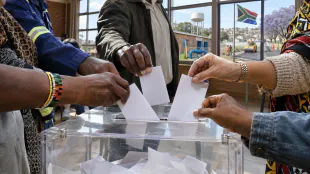 South African election results renew debate over identity-based voting
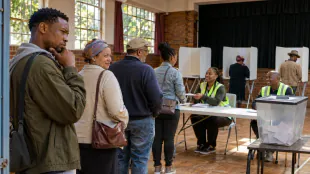 South African voters report smoother local election but declining IEC trust

 Dolly Parton museum and Nashville hotel open after singer’s death

 George and Amal Clooney attend New York political-comedy reading
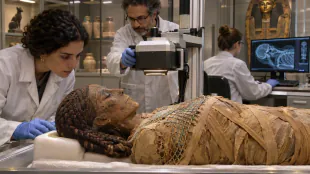
 British buyers pay substantial premiums for period-home appearance
 Thomas Markle released to house arrest after child-abuse-image charge
 Dawn of War 4 developers chose Adeptus Mechanicus for tactical variety
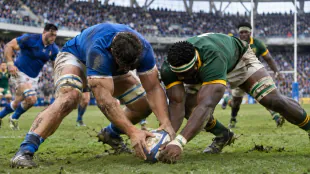 Italy face unbeaten South Africa in Turin Nations Championship match

 ChatGPT interactive interface feature tested across six custom tools

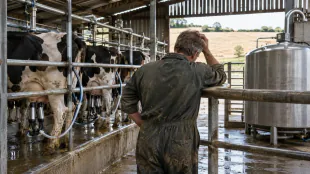 Freshways milk-price cut deepens pressure on UK dairy farms
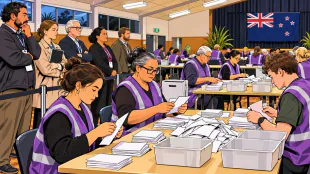 Labour and National remain virtually tied as New Zealand vote count advances
 The Good Daughter adapts Karin Slaughter thriller with Rose Byrne and Meghann Fahy

 Heavy-lift drone evacuates wounded Ukrainian soldier from frontline kill zone
 Morrison says West Brom recovered after pressure from successive derby losses
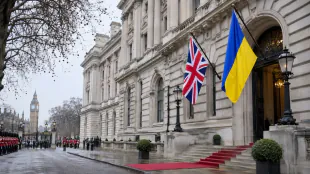 Britain considers 2027 state visit for Ukraine’s Zelensky
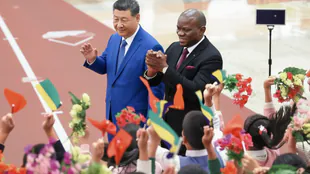 China and Gabon Upgrade Ties to 'Shared Future' Amid Strategic Pact
Russia's Supreme Court on Thursday removed the Taliban's designation as a "terrorist organisation", a symbolic gesture aimed at building friendly ties with Afghanistan's de facto rulers.
The Islamist group seized power in Afghanistan in August 2021, when American forces supporting the country's internationally recognised government pulled out.
Moscow, which called the US withdrawal a "failure", has taken steps to normalise relations with the Taliban authorities since then, seeing them as a potential economic partner and ally in fighting terrorism.
"The previously established ban on the activities of the Taliban -- included on the unified federal list of organisations recognised as terrorist -- has been suspended," Supreme Court Judge Oleg Nefedov said in a ruling, according to the TASS state news agency.
"The decision enters into legal force immediately," he added.
Russia's Prosecutor General asked the court to remove the group's "terrorist" designation last month, following several trips to Russia by top Taliban officials.
A Taliban delegation attended Russia's flagship economic forum in Saint Petersburg in 2022 and in 2024, and the group's top diplomat met Russian Foreign Minister Sergei Lavrov in Moscow last October.
The decision to suspend the label does not amount to formal recognition for the Taliban authorities, which are seeking international legitimacy.
But it helps avoid embarrassment for Russian officials meeting representatives from the militant group at high-profile events.
- Shifting attitudes -
Moscow's attitude toward the Taliban has shifted drastically over the last two decades.
The group was formed in 1994 during the Afghan Civil War, largely by former Mujahideen fighters who battled the Soviet Union during the 1980s.
The Soviet-Afghan war, which left thousands of young Soviet men dead and wounded, resulted in a stinging defeat for Moscow that hastened the demise of the USSR.
Moscow put the Taliban on its terrorist blacklist in 2003 over its support for separatists in the North Caucasus.
But the Taliban's return to power in 2021 has forced Russia and other countries in the region to change tack as they compete for influence.
Russia was the first country to open a business representative office in Kabul after the Taliban takeover, and has announced plans to use Afghanistan as a transit hub for gas heading to Southeast Asia.
In July 2024, Russian President Vladimir Putin called the Taliban "allies in the fight against terrorism".
Both Russia and the Taliban authorities have been trying to eradicate Islamic State-Khorasan (IS-K), an Islamist group responsible for deadly attacks in both Afghanistan and Russia, including an attack on a Moscow concert hall in March 2024 that killed 145.
Other countries have also sought to foster ties with the Taliban authorities, though no state has yet moved to officially recognise them.
Kazakhstan announced last year that it had removed the Taliban from its list of "terrorist organisations".
In 2023, China became the first country to appoint a new ambassador to Kabul and has forged growing economic links with its new rulers.
S.Barghouti--SF-PST