Ecuador votes in razor-close presidential runoff / Photo: Luis ACOSTA - AFP

 IoT Refrigerator Hacks Disrupt Blood Labs and Supermarkets Across Europe and US
 Post-election pressures complicate US and Israeli decisions on Iran
 UN members approve talks on treaty protocol against environmental crime

 Family-run West Sussex beach café prepares for first winter season

 CT scans reveal health and burial clues from Egypt’s Braided Lady mummy

 Oxford faces complaints over lecturer’s classroom attire

 Kyren Wilson and John Higgins reach International Championship snooker final

 New Zealand and Tonga meet for place in Rugby League World Cup final

 Reports of unsafe AI-toy responses renew calls for child-safety rules

 Juneau food network combines difficult supply routes with deep sharing traditions

 India climbs green-transition ranking after first emissions decline in 25 years
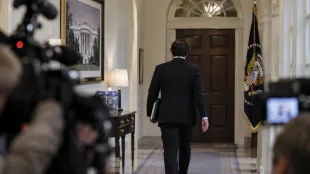 Trump names Stephen Miller as White House chief of staff after midterm losses

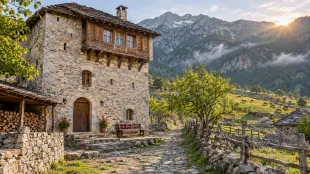 Restored Albanian tower houses anchor new rural tourism trail

 Sonia Gandhi reflects on family tragedy and reluctant political career

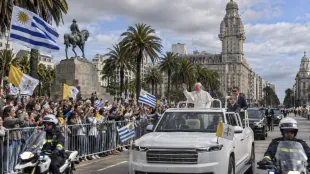 Pope Leo begins three-country South American tour in Uruguay

 Khawaja says entire Australia camp knew of 2018 ball-tampering plan
Ecuadorans vote Sunday in a too-close-to-call presidential election pitting the incumbent, security hawk Daniel Noboa, against a charismatic leftist challenger.
The 37-year-old president narrowly won February's first round, but not by enough to avoid another duel against a resurgent Luisa Gonzalez, who is bidding to become Ecuador's first woman president.
The election has been dominated by anger over cartel violence that has transformed Ecuador from one of the safest countries in Latin America to the most deadly.
On the eve of the vote, Noboa declared a 60-day state of emergency in the capital Quito and several provinces, underscoring the tense state of affairs.
This once-peaceful Andean nation averaged a killing every hour at the start of the year, as cartels vied for control over cocaine routes that pass through Ecuador's ports.
Noboa, the guitar-strumming son of a billionaire banana magnate, has staked his political fortunes on "iron fist" security policies and snuffing out the gangs.
He has deployed military to the streets, captured drug capos and invited the United States to send special forces.
He frequently dons a bulletproof vest to lead audacious security raids.
In stark contrast, 47-year-old single mother Gonzalez has pitched herself as a political everywoman, born to a humble family and transfixed with improving the lot of poor Ecuadorans.
She may have a growing constituency. Rampant bloodshed has spooked investors and tourists alike, fueling economic malaise and swelling the ranks of Ecuador's poor to 28 percent of the population.
"We hope that this Sunday, at last things will get better, that they leave us to work in peace and that calm returns," 61-year cafeteria manager Marcelo Salgado told AFP.
- 'Born with a problem' -
Polls have the race in a statistical tie. But Ecuador faces two very different paths depending on which candidate wins.
A Noboa win would likely see him double down on hardline security policies and nurturing a budding bromance with US President Donald Trump.
If Gonzalez wins, it would signal a sharp shift to the left and a likely cooling of Ecuador's relations with the United States.
Gonzalez is closely allied with ex-president Rafael Correa, who delighted in lobbing barbs at Washington during his decade in office.
He now lives in exile in Belgium, avoiding a corruption conviction he claims is politically motivated. He remains a deeply polarizing figure in his homeland.
In February's first round of voting less than a percentage point, or 17,000 votes, separated Noboa and Gonzalez.
On Sunday, with more than a dozen also-ran candidates shorn from the ballot, hundreds of thousands of votes are up for grabs.
Gonzalez has the backing of powerful indigenous leader Leonidas Iza, who won half a million votes in the first round. But it is unclear if his voters will remain united.
About 13.7 million Ecuadorans are obliged to vote, with ballots being cast between 7 am and 5 pm (1200 and 2200 GMT).
Both candidates on Thursday held final campaign events in Guayaquil, the country's largest city, economic capital and the epicenter of drug violence.
Gonzalez made a late play for women voters, proposing low-interest loans of up to $40,000 for single mothers.
During Noboa's time in power, she said, "violence, poverty and unemployment has hit us women hardest."
Noboa presented himself as an outsider and the candidate of change.
"The country does not deserve to be mistreated by the same old politicians," he said, targeting his rival's ties with former president Correa.
Some analysts fear a tight result could spark claims of fraud and lead to a government with a weak mandate.
"If the difference is very small, the government will be born with a problem: It has almost half the country against it, and that weighs heavily, making it more difficult to govern," said Simon Pachano of the social sciences institute FLASCO.
B.Mahmoud--SF-PST