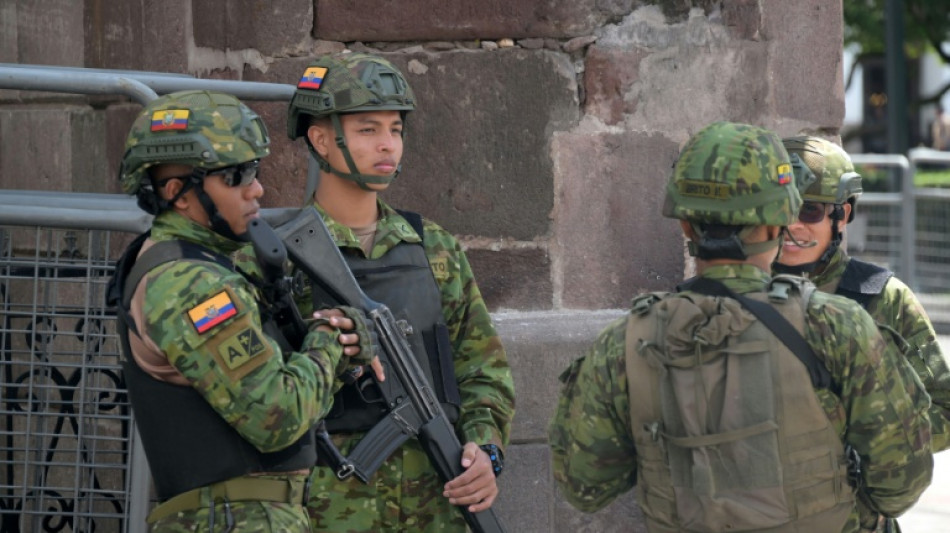
From Freddy Kruegers to Peaky Blinders: a look at Ecuador's drug gangs / Photo: Rodrigo BUENDIA - AFP

 US, Iran trade new strikes in fight over Hormuz strait

 Modi eyes 'historic' chance to secure Australian uranium
 US crackdown on top AI fuels open-source surge

 EU moves closer to kicking kids off social media
 Protecting the protectors: racing to save Philippine mangroves
 Expanded World Cup; same old story as Europe dominates quarter-finals

 Morocco's Saibari out of France World Cup quarter-final

 Trump orders new strikes on Iran over attacks on shipping in Hormuz
 PSG's Lee set to join Atletico Madrid
 Iran plays with fire, but calculates Trump will hold back
 Oil surges, stocks slide as Trump says Iran ceasefire over
 Meta to build $9 billion data center in western Canada

 Rogers backs Kane to outshine Haaland in World Cup showdown
 Some US Fed officials considered June rate hike on war fallout

 UN launches appeal for nearly $300 mn in Venezuela quake relief
 US to remove Syria from terror blacklist, in new boost to Sharaa
 Court rejects Trump request to restore his name to Kennedy Center

 MLB pitching great Verlander to retire after 2026 season

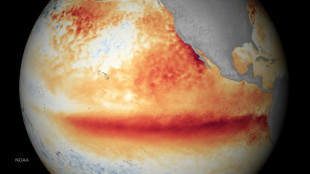 Artificial cloud brightening could tame El Nino, but with risks: study

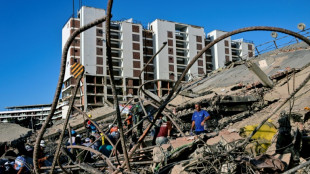 Shocked and shaken, Venezuela quake survivors get psychological help
 France, Morocco kick off blockbuster World Cup quarter-finals

 Amorim hails 'ambitious' AC Milan, promises to learn Italian

 Cancer survivor Traeen takes the long road to Tour yellow
 Easing Russian Olympic restrictions 'terrible', says Wimbledon star Kostyuk
 'Unbelievable' Kooij wins Tour de France 5th stage in chaotic sprint finish
Ecuadorans go to the polls on Sunday under the shadow of surging drug violence and a troubling explosion in the number of local gangs and mafias.
A flood of cocaine from Colombia and Peru through Ecuadoran ports has drawn a who's who of mafias from Albania to Italy to Mexico to this once-safe Andean nation.
But it has also created a plethora of homegrown groups with striking names and ferocious reputations.
"Los Freddy Kruegers" cause nightmares in the streets, "The Ugly Women's Headquarters" run jails and "The Peaky Blinders" try to rule the waves of a key coastal zone.
Together they and numerous other groups terrorise citizens through campaigns of extortion, kidnap and murder.
In January and February, Ecuador recorded more than one death every hour, according to figures from the Interior Ministry.
The mafias "have been gaining space; it is complex to combat them," admits Guayaquil's police commander, Pablo Davila.
The situation has put security at the center of Sunday's presidential runoff between incumbent Daniel Noboa and leftist candidate Luisa Gonzalez.
One merchant remembers the day a bomb exploded in her restaurant in Guayaquil, the economic and crime capital of the country.
"They said they were from the mafia. They demanded $15,000 not to kill us," the woman, who asked not to be named for her safety, told AFP.
Many local gangs have teamed up with much larger cartels from Mexico and Colombia, as well as Albanian and Italian mafias.
But the local gangs have also fractured and proliferated as they look for their own ever-bigger piece of the pie.
"The war is over territory. There aren't known leaders like before. Everyone wants their independence," said the head of one gang on condition of anonymity.
The situation is causing serious headaches for Ecuadoran security services, who must now gather intelligence and act against an ever-changing panoply of actors.
Security expert Carla Alvarez compares the situation to the chaos of 1990s Colombia.
"We see an association of small, less rigid groups. This already happened in Colombia in the 1990s after the death of Pablo Escobar," she said.
In Ecuador, hierarchies began to break in 2018 when one of the largest organizations split.
The death of "Choneros" leader Jorge Luis Zambrano in 2020 left a power vacuum.
The impact is now felt even in relatively safe Quito, once a haven from drug violence, but increasingly on the front lines.
There, restaurant employee Marianela receives threats and extortion via WhatsApp. "I block them," she said.
But there is no ignoring the violence on the streets of her Martha Bucaram neighborhood.
Police and military regularly appear, hunting for weapons and drugs. "There were about two dead here on the corner," she said, recalling a recent shootout.
Carolina Andrade, a municipal security secretary, admits that without the security presence of hard-hit Guayaquil, the capital is seen as "a safe space to come and hide."
As new alliances and actors emerge, there may be worse to come.
Multiple smaller gangs are now trying to join "larger organizations to have greater presence, legitimacy, and territorial control," Andrade said.
J.Saleh--SF-PST