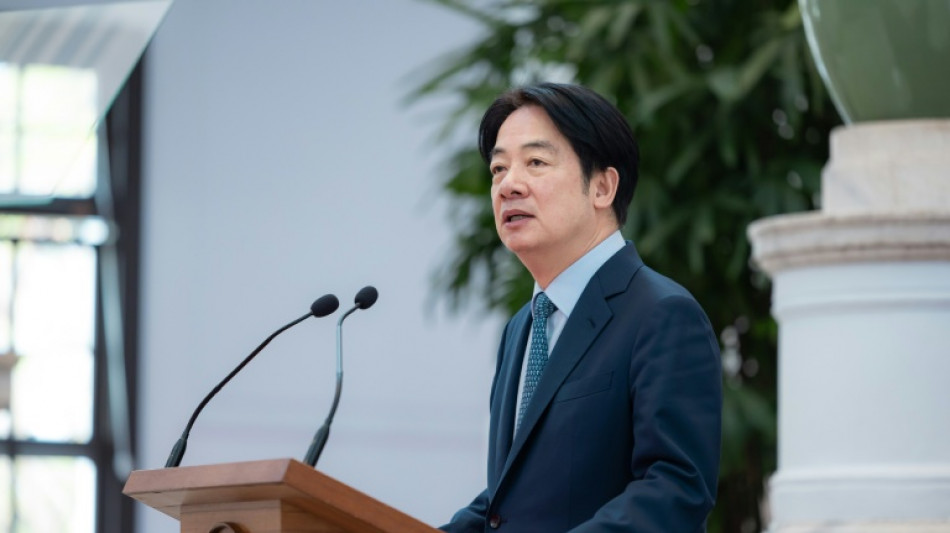
Taiwan exporters count the cost of Trump's 'ridiculous' tariffs / Photo: Handout - TAIWAN PRESIDENTIAL OFFICE/AFP

 US, Iran trade new strikes in fight over Hormuz strait

 Modi eyes 'historic' chance to secure Australian uranium
 US crackdown on top AI fuels open-source surge
 EU moves closer to kicking kids off social media
 Protecting the protectors: racing to save Philippine mangroves
 Expanded World Cup; same old story as Europe dominates quarter-finals

 Morocco's Saibari out of France World Cup quarter-final

 Trump orders new strikes on Iran over attacks on shipping in Hormuz

 PSG's Lee set to join Atletico Madrid
 Iran plays with fire, but calculates Trump will hold back

 Oil surges, stocks slide as Trump says Iran ceasefire over

 Meta to build $9 billion data center in western Canada

 Rogers backs Kane to outshine Haaland in World Cup showdown
 Some US Fed officials considered June rate hike on war fallout

 UN launches appeal for nearly $300 mn in Venezuela quake relief
 US to remove Syria from terror blacklist, in new boost to Sharaa
 Court rejects Trump request to restore his name to Kennedy Center

 MLB pitching great Verlander to retire after 2026 season

 Artificial cloud brightening could tame El Nino, but with risks: study

 Shocked and shaken, Venezuela quake survivors get psychological help

 France, Morocco kick off blockbuster World Cup quarter-finals
 Amorim hails 'ambitious' AC Milan, promises to learn Italian
 Cancer survivor Traeen takes the long road to Tour yellow
 Easing Russian Olympic restrictions 'terrible', says Wimbledon star Kostyuk

 'Unbelievable' Kooij wins Tour de France 5th stage in chaotic sprint finish
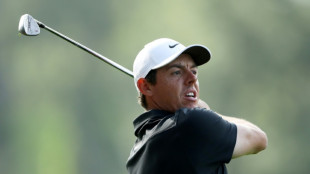
Taiwanese exporters are crunching numbers and talking to American clients as they scramble to figure out how to respond to US President Donald Trump's tariff blitz that threatens to derail their businesses.
While the final impact is not yet known, factory owners on the island are clear eyed on one thing: moving operations to the United States is easier said than done.
"Taiwan's structure is what makes this industry viable," the owner of a machine tool exporter told AFP on the condition of anonymity, highlighting the island's network of small and medium-sized factories supplying his company.
"There are so many components, like gears, belts and others -- the US doesn't have these industries. Setting up a factory in the US would not be worth it," he said, describing Trump's policy as "ridiculous".
From Wednesday, Taiwanese products shipped to the United States, including electronics, machinery components, auto parts and bicycles, will be hit with a hefty 32 percent levy.
It is part of Trump's far-reaching global tariffs that have rocked world markets and sparked recession fears, as he seeks to reduce the US trade deficit and push companies to shift manufacturing to American soil.
Many in Taiwan were stunned by the size of the duty, after chipmaking titan Taiwan Semiconductor Manufacturing Co's plan to invest an additional $100 billion in the United States raised hopes the island would be spared.
While chips have so far avoided tariffs, analysts have warned the critical sector could be impacted anyway as levies drive up the cost of iPhones, laptops and other technology, and reduce consumer demand.
- 'Unsophisticated understanding' -
Taiwanese companies have spent days calculating the impact on their operations and speaking to US clients about how to absorb the cost of the new tariff.
"They've been receiving a lot of calls or instructions," said Kristy Hsu, director of the Taiwan ASEAN Studies Center at Chung-Hua Institution for Economic Research.
She told AFP that US customers have requested deliveries be postponed or prices lowered.
Companies were also trying to determine if their products contained at least 20 percent "American content", which could partially shield them from Trump's levy, she added.
During Trump's first term in office, US tariffs against China prompted many Taiwanese companies operating there to relocate to Southeast Asia to avoid the tax.
This time, however, there are fewer places to hide.
Trump has slugged imports from Vietnam and Thailand with 46 percent and 36 percent tariffs, respectively, and there was uncertainty about whether duties could be cut or raised even higher.
"Right now, the only option for setting up factories overseas is the United States, but the cost of doing so is extremely high," an official from an electronic industry group told AFP.
"This truly isn't something that can be done easily," she said, adding "we didn't expect the US would come down this hard."
Trump's across-the-board tariffs revealed an "unsophisticated understanding" of how supply chains worked, said Ho Ming-yen, non-resident fellow of the Research Institute for Democracy, Society and Emerging Technology.
- Levy 'impossible to absorb' -
Even if companies shifted their factories to the United States, they would still be slugged with tariffs on imported components needed for their products, Ho said.
Ho expected most Taiwanese companies would likely take a "wait-and-see" approach and cut costs as they "wait for the calamities to end".
Taiwan President Lai Ching-te said he had no plans for "retaliatory tariffs" against the United States, the island's most important security partner.
The government has pledged US$2.7 billion to help affected industries, but that was a "drop in the ocean" for what was needed, said Jason Hsu, senior fellow at the Hudson Institute think-tank.
Hsu estimated tariffs would cost Taiwanese exporters US$15 billion-US$20 billion a year.
To secure any relief from Trump, Taiwan needed to come up with deals for the president, said Hsu, a former member of Taiwan's legislature for the opposition Kuomintang party.
"Trump doesn't care about allies and partnerships, he cares about how much business you can bring to the US," Hsu said.
The machine tool exporter said the United States was a "very important market" for the company, accounting for 30-40 percent of its sales.
While the business would survive in the short term, the owner hoped Taiwan could strike a deal with Washignton.
"A four to five percent hike we can split (with our clients) and absorb," he said.
"But 32 percent is impossible to absorb. Our profit margin isn't that high."
L.AbuTayeh--SF-PST