EU plan to end Russian fertiliser imports unsettles farmers / Photo: NICOLAS MAETERLINCK - BELGA/AFP

 US, Iran trade new strikes in fight over Hormuz strait
 Modi eyes 'historic' chance to secure Australian uranium
 US crackdown on top AI fuels open-source surge
 EU moves closer to kicking kids off social media
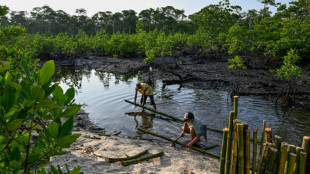 Protecting the protectors: racing to save Philippine mangroves
 Expanded World Cup; same old story as Europe dominates quarter-finals

 Morocco's Saibari out of France World Cup quarter-final
 Trump orders new strikes on Iran over attacks on shipping in Hormuz
 PSG's Lee set to join Atletico Madrid
 Iran plays with fire, but calculates Trump will hold back

 Oil surges, stocks slide as Trump says Iran ceasefire over
 Meta to build $9 billion data center in western Canada

 Rogers backs Kane to outshine Haaland in World Cup showdown
 Some US Fed officials considered June rate hike on war fallout

 UN launches appeal for nearly $300 mn in Venezuela quake relief
 US to remove Syria from terror blacklist, in new boost to Sharaa

 Court rejects Trump request to restore his name to Kennedy Center
 MLB pitching great Verlander to retire after 2026 season
 Artificial cloud brightening could tame El Nino, but with risks: study
 Shocked and shaken, Venezuela quake survivors get psychological help
 France, Morocco kick off blockbuster World Cup quarter-finals
 Amorim hails 'ambitious' AC Milan, promises to learn Italian

 Cancer survivor Traeen takes the long road to Tour yellow
 Easing Russian Olympic restrictions 'terrible', says Wimbledon star Kostyuk
 'Unbelievable' Kooij wins Tour de France 5th stage in chaotic sprint finish
The EU's plans to impose tariffs on fertiliser imports from Russia in a bid to increase pressure on Moscow over the Ukraine war have alarmed European farmers worried about possible price hikes.
More than a quarter of the 27-nation bloc's imports of nitrogen-based fertilisers come from Russia, with more flowing in from Moscow's ally Belarus.
The European Commission wants the flow -- around 3.6 million tonnes, worth a total of 1.28 billion euros ($1.4 billion) in 2023 -- to end.
This would dent Russia's war coffers, support local producers and reduce Europe's dependency on a foe that could use it as leverage, according to Brussels.
It will also prevent the indirect export of Russian gas, which is used to produce fertilisers, said a European diplomat.
But not everyone is happy.
"Russian fertilisers are the most competitive in terms of price, due to well-established logistics" for supplying the EU, said Dominique Dejonckheere of pan-European farmers' group Copa-Cogeca.
"We have the feeling that farmers are being forgotten."
The commission wants duties to increase gradually from the summer to reach "a prohibitive level" in three years.
Duties on imports from North Africa, Central Asia, the United States, Trinidad and Tobago, and Nigeria could be removed to alleviate pressure on prices, it suggested, among other mitigating measures, should the duties lead to price shocks.
"For too long, the European fertiliser industry has been exposed to artificially low-priced imports from Russia and Belarus, seriously distorting the market and undermining fair competition," said industry lobby group Fertilizers Europe, welcoming the plan.
- No drama -
Backed by member states in March, the proposal is yet to be approved by the European Parliament, where farmers have vowed to make their voices heard.
The risk of price increases is "a major concern", said Amaury Poncelet, a cereal and sugar beet farmer in Berloz, in central Belgium.
"Some colleagues are already in the red. We understand that we need to help Ukraine and annoy the Russians, but it is us who will bear the brunt."
Copa-Cogeca is calling for a one-year deferral, an annual review clause, and an ease of restrictions on some alternative products.
Farmer protests -- the likes of which Brussels has grown used to in recent years -- are also an option if prices rise rapidly and the commission fails to intervene, it indicated.
Lawmakers in the European Parliament seem split on the issue. A vote is due in May.
"The situation is under control and I wouldn't dramatise it," said Inese Vaidere, a Latvian lawmaker with the parliament's centre-right EPP group, who is the rapporteur for the text.
"This proposal is very balanced," she said. "There are a lot of countries who are ready to supply us with fertilisers."
But even within her own group -- the largest in the 720-seat assembly -- not everyone agrees.
"Of course, we must reduce dependence on Russian fertilisers" but "farmers always pay the price", said French EPP lawmaker Celine Imart, who is also a cereal farmer.
J.Saleh--SF-PST