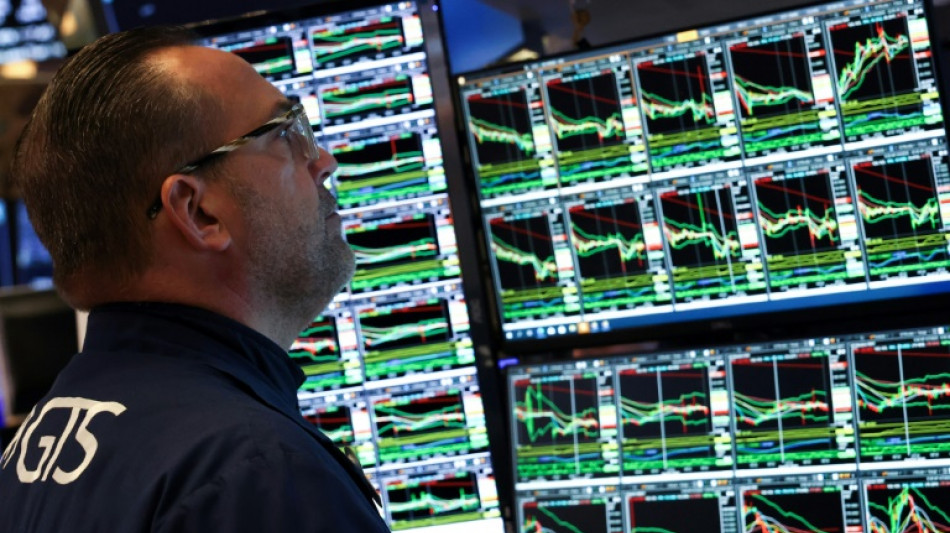
'Spectacle', 'seismic shock': Economists on Trump's tariffs / Photo: TIMOTHY A. CLARY - AFP

 US, Iran trade new strikes in fight over Hormuz strait

 Modi eyes 'historic' chance to secure Australian uranium
 US crackdown on top AI fuels open-source surge

 EU moves closer to kicking kids off social media
 Protecting the protectors: racing to save Philippine mangroves
 Expanded World Cup; same old story as Europe dominates quarter-finals

 Morocco's Saibari out of France World Cup quarter-final
 Trump orders new strikes on Iran over attacks on shipping in Hormuz

 PSG's Lee set to join Atletico Madrid
 Iran plays with fire, but calculates Trump will hold back

 Oil surges, stocks slide as Trump says Iran ceasefire over
 Meta to build $9 billion data center in western Canada
 Rogers backs Kane to outshine Haaland in World Cup showdown
 Some US Fed officials considered June rate hike on war fallout

 UN launches appeal for nearly $300 mn in Venezuela quake relief
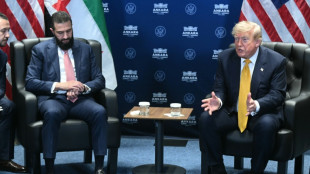 US to remove Syria from terror blacklist, in new boost to Sharaa

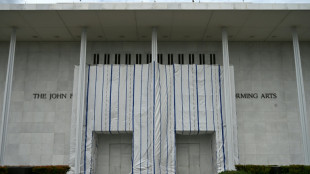 Court rejects Trump request to restore his name to Kennedy Center
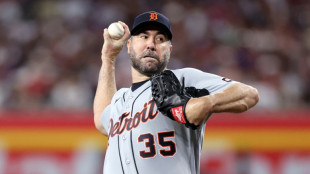 MLB pitching great Verlander to retire after 2026 season
 Artificial cloud brightening could tame El Nino, but with risks: study
 Shocked and shaken, Venezuela quake survivors get psychological help

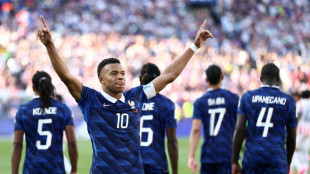 France, Morocco kick off blockbuster World Cup quarter-finals

 Amorim hails 'ambitious' AC Milan, promises to learn Italian
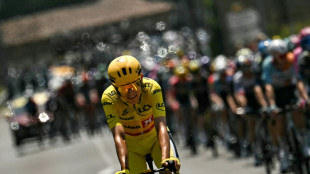 Cancer survivor Traeen takes the long road to Tour yellow
 Easing Russian Olympic restrictions 'terrible', says Wimbledon star Kostyuk
 'Unbelievable' Kooij wins Tour de France 5th stage in chaotic sprint finish
A wide range of economists are voicing alarm over US President Donald Trump's tariffs blitz, which has sparked a trade war that experts say could lead to a global recession.
Here are comments from some leading economists:
- 'Spectacle of failed policies' -
Li Daokui, one of China's most influential economists, told AFP that Trump's tariffs mainly aimed to "squeeze other countries" for concessions.
"It is hard to imagine that there is any other economic policy that can make people around the world, including people in the United States itself, suffer losses at the same time.
"This is simply a 'spectacle' of failed economic policies," Li said.
"Both the US government and the US economy will suffer huge losses," said Li, an economics professor at Tsinghua University and former member of China's main political advisory body.
He said the Chinese government had fully prepared for tariffs, including countermeasures and stepped-up efforts to stimulate domestic consumption.
While Trump's trade policy signifies the end of US leadership in globalisation, it gives Beijing opportunities to negotiate free-trade agreements with other countries and play a key role in any effort to establish a new system that would replace the World Trade Organization, Li said.
"China has the economic foundation to lead globalisation."
- 'Very wrong' -
Brent Neiman, a US Treasury official under previous president Joe Biden, was cited by the US Trade Representative last week in a statement explaining the calculations behind the tariffs.
But Neiman said Monday that Trump administration officials misinterpreted his academic research, co-authored with three other economists.
"It got it wrong. Very wrong. I disagree fundamentally with the government's trade policy and approach," Neiman said in a New York Times opinion piece.
"But even taking it at face value, our findings suggest the calculated tariffs should be dramatically smaller -- perhaps one-fourth as large," Neiman wrote.
Other economists had criticised the Trump administration's methodology to calculate the tariffs when they were announced last week.
"I would strongly prefer that the policy and methodology be scrapped entirely. But barring that, the administration should divide its results by four," Neiman said.
- 'Failure of Reaganism' -
For Thomas Piketty, French author of the best-selling "Capital in the Twenty-First Century", "Trumpism is first of all a reaction to the failure of Reaganism" -- the liberalisation of President Ronald Reagan in the 1980s.
"Republicans realise that economic liberalism and globalisation have not benefitted the middle class as they said they would," the left-leaning economist told AFP.
"So now they're using the rest of the world as a scapegoat," he said.
"But it's not going to work. The Trump cocktail is simply going to generate more inflation and more inequalities."
In response, "Europe needs to define its own priorities and prepare for the global recession that's coming" with a massive investment plan in "energy and transport infrastructure, education, research and health".
- 'Major problem' for the poor -
For Nasser Saidi, a former economy minister of Lebanon, "a major problem is the impact on the least-developed and emerging countries" from Trump's "seismic shock to the global trade landscape".
"Countries like Egypt, Lebanon or Jordan are going to face disruptions in terms of their trade relations" as well as the prospect of cuts to foreign investments.
"When you have tariffs of this type being set up -- high levels of tariffs with no economic basis -- what you're going to do is severely disrupt supply chains," he added.
"I think we're finished with the era of globalisation and liberalisation", which will lead countries in the Middle East, for example, to reinforce ties with Asian partners.
- 'Big boys will suffer' -
Kako Nubukpo, an economist and former government minister in Togo, warned that Trump's tariffs would hit African nations already suffering from political difficulties.
"Those left behind by globalisation appear more and more numerous. And so we've seen an increase in illiberal regimes, whether that's in Europe, Africa or America," he said.
"(But) protectionism is a weapon of the weak and I think Trump has realised that in the competition with China, the United States is now the weaker one."
In response, "African countries should promote their own national and regional value chains" as buffers against Trump's tariffs.
Bismarck Rewane, CEO of Financial Derivatives Co. in Nigeria, said "big powers" would suffer most from a global recession.
"The small powers, we don't have that much to suffer because we were already bleeding before, so we just stay where we are," he said.
"Africa will suffer but not as much as the big boys."
Z.Ramadan--SF-PST