-
 Alpacas, mini pigs on the loose after floods hit south China zoo
-
New Zealand may join Australia-Fiji defence pact: PM Luxon
-
 All Blacks make five changes for Italy Nations Championship clash
-
Fly-half Meredith to make Australia debut against France
-
 Western Europe records its hottest June as heatwaves surge: EU monitor
-
US, Iran trade new strikes in fight over Hormuz strait
-
 Fashion's mystery man Margiela sells off his archives
-
Modi eyes 'historic' chance to secure Australian uranium
-
 Nuclear test-scarred Marshall Islands criticises China missile
-
US crackdown on top AI fuels open-source surge

-
 Chip titan SK hynix to set price for mega US listing
-
EU moves closer to kicking kids off social media

-
 Crude extends rally as US-Iran flare-up rocks peace hopes
-
Protecting the protectors: racing to save Philippine mangroves
-
 Democrat accused of rape exits key US Senate race
-
Expanded World Cup; same old story as Europe dominates quarter-finals
-
 Japan student Ito keeps place against Ireland as Jones returns
-
Morocco's Saibari out of France World Cup quarter-final

-
 Belgium bid to crack Spain's ironclad defence in World Cup quarter-final
-
Trump orders new strikes on Iran over attacks on shipping in Hormuz
-
 US man sentenced after swapping 17th century manuscript
-
PSG's Lee set to join Atletico Madrid
-
 US launches new strikes on Iran after Trump vows to hit 'hard'
-
Iran plays with fire, but calculates Trump will hold back

-
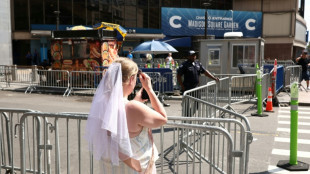 Taylor Swift fans pay $25 for garbage from outside wedding
-
Oil surges, stocks slide as Trump says Iran ceasefire over
-
 After quakes, Venezuelans fear losing damaged homes
-
Meta to build $9 billion data center in western Canada

-
 PSG's Lee set to join Athletico
-
Rogers backs Kane to outshine Haaland in World Cup showdown
-
 Erdogan gave pistols to NATO leaders, Starmer says
-
Some US Fed officials considered June rate hike on war fallout

-
 Nocera Expands Diversified Technology Strategy With Binding Agreement to Acquire an Equity Interest in INERGX, an Integrated Energy Storage and Power Platform for AI, Defense and Mission-Critical Demand
-
UN launches appeal for nearly $300 mn in Venezuela quake relief
-
 China sends nuclear missile message as US looks elsewhere
-
US to remove Syria from terror blacklist, in new boost to Sharaa

-
 Justin Bieber added to 11-minute World Cup final halftime show
-
Court rejects Trump request to restore his name to Kennedy Center
-
 Fery targets Wimbledon final birthday present after royal seal of approval
-
MLB pitching great Verlander to retire after 2026 season
-
 Egypt file complaint against referee after World Cup exit
-
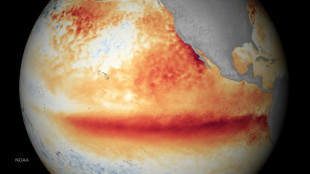
Artificial cloud brightening could tame El Nino, but with risks: study
-
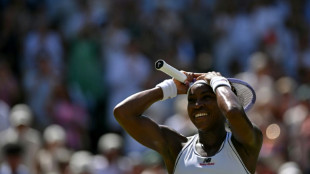 Women's semi-finalists in uncharted territory at Wimbledon
-
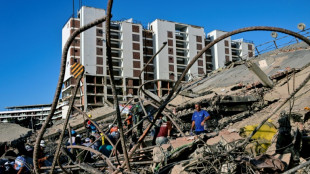
Shocked and shaken, Venezuela quake survivors get psychological help
-
 US man jailed after swapping 17th century manuscript
-
France, Morocco kick off blockbuster World Cup quarter-finals

-
 UN maritime head urges halt to Hormuz transit to protect seafarers
-
Amorim hails 'ambitious' AC Milan, promises to learn Italian
-
 Trump skips new Air Force One on return from Turkey NATO summit
-
Cancer survivor Traeen takes the long road to Tour yellow
Buchenwald camp survivor recounts liberation, 80 years on
Jacques Moalic, a 102-year-old former Agence France-Presse journalist, remembers vividly the liberation of Buchenwald concentration camp by American troops 80 years ago.
In an interview with AFP, where he worked for 40 years after World War II, the Buchenwald survivor spoke of his last months in captivity and the arrival of American troops on April 11, 1945.
He recounted his ordeal once again, speaking ahead of the 80th anniversary of the camp's liberation. Around 56,000 Jews, Roma and Soviet prisoners died there between 1937 and 1945.
In 1943, Moalic, then a young Resistance fighter, was arrested and eventually forced to board a train.
He tried to flee, jumping from the train, but was caught.
In December 1943, he was brought to Buchenwald, which stood on a hill near the German town of Weimar.
He was placed in Block 34. In the hell that was Buchenwald, prisoners pinned their hopes on Allied forces, who landed on the beaches of Normandy on June 6, 1944.
- Transfer to Ohrdruf -
The liberation of Paris in August 1944 boosted their spirits.
"In the camps, people regained their courage," Moalic, former head of general news at AFP, said in his Paris apartment.
"They said to themselves, we will be free by Christmas. I didn't really believe it. I was right."
When the Allied troops had not arrived by the end of the year, many began to lose hope.
In January 1945, Moalic was moved to the Ohrdruf death camp.
"In January, on the 8th I believe, there was an unexpected gathering," he said. "The SS officer passed between the rows noting down the numbers. Eight hundred to 900 of us were to leave for a camp nobody knew about."
He was advised to try to get himself taken off the list if he wanted to live.
"But I was on it, and there was no escaping. We ended up in Ohrdruf."
The prisoners there were forced to dig underground tunnels.
"Guys worked day and night digging into the mountain," Moalic said.
He thought he would die.
"I said to myself: being woken up at four or five in the morning, going home at 10 at night, I'll last a fortnight. For the first time, I thought that maybe I wouldn't come back."
Instead, he was recruited as an electrician. The job saved his life.
"I slept in former Wehrmacht (German military) accommodations," he said. Other prisoners were exposed to temperatures of minus 15 degrees Celsius. Many died.
- Death march -
"Of course, we had known for some time that Russians and the Allies were advancing. But there's a big difference between 'they're advancing' and 'they're here'!" he said.
"One day at roll call, we heard a sound we had never heard before -- artillery, cannon," he said. They realised the Allies were within striking distance.
"We looked at each other and there was an extraordinary silence."
In 1945, Easter fell on April 1. They did not work that day. Then they were told they were being evacuated.
They were ordered to march, in columns of 1,000 people. They did not know their final destination.
They marched through mountainous countryside.
"It drizzled," he said. "We marched like that for three or four days."
Ohrdruf had been worse than Buchenwald, and the prisoners were exhausted.
Anyone who fell along the way was shot.
Many were killed during the death march, said Moalic.
"Some of the guys were already half dead when they started out," he said.
"We arrived at Weimar train station and then we started climbing towards Buchenwald."
It was a trek of around six or seven kilometres, he said.
"There were 72 corpses."
- Liberation -
When the prisoners arrived back at Buchenwald, it was dark.
"There were 3,000 to 4,000 of us on the roll call square," he said.
One man recognised him and took him back to Block 34. "I was covered in lice."
The Americans were getting closer.
"On April 11, there was a lot of excitement in the camp," Moalic said.
The prisoners did not know whether they would be liberated or massacred.
"The SS began to empty the camp, block by block, and each group was sent to Weimar station, where filthy wagons were awaiting."
The remaining prisoners were preparing for a possible fight.
"Then all of a sudden, an American unit arrived," he said.
"The SS did not engage in combat. They preferred to get the hell out of there," he said.
"A few minutes later, we were outside."
When Moalic finally returned to Paris, he was questioned by authorities at the iconic Lutetia hotel, which was turned into a welcome centre for concentration camp survivors.
He looked so haggard women gave up their seats for him in the metro.
"I still remember a pale spring sun," he wrote in an account published in 1985.
"Wednesday April 11, 1945 was a beautiful day for the inmates of Buchenwald concentration camp, the first beautiful day since July 1937, when Heinrich Himmler inaugurated and named it."
Y.Zaher--SF-PST