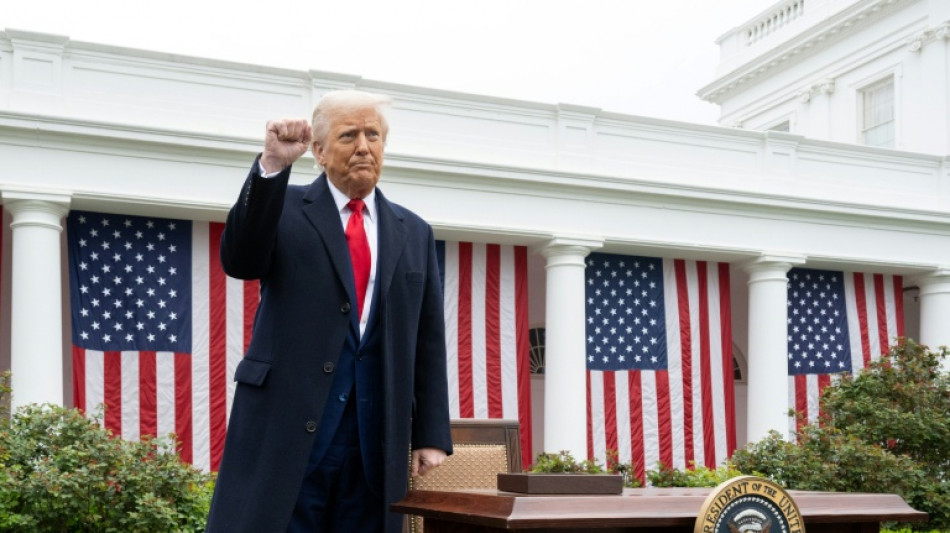
America's passion for tariffs rarely pays off, economists warn / Photo: SAUL LOEB - AFP

 Alpacas, mini pigs on the loose after floods hit south China zoo
 All Blacks make five changes for Italy Nations Championship clash

 Western Europe records its hottest June as heatwaves surge: EU monitor
 Fashion's mystery man Margiela sells off his archives
 Nuclear test-scarred Marshall Islands criticises China missile

 Chip titan SK hynix to set price for mega US listing

 Crude extends rally as US-Iran flare-up rocks peace hopes

 Democrat accused of rape exits key US Senate race

 Japan student Ito keeps place against Ireland as Jones returns

 Belgium bid to crack Spain's ironclad defence in World Cup quarter-final
 US man sentenced after swapping 17th century manuscript

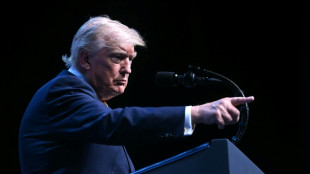 US launches new strikes on Iran after Trump vows to hit 'hard'
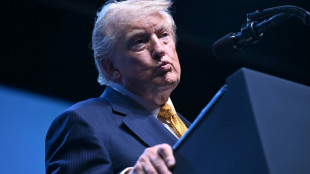
 Taylor Swift fans pay $25 for garbage from outside wedding

 After quakes, Venezuelans fear losing damaged homes

 PSG's Lee set to join Athletico

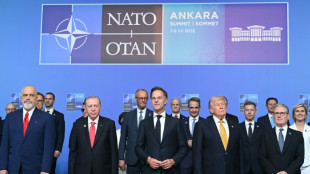 Erdogan gave pistols to NATO leaders, Starmer says
 Nocera Expands Diversified Technology Strategy With Binding Agreement to Acquire an Equity Interest in INERGX, an Integrated Energy Storage and Power Platform for AI, Defense and Mission-Critical Demand

 China sends nuclear missile message as US looks elsewhere
 Justin Bieber added to 11-minute World Cup final halftime show
 Fery targets Wimbledon final birthday present after royal seal of approval

 Egypt file complaint against referee after World Cup exit

 Women's semi-finalists in uncharted territory at Wimbledon

 US man jailed after swapping 17th century manuscript

 UN maritime head urges halt to Hormuz transit to protect seafarers

 Trump skips new Air Force One on return from Turkey NATO summit

Long before Donald Trump's "Liberation Day" announcement, the United States had toyed with imposing high tariffs throughout its history, with inconclusive -- and sometimes catastrophic -- results.
"We have a 20th century president in a 21st century economy who wants to take us back to the 19th century," Dartmouth College economics professor Douglas Irwin posted on X.
The 19th century marked the golden age of tariffs in the United States, with an average rate regularly flirting with 50 percent.
The century extended a doctrine adopted since the country's founding, which advocated for the protection of the American economy as it underwent a period of industrialization.
"Careful studies of that period suggest that the tariffs did help protect domestic development of industry to some degree," said Keith Maskus, a professor at the University of Colorado.
"But the two more important factors were access to international labor, and capital... which was flowing in the United States during that period," he added.
Christopher Meissner, a professor at the University of California, Davis, told AFP that in addition to these factors, "the reason we had a thriving industrial sector in the United States was we had great access to natural resources."
These resources included coal, oil, iron ore, copper and timber -- all of which were crucial to industry.
"The industrial sector wouldn't have been much smaller if we had much lower tariffs," Meissner added.
Shortly after taking office in January, Trump said: "We were at our richest from 1870 to 1913."
The 78-year-old Republican often references former US president William McKinley, who was behind one of the country's most restrictive tariff laws, which passed in 1890.
These tariffs did not prevent imports from continuing to grow in the years that followed, although once customs duties were lowered in 1894, the amount of goods the US purchased abroad remained below previous peaks.
- Great Depression -
In 1929, Harvard professor George Roorbach wrote: "Since the end of the Civil War (1865), during which the United States has been under a protective system almost, if not quite, without interruption, our import trade has enormously expanded."
"Fluctuations that have occurred seem to be related chiefly to factors other than the ups and downs of tariff rates," he added.
A year later, the young nation tightened the screws with tariffs again, this time under Republican president Herbert Hoover.
The Smoot-Hawley Tariff Act of 1930 is best remembered "for triggering a global trade war and deepening the Great Depression," according to the Center for Strategic and International Studies.
"What generated the depression... was a lot of complicated factors, but the tariff increase is one of them," said Maskus from the University of Colorado.
The end of the Second World War marked the start of a new era in trade, defined by the ratification in 1947 by 23 countries -- including the United States -- of the GATT free trade agreement.
The agreement created the conditions for the development of international trade by imposing more moderate customs duties.
The momentum was maintained by the North American Free Trade Agreement (NAFTA) between the United States, Mexico and Canada, which took effect in 1994.
Alongside NAFTA, free trade in the United States was further expanded by the creation of the World Trade Organization in 1995, and a 2004 free trade agreement between the United States and several Central American countries.
During his first term in office, Donald Trump reopened the tariff ledger and decided on new measures against China, many of which were maintained under his successor, Joe Biden.
But despite these levies, the US trade deficit with China continued to grow until 2022, when China was hit by a brutal economic slowdown unrelated to the tariffs.
For Keith Maskus, the tariffs on Beijing did not do much to prevent the growth of imports from China.
C.AbuSway--SF-PST