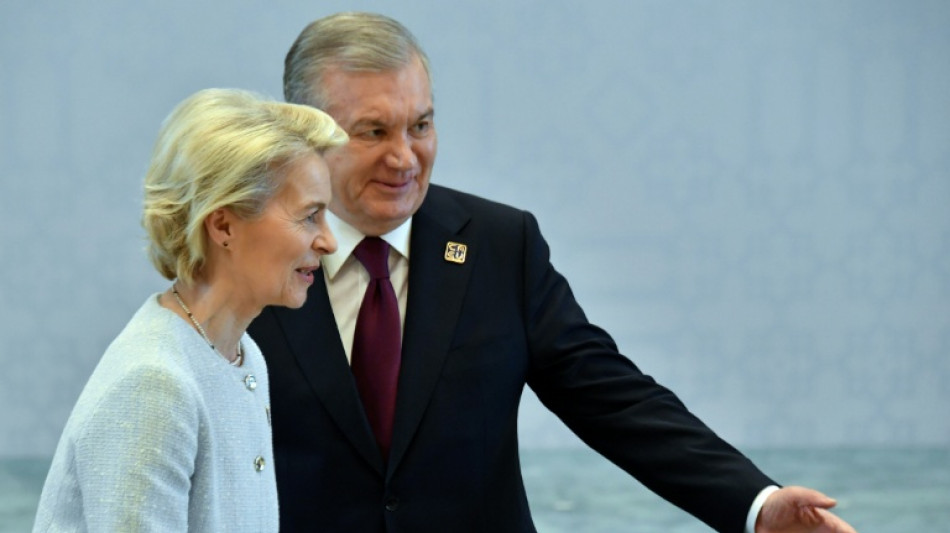
EU announces 'new era' in relations with Central Asia / Photo: Vyacheslav OSELEDKO - AFP

 Crude stabilises after US-Iran flare-up rocked peace hopes

 Playmaker Jalibert moves to fullback as France swing axe for Australia clash
 Australian sprint star Gout out of U20 worlds with hamstring tear

 Unions to protest as Volkswagen thrashes out job cut plans
 Teeth bared in Greece's bear-human showdown
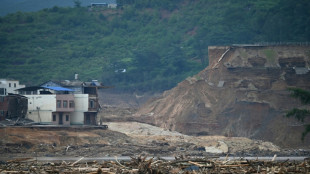 Alpacas, mini pigs on the loose after floods hit south China zoo
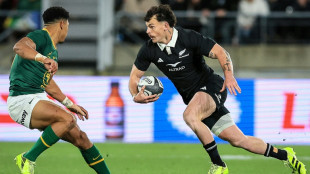 All Blacks make five changes for Italy Nations Championship clash

 Western Europe records its hottest June as heatwaves surge: EU monitor
 Fashion's mystery man Margiela sells off his archives
 Nuclear test-scarred Marshall Islands criticises China missile
 Chip titan SK hynix to set price for mega US listing

 Crude extends rally as US-Iran flare-up rocks peace hopes
 Democrat accused of rape exits key US Senate race
 Japan student Ito keeps place against Ireland as Jones returns
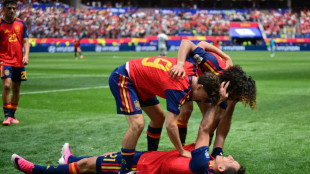 Belgium bid to crack Spain's ironclad defence in World Cup quarter-final
 US man sentenced after swapping 17th century manuscript
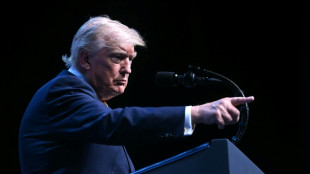 US launches new strikes on Iran after Trump vows to hit 'hard'
 Taylor Swift fans pay $25 for garbage from outside wedding
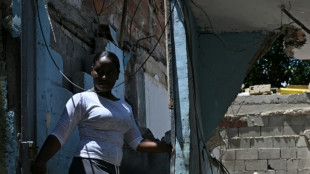 After quakes, Venezuelans fear losing damaged homes

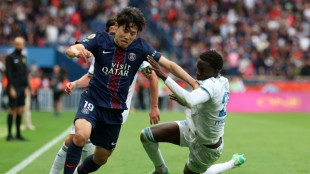 PSG's Lee set to join Athletico
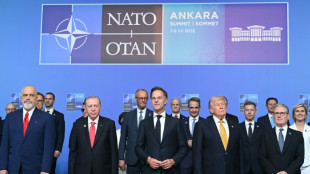 Erdogan gave pistols to NATO leaders, Starmer says
 Nocera Expands Diversified Technology Strategy With Binding Agreement to Acquire an Equity Interest in INERGX, an Integrated Energy Storage and Power Platform for AI, Defense and Mission-Critical Demand
 China sends nuclear missile message as US looks elsewhere
 Justin Bieber added to 11-minute World Cup final halftime show

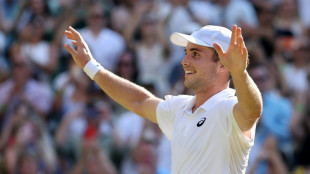 Fery targets Wimbledon final birthday present after royal seal of approval
The EU announced a "new era" in ties with Central Asia on Friday at a major summit in Uzbekistan, as Brussels presses its influence in the region in the face of Russian and Chinese competition.
Russia's invasion of Ukraine has accelerated the region's drift from Moscow's orbit, with major powers to both the West and East sensing an opening.
The presidents of the five Central Asian countries -- Kazakhstan, Kyrgyzstan, Tajikistan, Turkmenistan and Uzbekistan -- are holding a summit with the EU's top leaders.
The meeting is in the ancient Silk Road city of Samarkand, for centuries a key hub in East-West connections, trade and commerce.
Central Asia is rich in natural resources, on the front lines of climate change and a key security player trying to contain extremism, sharing borders with Afghanistan, Iran, China and Russia.
"This is the start of a new era in our ancient friendship," EU chief Ursula von der Leyen told Central Asian leaders.
The European Commission chief and Antonio Costa -- the head of the European Council -- were in Uzbekistan as US President Donald Trump's tariff offensive sparked global market shock and as Moscow has been fighting in Ukraine for over three years.
"We are at another turning point. New global barriers arise, investments are being redirected, powers around the world are carving up new spheres of influence," von der Leyen said.
"Reliable partners have never been so important. We want to explore new avenues," she said, calling for a "strategic partnership" with the region.
Central Asia is interested in Europe's advanced industrial technology -- which Russia and China struggle to provide -- while Brussels eyes the region's precious resources.
- 'Honey pot' -
These resources are a "honey pot for global players," von der Leyen said.
The landlocked region has an abundance of uranium, cobalt, copper and other essential materials.
Kazakhstan, on the eve of the summit, discovered potentially its largest ever deposit of rare earth elements.
Alongside Russia's historic leadership in the region, Turkey, China, the United States and even the likes of South Korea and Japan are interested in the resources.
"Europe's offer is different," von der Leyen pledged, promising to help develop local industries.
She also said Brussels wanted to help Central Asia become a "clean energy power house".
She announced that Europe's satellites could bring internet to remote areas, where it is scarce.
"It would give direct access to high-speed internet without your neighbours acting as gatekeepers," she said, in an apparent reference to Russia, which tightly controls information.
- 'Not going to preach' -
Central Asia is as large as the EU but home to just 80 million people, one-fifth of those in the 27-member bloc and is seeking foreign investment.
Uzbek President Shavkat Mirziyoyev said that huge warming of ties between the five regional countries in recent years had made the summit possible.
"Only seven or eight years ago, borders between the countries were closed. There was no trade, no transit, business... Relations were frozen," he said.
"Nobody would be able to even imagine that in the near future we could stand together to represent the region in talks with European leaders," he said.
Mirziyoyev came to power in Uzbekistan after the death of dictator Islam Karimov in 2016.
He has opened up the country after years of closed borders, but rights group have said the region has a worsening record on human rights.
Despite pleas from NGOs, human rights were not expected to feature heavily in the talks, an EU official told AFP on condition of anonymity.
"We're not going there to preach, but we are going to make our concerns known, to work with them, to have a dialogue," the official said.
- Sanctions -
Despite EU ambitions, Russia and China will be difficult to dislodge.
Beijing is pouring cash into ambitious infrastructure projects, while Russia supplies arms and energy -- as well as having long-standing cultural and linguistic reach across the former Soviet state.
Yet Moscow's war in Ukraine has made its allies nervous.
The war in Ukraine and sanctions against Russia will also be on the table at the talks, the EU official said.
Central Asia has emerged as one of several hubs through which sanctioned Western goods are re-exported to Russia.
Brussels would like the region to crack down on the flow, as it pushes to keep up the pressure on Moscow while Trump oversees a rapprochement with the Kremlin.
Central Asian countries have shown "willingness" to act and "some progress" but "we would like to see a lot more from our partners," the EU official said.
F.AbuZaid--SF-PST