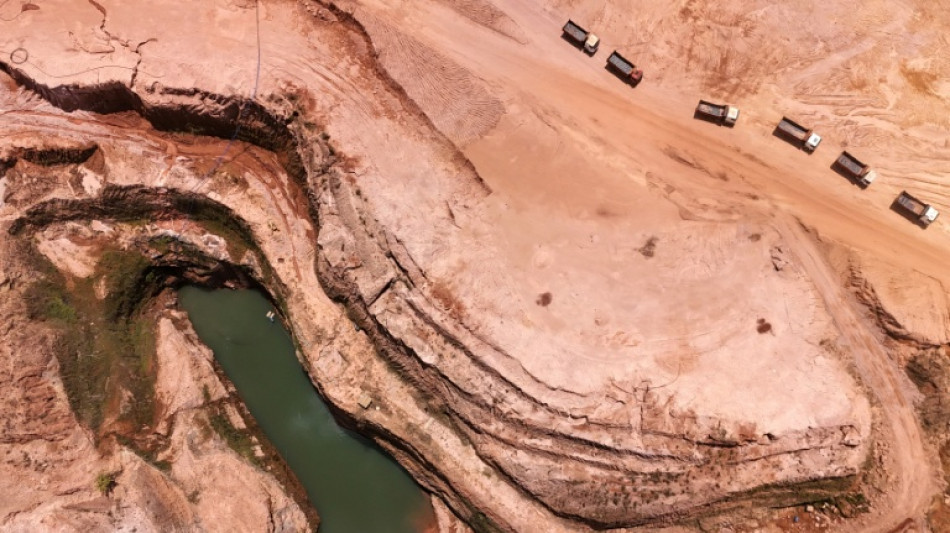
Paraguay gold rush leaves tea producers bitter / Photo: Daniel DUARTE - AFP

 Myanmar names Norwegian Andersen as head of national team

 Russell back as Scotland tackle world champions South Africa
 Tour de France yellow jersey protocol: 90 minutes of 'stress'

 Crude stabilises after US-Iran flare-up rocked peace hopes

 Playmaker Jalibert moves to fullback as France swing axe for Australia clash
 Australian sprint star Gout out of U20 worlds with hamstring tear

 Unions to protest as Volkswagen thrashes out job cut plans

 Teeth bared in Greece's bear-human showdown

 Alpacas, mini pigs on the loose after floods hit south China zoo
 All Blacks make five changes for Italy Nations Championship clash

 Western Europe records its hottest June as heatwaves surge: EU monitor

 Fashion's mystery man Margiela sells off his archives

 Nuclear test-scarred Marshall Islands criticises China missile

 Chip titan SK hynix to set price for mega US listing

 Crude extends rally as US-Iran flare-up rocks peace hopes
 Democrat accused of rape exits key US Senate race

 Japan student Ito keeps place against Ireland as Jones returns

 Belgium bid to crack Spain's ironclad defence in World Cup quarter-final

 US man sentenced after swapping 17th century manuscript

 US launches new strikes on Iran after Trump vows to hit 'hard'

 Taylor Swift fans pay $25 for garbage from outside wedding

 After quakes, Venezuelans fear losing damaged homes

 PSG's Lee set to join Athletico

 Erdogan gave pistols to NATO leaders, Starmer says

 Nocera Expands Diversified Technology Strategy With Binding Agreement to Acquire an Equity Interest in INERGX, an Integrated Energy Storage and Power Platform for AI, Defense and Mission-Critical Demand
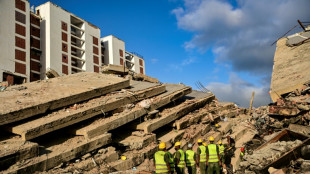
In a small town in Paraguay, a showdown is brewing between traditional producers of yerba mate, a bitter herbal tea popular across South America, and miners of a shinier treasure: gold.
A rush for the precious metal is pitting mate growers and Indigenous groups against the expanding operations of small-scale miners who, until recently, were their neighbors, not nemeses.
"They (the miners) have destroyed everything... the canals, springs, swamps," said Vidal Britez, president of the Yerba Mate Producers' Association of the town of Paso Yobai, about 210 kilometers (130 miles) east of Paraguay's capital Asuncion.
"You can see the pollution from the dead fish. The water has changed color," the 56-year-old told AFP.
Yerba mate, a green infusion sipped from a gourd with a metal straw, is deeply rooted in Paraguay, where the Guarani people have cultivated the tree that produces the leaves for centuries, including in Paso Yobai.
But when an Ecuadoran miner discovered gold nuggets in a stream there in the 1990s, the town's fortunes changed. One in six of its 30,000 inhabitants now lives off mining and related activities, with angry mate growers saying they are being squeezed out.
They also complain of environmental damage from the mercury used to extract gold, and the arsenic released in the process.
The place "is the cradle of yerba mate," Britez said indignantly, showing AFP mate leaves covered in mining dust that he says are being spurned by buyers.
Tensions boiled over last month, with armed mate farmers and miners working for the Paraguayan subsidiary of a Canadian company nearly coming to blows.
No injuries were reported in the standoff.
But since then, small groups of mate farmers have been camping out around Paso Yobai to prevent miners digging more quarries or pits.
- Path to a better life -
In just a few years, Paso Yobai has been transformed from a quiet, bucolic settlement into a frenetic anthill of activity with lines of trucks hauling sand to pools where the gold is processed.
The farmers claim there are more than 300 excavations around the town -- most of them illegal.
Each dig can yield about a kilogram (2.2 pounds) of gold in a month or two, and for some, the town's long-hidden treasure has proved to be a boon.
Paso Yobai's 2,000-odd small-scale miners earn about $20 per day -- roughly equal to the country's minimum monthly wage.
"Many families managed to improve their homes, managed to get their children to study at universities," miner Ruben Villalba told AFP.
The mate farmers, by contrast, barely break even most of the time.
- 'No complaint' -
In 2024, Paraguay exported 600 kg of gold extracted mainly in Paso Yobai, generating $260,000 in royalties for the government, according to Deputy Minister of Mines and Energy Mauricio Bejarano.
In an interview with AFP, he boasted that "profitability is guaranteed" as Paraguay seeks to expand its fledgling gold-mining sector.
As for environmental concerns, he said that "as far as I know, there has been no complaint."
The UN Environment Programme has observed in a report that Paraguay has not conducted a national inventory of mercury pollution.
Two Paraguayan universities are researching the issue but have yet to present their findings.
Ruben Irala Galeano, an agricultural engineer and researcher on the project, told AFP initial findings have pointed to "alarming" mercury levels and to "an ecological crime being committed in Paso Yobai."
His concerns are shared by Nery Cardozo Benitez -- a Mbya Guarani leader -- who told AFP the community could see the effects of the mining for themselves.
"The chemicals they use are very potent. They evaporate into the air and contaminate our animals," the chief said.
Mariano Benitez, a fellow Indigenous leader from a nearby settlement, said the contamination was making it difficult to survive.
"The fish are dying. We don't have drinking water," he said.
T.Khatib--SF-PST