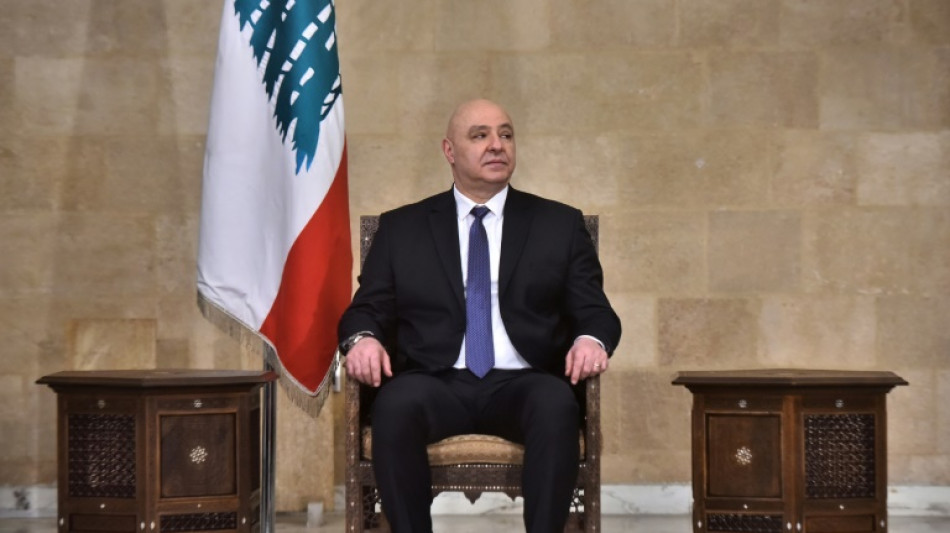
Lebanon lawmakers throw weight behind ICJ judge Salam for PM / Photo: Fadel ITANI - AFP

 Improving Atletico cruise to comfortable win over Osasuna

 Candidate for UN chief calls for AI regulation akin to nuclear weapons

 O'Neill expects Celtic recovery after Old Firm misery
 Man City midfield trio backed to emulate Rodri and Silva

 'We're losing control,' AI pioneer Yoshua Bengio tells AFP

 WHO eyes 'encouraging' signs in DRCongo fight against Ebola

 Liga boss criticises Real Madrid trio for Ceuta shirt incident

 WTA Finals moved to Charlotte from 2027

 Almost 8,000 excess deaths in France's scorched summer: statistics

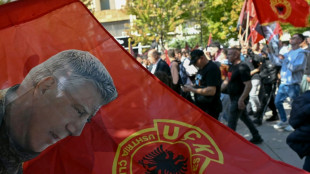 Ex-president's lengthy war crimes sentence shocks Kosovo

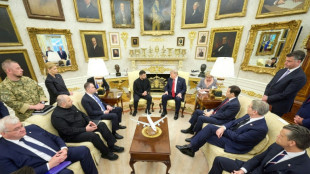 US House faces test on sweeping Russia sanctions bill

 British PM says to make 'difficult decisions' as inflation rises

 TotalEnergies pumps up controversy in France with cut-price gas

 Global fuel price demos: a round-up

 Leverate Launches MCP for Traders to Connect AI Assistants With Trading Platforms

 MEXC Launches $1M "Discover Your Wall Street DNA" Campaign to Help Traders Find Their Market Fit

 Emporio Armani names Dario Vitale new creative director

 Maresca defends VAR officials after Man City benefit from error

 Courts jails LGBTQ activists as Turkey crackdown widens

 French court to hear Depardieu's appeal against rape trial order: sources

 The German state premier hoping to halt far-right surge
 Lebanon wants Israel security deal as prelude to peace: president to AFP

 England's Brook keen to learn from 'hero' Pietersen after stunning ton
 Saudi says Houthis target Mecca, warns of 'red line'

 Phillippines ex-leader Duterte makes first appearance at ICC
Dozens of Lebanese lawmakers endorsed international jurist Nawaf Salam on Monday to become the crisis-hit country's prime minister, local media said, as the newly elected president prepares to name his pick.
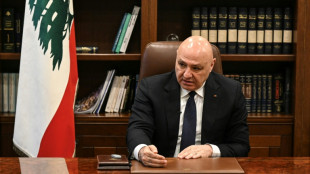
President Joseph Aoun, whose election last week ended a two-year power vacuum and revived hopes of lifting war-battered Lebanon out of crisis, held consultations with lawmakers ahead of announcing his nominee for a new head of government.
A tally given by Lebanese media put Nawaf Salam, the presiding judge at the International Court of Justice in The Hague, ahead of any other candidate including the incumbent Najib Mikati.
By Monday afternoon, 78 members of parliament told Aoun they backed Salam, according to the tally, with nine endorsing Mikati who has served as prime minister in a caretaker capacity.
While Salam's endorsements are equivalent to a majority in the 128-member parliament, the final decision lies with the president.
Before Aoun's election, made possible in part by the weakening of Iran-backed militant group Hezbollah in war with Israel, Lebanon had been without a president since October 2022.
With the prime minister named by the president, the eastern Mediterranean country has been run by a caretaker government for more than two years amid a crushing economic crisis.
Under Lebanon's power-sharing system, the president must be a Maronite Christian, the prime minister a Sunni Muslim, and the parliament speaker a Shiite Muslim.
- 'Change' -
Salam's backers view the judge and former ambassador as an impartial figure able to carry out much-needed reforms, a contrast to Mikati regarded by critics as under Hezbollah's influence.
Lawmaker George Adwan of Christian party the Lebanese Forces said after meeting Aoun and endorsing Salam that it was time for Hezbollah to focus on "political work".
"The era of weapons is over," Adwan told reporters.
Hezbollah ended a deadly war against Israel this autumn bruised and weakened. Under a ceasefire deal, the group must pull its fighters from areas of southern Lebanon near the Israeli border as the national army -- until last week under Aoun's command -- and UN peacekeepers deploy there.
Hezbollah also lost a key ally in neighbouring Syria when Islamist-led forces toppled president Bashar al-Assad last month.
Independent lawmaker Melhem Khalaf said he backed Salam as a candidate of "change", coming from outside of Lebanon's traditional ruling class.
A source close to Hezbollah had told AFP that the movement and its ally Amal movement supported Mikati.
The Monday front page of Al-Akhbar, a newspaper close to Hezbollah, said Salam's nomination would be tantamount to a "complete US coup", after Washington had backed Aoun for president.
- 'Two options' -
In his inaugural speech on Thursday, Aoun said his election as president would usher in a "new phase" for the country.
Lebanese university professor Ali Mrad said support for Salam's nomination reflected "the real changes that Lebanon is experiencing".
"Today there are two options in the country: a serious reform option, called Nawaf Salam, and an option that takes up back, called Najib Mikati," he said.
Some opposition lawmakers on Saturday threw their weight behind anti-Hezbollah lawmaker and businessman Fouad Makhzoumi, but on Monday he withdrew to allow consensus around Salam.
Whoever heads Lebanon's new government will face major challenges, including implementing reforms to satisfy international donors amid the country's worst economic crisis in its history.
They will also face the daunting task of reconstructing swathes of the country after the Israel-Hezbollah war and implementing the November 27 ceasefire agreement.
According to Lebanon's constitution, the president designates the prime minister after talks with all political parties and independent lawmakers in parliament. By convention, he chooses the candidate with the most votes during these consultations.
Nominating a premier does not guarantee a new government will be formed imminently.
The process has previously taken weeks or even months due to deep political divisions and horse-trading.
A.AbuSaada--SF-PST