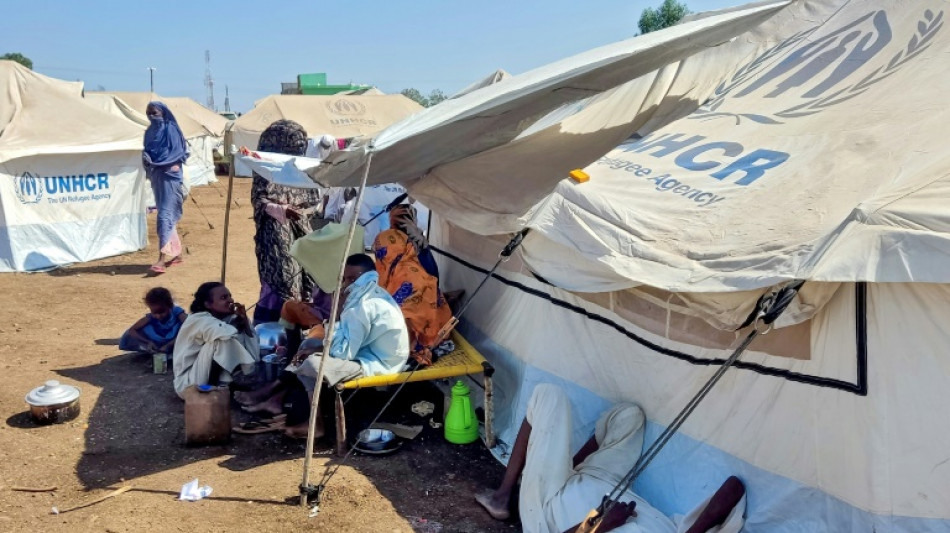
Over two-thirds of displaced families in east Sudan short of food: NGO / Photo: - - AFP/File

 انخفاض طفيف على درجات الحرارة اليوم وغدًا ارتفاع آخر

 دراسة دنماركية: القهوة تحسن صحة الجهاز الهضمي وتنوع البكتيريا

 فتح تؤكد التزامها بإرث عرفات في الذكرى الـ22 لاستشهاده

 Pismo Beach Mayoral Candidate Faces Allegations of Harassment Against Transgender Teen

 Bahrain MPs Approve Five-Year Wait for Repeat Hajj Pilgrims

 David Walliams Identified as Celebrity in Sexual Misconduct Allegations After Legal Bid

 Texas Gov.-elect Hinojosa Plans Rate Freeze Amid Legal Concerns

More than two-thirds of displaced families in eastern Sudan are unable to secure enough food, as war has pushed millions to the brink of famine, the Norwegian Refugee Council (NRC) said on Friday.
The number of displaced in eastern Sudan has surged particularly since mid-year when paramilitary Rapid Support Forces (RSF), at war with Sudan's army, stepped up attacks in Al-Jazira state south of Khartoum.
Adjacent Gedaref state alone hosts more than one million displaced, according to United Nations figures.
For almost 20 months the army, led by Abdel Fattah al-Burhan, has been battling Mohamed Hamdan Daglo's RSF, in a war that has killed tens of thousands of people and displaced -- according to UN data -- more than 11 million internally or to neighbouring countries.
In October, United Nations experts accused the warring sides of using "starvation tactics" against 25 million civilians.
"The scale of unmet needs for both displaced and host communities is beyond what the current humanitarian response can manage without urgent support," the NorwegIan Refugee Council said.
Based on surveys of more than 8,600 households across six states in eastern Sudan, NRC found that 70 percent of internally displaced families and 56 percent of host families in eastern Sudan "cannot afford enough food due to skyrocketing prices and lost incomes".
The report also said 92 percent of host families and 76 percent of internally displaced people in the region reported receiving no food aid in the past six months.
"Eastern Sudan's towns and cities were already fragile," said NRC Sudan Country Director Will Carter.
The conflict has pushed towns and cities in the region to the brink, with displaced and host communities now "on the verge of collapse", he said.
Health care services are also critically overstretched.
The NRC urged global action to "scale up humanitarian aid, rehabilitate critical infrastructure and invest in livelihoods to prevent further destabilisation".
Carter said: "The world must stand with all people affected by this terrible war."
I.Yassin--SF-PST