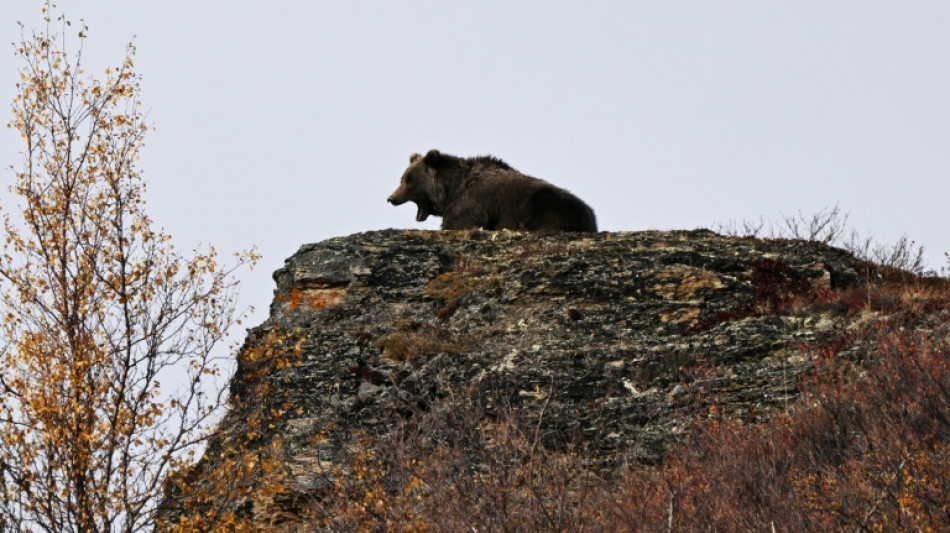
Green groups sue to block Trump rule gutting species habitat protections / Photo: Patrick T. FALLON - AFP/File

 Stocks rise on AI buzz, oil prices cool

 India narrowly survive huge scare against minnows Japan

 Missing F-35 fighter parts 'not sensitive', says Australia minister

 Cambodia showcases scams crackdown with global conference

 Afghan cyclist who disguised herself as man wins Asian Games silver

 Typhoon Dujuan leaves four dead in Japan, 45,000 houses without power

 G7 leaders condemn Houthi strikes on Saudi Arabia

 Google data centre sparks protests in Austria

 Shin Ohashi: Junk food-loving teen and Japan's next big swimming hope

 Stocks rise on AI buzz, drop in oil prices

 China's robot dancers limber up for America's Got Talent final

 Despite military might, Saudi struggles to crush the Houthis

 Trump to tout deals, defend Iran war in UN speech
 Sri Lanka to issue verdict in landmark Easter attack trial

 Macron says talks with Trump on Red Sea, Ukraine 'constructive'

 Green policies just good politics, says UK minister

 Bardot auction in Paris fetches nearly one million euros
 No timeline on Daniels injury return, says Commanders coach

 British Columbia sues OpenAI in US court over Canada school shooting
 French star Batum retires after 18-year NBA career

 Zidane leads first France training session

 Man shot by ICE agent in Texas detained with bullet inside him: lawyer

 California declares state of emergency ahead of El Nino

 South Africa arrests three more suspects, after nine women murdered
 Carse needs time away from England, says captain Brook

Conservation groups sued US President Donald Trump's administration Tuesday, accusing it of gutting a core protection in the Endangered Species Act by excluding habitat destruction from the legal definition of "harm" to vulnerable plants and animals.
The Interior Department finalized the changes to its regulations last week, overturning five decades of precedent in how the law is interpreted.
The Trump administration has argued that actions that directly injure or kill plants and animals will continue to be prohibited, but said the prior definition of "harm" was overly broad and interfered with private property rights.
In their complaint, filed in federal court in Washington state, groups including the Center for Biological Diversity and the Sierra Club argued the government had blatantly violated "common sense, biological science, and federal law."
"When a dam blocks stream passage, threatened and endangered salmon suffer; when forests with nesting trees for marbled murrelets are logged, threatened murrelets slide closer to extinction," the complaint said.
"Destruction and degradation of habitat kills threatened and endangered species just as surely as shooting them."
In an accompanying statement, the groups argued the rule changes could immediately harm wildlife including Florida manatees, grizzly bears, salmon and steelhead fish, bird species like rufa red knots and golden-cheeked warblers, and insect pollinators.
"Claiming that the Endangered Species Act does not protect the habitat of endangered species is beyond stupid, even for the Trump administration," said Miles Johnson, legal director for Columbia Riverkeeper.
The landmark Endangered Species Act -- passed in 1973 and credited with saving the bald eagle, the American alligator and other iconic species -- prohibits "taking" endangered species.
The law defines "take" to mean "harass, harm, pursue, hunt, shoot, wound, kill, trap, capture, or collect, or to attempt to engage in any such conduct."
In implementing the law, the government further defined "harm" to include "significant habitat modification or degradation where it actually kills or injures wildlife by significantly impairing essential behavioral patterns, including breeding, feeding or sheltering."
That definition stood for decades, notably surviving a 1995 Supreme Court case focused on the protection of old-growth forests for spotted owls.
In proposing the revision last year, the Trump administration cited a 2024 ruling by the conservative-tilted Supreme Court that overrode the longstanding "Chevron doctrine," which empowered federal agencies to interpret ambiguous statutes.
As a result, the government contends it is now required to "follow the single best meaning of a statute rather than contorting laws to fit political agenda."
The rule repeal is part of a broader package of measures curbing the Endangered Species Act.
Last November, the government proposed allowing "economic considerations" in decisions about whether to protect species at risk of extinction.
The Trump administration has also exempted oil and gas industries operating in the Gulf of Mexico from complying with the act.
And on Monday, the government announced it was shrinking two vast stretches of protected land in Utah by more than 90 percent each.
Z.Ramadan--SF-PST