At climate talks, painstaking diplomacy and then anger / Photo: STRINGER - AFP

 Trump says Denmark to give US 'permanent control' over Greenland security
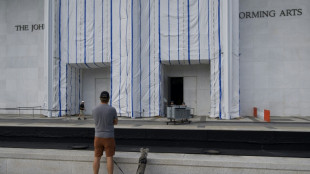 Kennedy Center: future unclear for iconic Washington arts hub

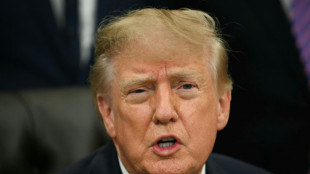 Trump claims 'infinite' Greenland security deal with Denmark

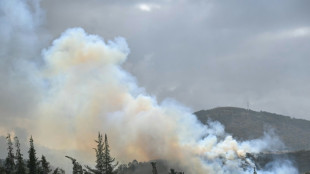 Helicopters battle wildfire threatening Ecuador's capital

 Brentford batter Chelsea to undo Alonso's promising start
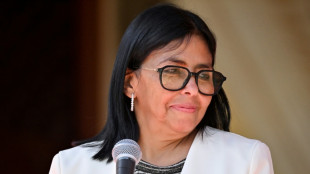
 Kane hits Bundesliga century as Bayern rout Union
 Trump says CNN, MS NOW, Politico banned from White House
 Hushing and hedging: US companies retreat on climate

 Springboks to face Fiji before 2027 Rugby World Cup
 Nigeria miners struggled to breathe in cell before 37 died: survivors

 McIlroy on the charge at PGA Championship as Reed withdraws
 McIlroy on the charge at PGA Championship
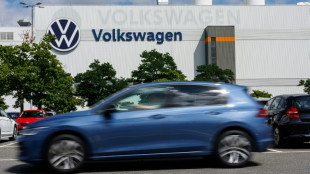 Crisis-wracked Volkswagen warns of 10-bn-euro hit to profits
 Costa Rica's Grynspan tops third informal poll for UN chief: diplomat
 Stock markets retreat after central bank rate hikes
 Russia labels director of Cannes Grand Prix winner a 'foreign agent'
 Macron warns of Russian 'hybrid' threat after meeting presidential hopefuls
 UN holds third informal poll for new chief
 Kulusevski return can spark Spurs: De Zerbi

 Shakira to cap off world tour with Madrid 12-gig run
 Isolated Syrian-Druze city blames Damascus for shortages
 Isolated Syrian-Druze city shortages
 Dutch drop Depay for Germany match in Xavi's first pick
 Ronaldo named in Portugal squad for Nations League
 Stock markets diverge after central bank rate hikes
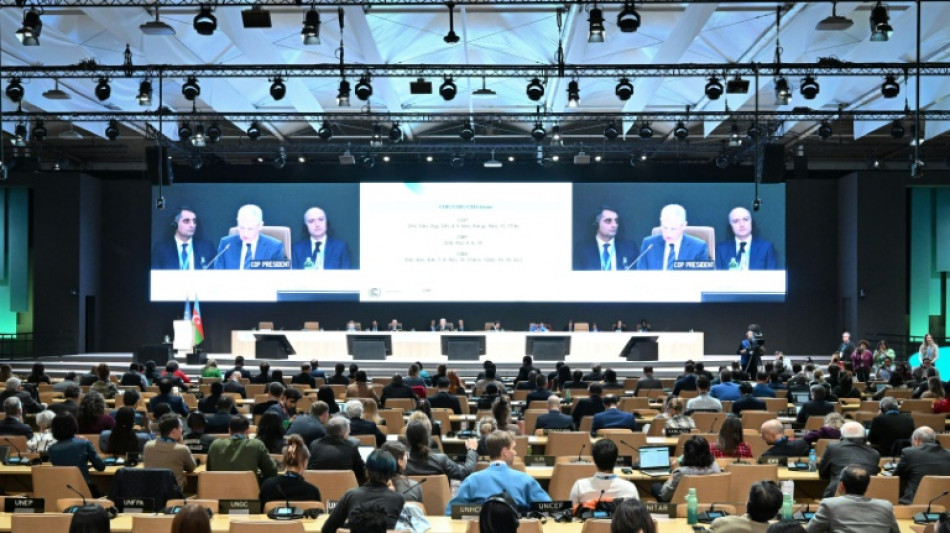
After three sleepless nights of back and forth among negotiators, all it took to seal a contentious global deal on climate finance was the hammering of a gavel. And just as quickly, the denunciations began.
In a year expected to be the hottest on record, the fate of the fight against climate change was haggled over for two weeks inside Azerbaijan's Olympic Stadium, which has never held the Olympics but was transformed into a cavernous, windowless maze of conference rooms.
The key issues showed no sign of resolution by the scheduled closing time of 6:00 pm on Friday, with Azerbaijan only convening a final session after midnight more than a day afterwards.
But at nearly 3:00 am on Sunday, Azerbaijan's stoic, silver-haired COP president Mukhtar Babayev raised the gavel. The deal, he announced, had been adopted.
Most of the delegates took to the floor, some applauding loudly and others -- such as those from oil producer Saudi Arabia -- just watching politely.
But no sooner was word of the deal out than countries were lining up to lodge complaints.
Cuba and India both took to the floor to denounce it, as did Chile and typically amenable Switzerland.
In a fiery address, India's representative said the figure agreed in the deal -- $300 billion a year to be paid by wealthy countries to poorer ones worst affected by climate change -- was "abysmally low".
Chandni Raina accused Babayev of ignoring objections and going ahead to announce the agreement by consensus -- a tactic repeatedly used at UN climate talks.
"This has been stage-managed and we are extremely, extremely disappointed with this incident," she said as she looked at him, while climate activists in the back of the room roared and pounded their desks in approval.
Babayev, unflinching, responded, "Thank you for your statement."
- Down-to-wire talks -
India is known for its fierce independence and criticism of Western climate policies, but it had not been as visible as some other countries, both rich and poor, in the breakneck diplomacy to reach the COP29 deal.
During a pause in the closing session, John Podesta, a close adviser to outgoing US President Joe Biden, smiled broadly as he shook hands and chatted with his Chinese counterpart, who in turn was seen speaking to Saudi officials who then passed around a telephone.
Panama's negotiator Juan Carlos Monterrey Gomez, a recognisable presence in Baku with his national hat and outspoken criticism of rich nations -- which hours earlier he said had been offering "crumbs" -- told AFP as the closing session got underway, "We are beginning to see the light."
Mindful of the lessons of the troubled 2009 Copenhagen climate summit, the Azerbaijani hosts made sure to attend to practicalities, with a coffee stand remaining open late into the night for bleary-eyed participants.
But as the clock ticked, some delegates came to the plenary hall with hulking suitcases as they rushed to catch their flights, with one activist dozing off on a desk next to a plastic bag full of nuts and potato chips.
Azerbaijan, an authoritarian oil and gas exporter, had come under heavy criticism for its handling of COP29.
Its president, Ilham Aliyev, opened the conference in an unusually confrontational way by attacking Western nations that have criticised his rights record and praising fossil fuels as a divine gift.
But after pounding the gavel on a deal, in a plenary room named after Azerbaijan's national poet, the usually taciturn Babayev took a short victory lap.
"Since the beginning of this journey, people doubted that Azerbaijan could deliver. They doubted that everyone could agree. They were wrong on both."
B.Mahmoud--SF-PST