-
 Death toll from attack at police HQ in Pakistan rises to 31
-
Drone owners rush to offload devices ahead of Beijing ban

-
 Trump says Denmark to give US 'permanent control' over Greenland security
-
Trump's beef policies irk Texas ranchers, testing their loyalty
-
 Kennedy Center: future unclear for iconic Washington arts hub
-
Nvidia, OpenAI CEOs to attend Xi dinner at White House

-
 Trump claims 'infinite' Greenland security deal with Denmark
-
Anthropic picks Accenture for in-house AI safety evaluation

-
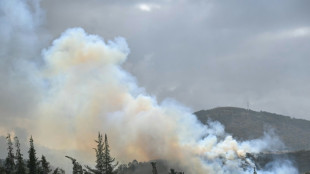 Helicopters battle wildfire threatening Ecuador's capital
-
Balogun returns as Monaco beat Lens to continue strong Ligue 1 start

-
 Brentford batter Chelsea to undo Alonso's promising start
-
'Pause' on overt repression in Venezuela, but reforms still needed: HRW
-
 Kane hits Bundesliga century as Bayern rout Union
-
Global stocks mixed as yen falls despite Bank of Japan rate hike
-
 Trump says CNN, MS NOW, Politico banned from White House
-
Cuba hit with seventh major blackout of the year
-
 Hushing and hedging: US companies retreat on climate
-
Murray out with concussion so Wentz will start for Vikings

-
 Springboks to face Fiji before 2027 Rugby World Cup
-
UN chief 'deeply regrets' US visa refusal to Abbas for annual meeting
-
 Nigeria miners struggled to breathe in cell before 37 died: survivors
-
England quick Carse to face no charges over alleged nightclub assault

-
 McIlroy on the charge at PGA Championship as Reed withdraws
-
Mancini brings nine newcomers into the first squad of his Italy comeback
-
 McIlroy on the charge at PGA Championship
-
Czechs level Davis Cup tie against USA as South Korea eye Finals

-
 Crisis-wracked Volkswagen warns of 10-bn-euro hit to profits
-
New France boss Zidane confirms Mbappe as captain after naming first squad
-
 Costa Rica's Grynspan tops third informal poll for UN chief: diplomat
-
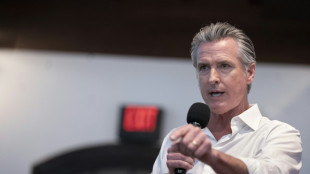
California governor signs order to explore AI 'kill switch'
-
 Stock markets retreat after central bank rate hikes
-
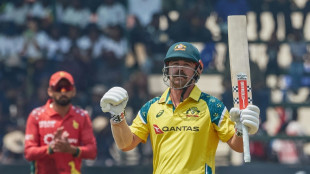
Head leads run spree as Australia win Zimbabwe ODI series
-
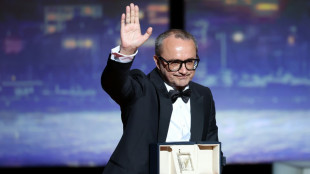 Russia labels director of Cannes Grand Prix winner a 'foreign agent'
-
In-form Raphinha wants to finish career at Barcelona

-
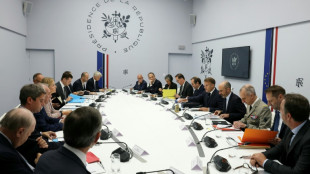 Macron warns of Russian 'hybrid' threat after meeting presidential hopefuls
-
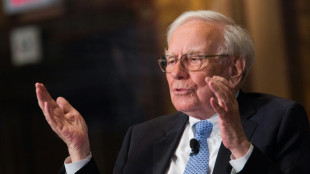
Warren Buffett steps down as Berkshire Hathaway chairman
-
 UN holds third informal poll for new chief
-
Carrick confident Man Utd can 'work through' tough time
-
 Kulusevski return can spark Spurs: De Zerbi
-
Mbappe ends Nike partnership to join Swiss brand On

-
 Shakira to cap off world tour with Madrid 12-gig run
-
Liverpool boss Iraola puts Bournemouth love affair on hold

-
 Isolated Syrian-Druze city blames Damascus for shortages
-
'A disaster' if Man City do not win says Maresca after flawless start
-
 Isolated Syrian-Druze city shortages
-
Kerry James Marshall: American 'blackness' painter celebrated in Europe

-
 Dutch drop Depay for Germany match in Xavi's first pick
-
Spain coach De la Fuente offers 'full support' to people of Ceuta

-
 Ronaldo named in Portugal squad for Nations League
-
Russia seizes assets of Nestle, French firms over West's Ukraine support
World reaches $300 bn climate finance deal at COP29
The world approved a bitterly negotiated climate deal Sunday committing wealthy historic polluters to $300 billion annually for poor and vulnerable nations that had demanded far more to confront the crisis of global warming.
After two exhaustive weeks of chaotic bargaining and sleepless nights, nearly 200 nations banged through the contentious finance pact in the early hours beneath a sports stadium roof in Azerbaijan.
Nations had struggled to reconcile long-standing divisions over climate finance. Sleep-deprived diplomats, huddled in anxious groups, were still revising the final phrasing on the plenary floor before the deal passed.
At points, the talks appeared on the brink of collapse, with developing nations storming out of meetings and threatening to walk away should rich nations not cough up more cash.
In the end -- despite repeating that no deal is better than a bad deal -- they did not stand in the way of an agreement, despite it falling well short of what they want.
The final deal commits developed nations to pay at least $300 billion a year by 2035 to help developed countries green their economies and prepare for worse disasters.
That is up from $100 billion now provided by wealthy nations under a commitment set to expire -- and from the $250 billion proposed in a draft Friday.
That offer was slammed as offensively low by developing countries, which have demanded at least $500 billion to build resilience against climate change and cut emissions.
A number of countries have accused Azerbaijan, an authoritarian oil and gas exporter, of lacking the experience and will to meet the moment, as the planet again sets temperature records and faces rising deadly disasters.
Wealthy countries and small island nations have also been concerned by efforts led by Saudi Arabia to water down calls from last year's summit to phase out fossil fuels.
The United States and EU have wanted newly wealthy emerging economies like China -- the world's largest emitter -- to chip in.
The final draft encouraged developing countries to make contributions on a voluntary basis, reflecting no change for China which already pays climate finance on its own terms.
Wealthy nations said it was politically unrealistic to expect more in direct government funding.
Donald Trump, a sceptic of both climate change and foreign assistance, returns to the White House in January and a number of other Western countries have seen right-wing backlashes against the green agenda.
The deal posits a larger overall target of $1.3 trillion per year to cope with rising temperatures and disasters, but most would come from private sources.
T.Samara--SF-PST