'They even murder children': Burkinabes caught in conflict crossfire / Photo: Issouf SANOGO - AFP

 At UN, OpenAI's Altman calls 'for extreme care' in AI
 Hamilton gives thumbs up to Gulf GPs despite Iran conflict
 Leclerc admits going 'too far' in Hamilton shunt in Italy
 Row engulfs Dolly Parton's estate as manager accuses nephew of making threats
 Mandela Digital Extends Early Access Programme to 11 February 2027 Following Strong Response

 US seeks 11th Presidents Cup win in a row over global foes

 McDonald's to boost franchisees as inflation weighs on consumers
 Trump invites Putin to G20 summit in Miami
 Archaelogical 'breakthrough' could confirm origins of Paris

 ILO financial crisis takes centre stage in leadership race
 Stocks dip, oil soars despite Trump hailing "productive" Iran talks

 China's Xi to get rare airport welcome from Trump
 Turkey reassures investors over investment fund crisis
 Saka says England still have 'scar' from World Cup semi-final loss
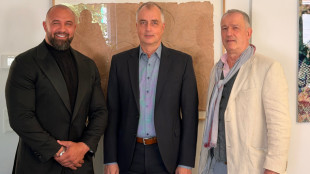
 アレックス・ボディ氏とシュテファン・ハウプト教授、ルーマニアの伝説的な美術コレクションをめぐり提携に合意

 亞歷克斯·博迪與史蒂芬·豪普特教授就羅馬尼亞傳奇藝術收藏達成合作協議
 Алекс Боди и проф. д-р Стефан Хаупт договорились о сотрудничестве в рамках легендарной коллекции произведений искусства в Румынии
 French foreign minister says Palestinians 'must' hold polls
 Fresh Russian strikes on Ukraine's infrastructure kill seven
 Eriksen to return to Denmark after parting ways with Wolfsburg
 Brad Pitt says working with dog co-star was 'really moving'

 Golan will remain Syrian, vows President al-Sharaa at UN

 Blueberry Strengthens MENA Presence with CMA Category 5 License and Dubai Office Launch
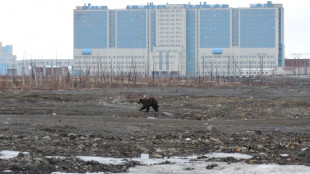 Russia probes bear attacks, as official says town under 'siege'

 Robertson tells Spurs to 'forget' past woes

In northern Ivory Coast, thousands of refugees from neighbouring Burkina Faso have fled two threats -- jihadist attacks, and massacres committed by army-backed militiamen who target the Fulani community.
A year ago, the night that gunmen showed up at Ami G.'s village near Titao, in northern Burkina Faso, she and her six children left everything behind and fled on foot, walking for several days.
"There was a baptism that day. Suddenly, we heard gun shots," said the young woman, who belongs to the Mossi ethnic group, which makes up about half of the Burkinabe population.
"The jihadists killed our husbands and threatened to do the same to us on their next visit," she said.
"They had already come and forced us to wear long black dresses. Then, they threatened us with reprisals, because we had been speaking with soldiers. There, it is war, they even murder children," she said, wiping a tear from her face.
After a journey of more than 600 kilometres (370 miles), Ami G. found safety in Ouangolodougou, a city in northern Ivory Coast where she is being hosted by a camp for asylum seekers in Niornigue.
Abidjan does not recognise those fleeing Burkina Faso as refugees.
Adama M., another newcomer at the camp, wearing a blue headscarf and a yellow skirt, recalled the day that armed militants looted her home.
"They killed my aunt with a bullet in the head and tied up and kidnapped my older brother. They told us not to cry," she said, after having travelled 900 kilometres from Gorom-Gorom, a town in the north of Burkina, near Mali and Niger.
The ACLED non-governmental group, which tracks conflict, has counted more than 26,000 people killed -- soldiers, militiamen and civilians -- in Burkina Faso since the start of the conflict in 2015.
An estimated two million people have been forced to flee their homes.
- Militia violence -
As well as insurgent violence, another kind of abuse is pushing Burkinabes to flee -- the terror spread by the Volunteers for the Defence of the Homeland (VDP), a force made up of civilians recruited by the army to fight alongside troops but who do not hold military status.
The militia, which was formed to defend villages against jihadist attacks, has scaled up since junta chief Captain Ibrahim Traore seized power in the West African country in a 2022 coup.
He vowed to regain control over a nation plagued by armed groups, mainly affiliated with Al-Qaeda but some with the Islamic State group.
Because many ethnic Fulani people, a community of mainly semi-nomadic herders, have joined the ranks of the jihadists, the community as a whole has become a target of the VDP, sources told AFP.
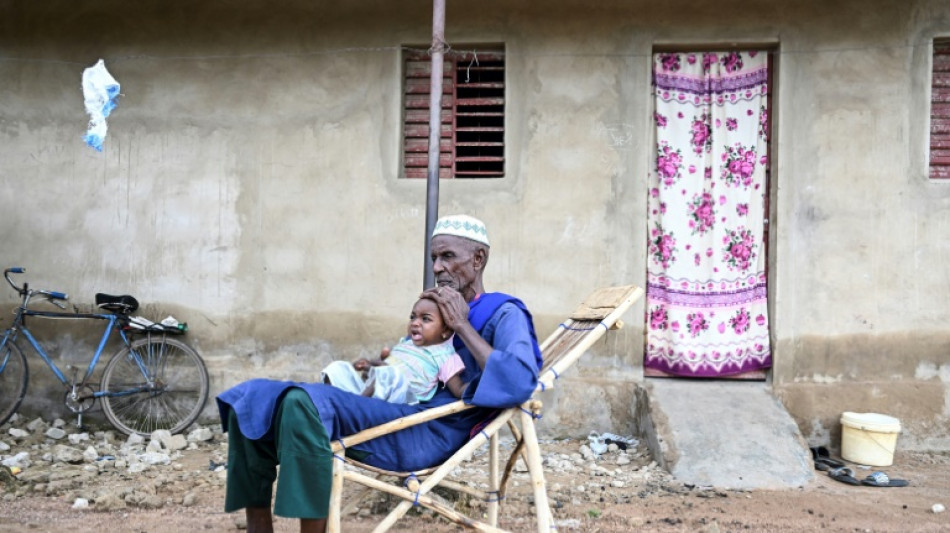
Abdoulaye D., 79, fled his home in Bobo-Dioulasso with his grandchildren after armed men in military uniforms killed his two sons and stole his cattle.
"They tied up all the Fulanis and executed them with a rifle," he told AFP, holding his one-year-old granddaughter in his arms.
When asked about Captain Traore, his expression turned to anger.
"What those in power are doing is ethnic differentiation," said Abdoulaye, who arrived in Ivory Coast four months ago.
"There is no more Burkina for me, even when I die, I don't want my body to be sent there."
- 'Killed my entire family' -
Other stories in the community echo Abdoulaye's.
Aminata S. left the northwestern town of Nouna in January 2023 after the VDP killed her husband and parents in a massacre Amnesty International blamed on the "army's proxy forces".
"They came on a Friday and killed my entire family. There were three Fulani camps -- they fired everywhere and killed 31 people," said Aminata, adding that she did not want to hear about Traore.
"I don't want to go back to Burkina," she said.
A Ivorian resident of Ouangolodougou who spoke on condition of anonymity said Fulani traders, whom locals were used to seeing in the city, had been killed by the VDP.
"They said they were supplying the jihadists," the resident said. "They target people who go back and forth between the two countries."
"In the bush in Burkina, if you are Fulani, people say you are a jihadist. If they see you, you're dead. It is ethnic targeting," said Moussa T., a Fulani refugee.
In the Niornigue refugee camp, 98 percent of the population is Fulani. Many Mossis -- the majority ethnic group in Burkina Faso -- did not stay, officially citing a desire to make a living out of farming land.
But for one woman who fled Burkina Faso and took refuge in the camp seeking asylum, said there was more to it.
"Many left because they did not want to live with Fulanis," she said.
"When they see them, they are reminded of jihadists. But for me, living together is good, these people haven't done anything to me."
Y.Shaath--SF-PST