Tolstoy's descendants in family saga over Russian peace prize / Photo: Natalia KOLESNIKOVA - AFP

 At UN, OpenAI's Altman calls 'for extreme care' in AI
 Hamilton gives thumbs up to Gulf GPs despite Iran conflict
 Leclerc admits going 'too far' in Hamilton shunt in Italy
 Row engulfs Dolly Parton's estate as manager accuses nephew of making threats
 Mandela Digital Extends Early Access Programme to 11 February 2027 Following Strong Response

 US seeks 11th Presidents Cup win in a row over global foes
 McDonald's to boost franchisees as inflation weighs on consumers
 Trump invites Putin to G20 summit in Miami
 Archaelogical 'breakthrough' could confirm origins of Paris
 ILO financial crisis takes centre stage in leadership race
 Stocks dip, oil soars despite Trump hailing "productive" Iran talks
 China's Xi to get rare airport welcome from Trump
 Turkey reassures investors over investment fund crisis
 Saka says England still have 'scar' from World Cup semi-final loss
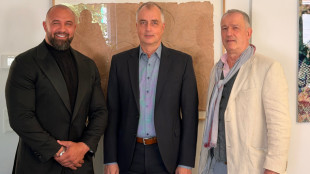
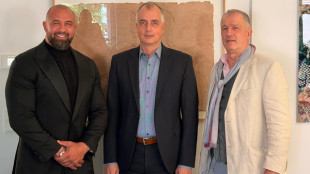 アレックス・ボディ氏とシュテファン・ハウプト教授、ルーマニアの伝説的な美術コレクションをめぐり提携に合意
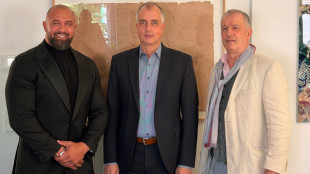 亞歷克斯·博迪與史蒂芬·豪普特教授就羅馬尼亞傳奇藝術收藏達成合作協議
 Алекс Боди и проф. д-р Стефан Хаупт договорились о сотрудничестве в рамках легендарной коллекции произведений искусства в Румынии
 French foreign minister says Palestinians 'must' hold polls
 Fresh Russian strikes on Ukraine's infrastructure kill seven
 Eriksen to return to Denmark after parting ways with Wolfsburg
 Brad Pitt says working with dog co-star was 'really moving'
 Golan will remain Syrian, vows President al-Sharaa at UN
 Blueberry Strengthens MENA Presence with CMA Category 5 License and Dubai Office Launch
 Russia probes bear attacks, as official says town under 'siege'
 Robertson tells Spurs to 'forget' past woes
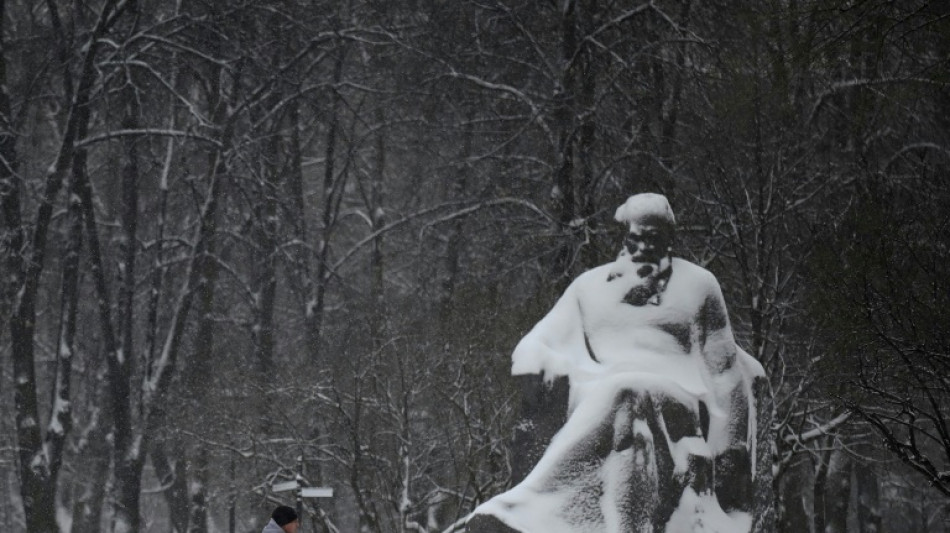
A new peace prize backed by Russian President Vladimir Putin bearing Leo Tolstoy's name has divided the writer's descendants, bringing to mind the unhappy families of his novel "Anna Karenina".
At the famed Bolshoi Theatre in Moscow, the first Leo Tolstoy International Peace Prize was awarded on September 9 to the African Union, in the presence of numerous high-profile Russians.
Leo Tolstoy "would turn and turn and turn in his grave" if he knew, "but hopefully he can't hear anything", his great-grandson Stephan Tolstoy told AFP in an interview in Stockholm.
An elegant 83-year-old Swedish national, he has been fuming ever since he found out about the initiative.
His ancestor was a fervent pacifist opposed to all forms of state and government, and who recounted his experience as a soldier during the Siege of Sevastopol in the Crimean War in 1854-1855.
"It is a peace prize. And I think it's perfect to link it to the name of Leo Tolstoy. There's nothing wrong with that," Stephan Tolstoy said.
"The problem is that it is initiated by a country at war and invading another country," he said, referring to Russia's invasion of Ukraine.
"And that makes it more complicated. A little bit disturbing," he added.
- Tool of influence -
The Tolstoy Prize helps contribute to the "formation of the new just multipolar world order", President Putin said in a statement accompanying the prize's announcement.
The selection of the African Union as its first laureate was likely a strategic choice, as Russia vies to expand its influence over the continent.
In this power struggle with the West, the Kremlin has recruited the illustrious "War and Peace" author's great-great-grandson, Vladimir Tolstoy, as a board member for the prize.
Leo Tolstoy "was always in favour of a just world", Vladimir Tolstoy told Russian state television Pervy Kanal in June.
"Tolstoy's descendants live all over the world and have supported this initiative," said the former presidential adviser on cultural affairs and head of the Tolstoy Museum in Moscow.
"No!", retorted his distant cousin in Stockholm.
"It was said that the members of the Tolstoy family were asked in advance, and certainly we were not," he said.
"Before the invasion, I had quite a good relationship with him (Vladimir Tolstoy)," said Stephan Tolstoy.
But "now we haven't had any discussions or contact since the war started, unfortunately."
In another sign of the deep split, the once-packed family reunions that Vladimir Tolstoy used to organise every two years at Leo Tolstoy's Yasnaya Polyana estate are now ancient history.
- Nobel copycats -
The Tolstoy Prize has little chance of overshadowing the most prestigious award in the field, the Nobel Peace Prize -- which Tolstoy himself was nominated for thrice.
Since it was first awarded in 1901, the Nobel, whose winners will be announced this year from October 7-14, has inspired numerous copycats, including some outright competitors.
In 1949, at the start of the Cold War, the Stalin Peace Prize -- later renamed the Lenin Peace Prize -- saw itself as an alternative to the Nobel and was presented until the Soviet Union's collapse.
Among its numerous laureates -- often subscribers to Communist ideology -- are Chilean poet Pablo Neruda, French author Louis Aragon, Spanish painter Pablo Picasso, Soviet leaders Nikita Khrushchev and Leonid Brezhnev, as well as Cuban leader Fidel Castro.
After the Nobel went to Chinese dissident Liu Xiaobo in 2010, a Confucius Peace Prize was also introduced in China and awarded for a few years, to Putin, Castro and Zimbabwean president Robert Mugabe, among others.
Meanwhile in Oslo, the Norwegian Nobel Institute aims to steer clear of any controversy when the Peace Prize is awarded on October 11.
"There are more than 300 peace prizes in the world and we wish all of them welcome and all the best," its director Olav Njolstad told AFP.
"We are pretty confident that the Nobel Peace Prize stands out as ... the most prestigious peace prize in the world, and that I say without any criticism of the other prizes," he added.
Q.Jaber--SF-PST