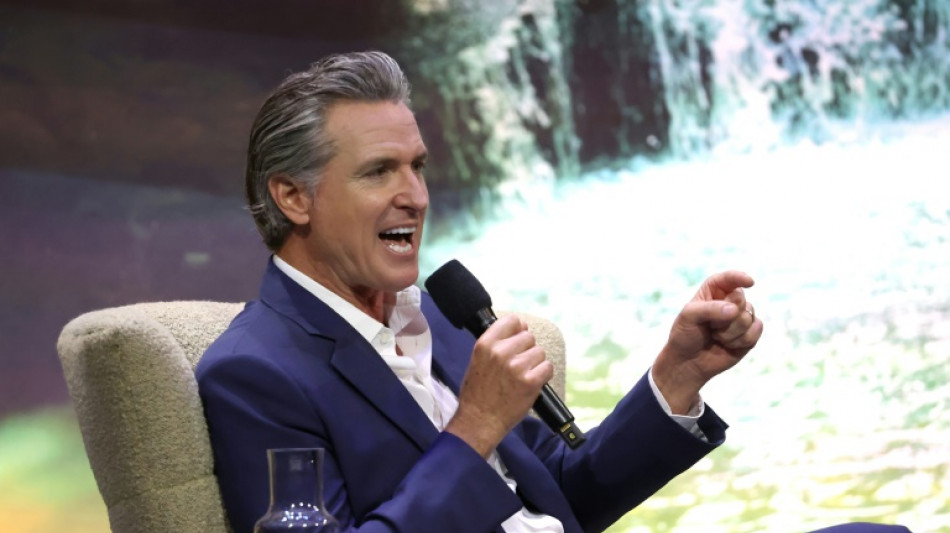
California enacts law to protect brain data / Photo: JUSTIN SULLIVAN - GETTY IMAGES NORTH AMERICA/AFP/File

 Venezuelan shot by ICE needs urgent surgery, mother tells AFP

 Giants QB Dart to have season-ending surgery: reports

 Judge urged to lift Trump's White House ban on media outlets

 Stocks fall on soaring bond yields, higher oil prices
 US judge weighing Trump's White House ban on media outlets

 At UN, OpenAI's Altman calls 'for extreme care' in AI

 Hamilton gives thumbs up to Gulf GPs despite Iran conflict

 Leclerc admits going 'too far' in Hamilton shunt in Italy

 Row engulfs Dolly Parton's estate as manager accuses nephew of making threats

 Mandela Digital Extends Early Access Programme to 11 February 2027 Following Strong Response

 US seeks 11th Presidents Cup win in a row over global foes

 McDonald's to boost franchisees as inflation weighs on consumers

 Trump invites Putin to G20 summit in Miami
 Archaelogical 'breakthrough' could confirm origins of Paris

 ILO financial crisis takes centre stage in leadership race
 Stocks dip, oil soars despite Trump hailing "productive" Iran talks

 China's Xi to get rare airport welcome from Trump

 Turkey reassures investors over investment fund crisis

 Saka says England still have 'scar' from World Cup semi-final loss
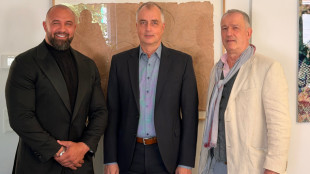
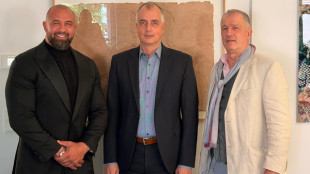 アレックス・ボディ氏とシュテファン・ハウプト教授、ルーマニアの伝説的な美術コレクションをめぐり提携に合意
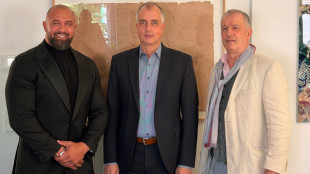 亞歷克斯·博迪與史蒂芬·豪普特教授就羅馬尼亞傳奇藝術收藏達成合作協議
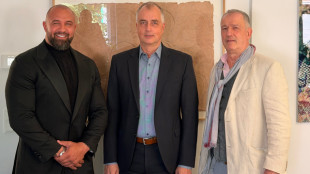
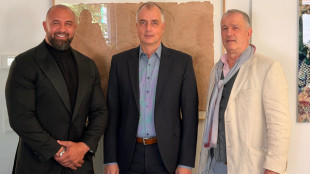 Алекс Боди и проф. д-р Стефан Хаупт договорились о сотрудничестве в рамках легендарной коллекции произведений искусства в Румынии
 French foreign minister says Palestinians 'must' hold polls
 Fresh Russian strikes on Ukraine's infrastructure kill seven

 Eriksen to return to Denmark after parting ways with Wolfsburg

A new California law extends consumer privacy protection to brainwave data gathered by implants or wearable devices.
Governor Gavin Newsom over the weekend signed into law a bill amending the California Consumer Privacy Act, the state's spin on the GDPR in Europe, to classify "neural data" as protected personal information along the lines of precise geolocation, genetics and biometrics.
Neurorights Foundation medical director Sean Pauzauskie called the Califoria law "an enormous victory" for patients suffering from mental health disorders as well as for consumers simply looking to enhance their lives with new technologies.
The NGO co-sponsored the bill with a state senator.
"The essential privacy guardrails it ensures should only boost confidence in all varieties of these revolutionary neurotechnologies, the great majority which are based in California," Pauzauskie said in a release.
California is the second state to extend data protections to brainwaves, on the heels of Colorado putting in place a law requiring privacy safeguards along the lines of what is done for fingerprints.
The California law sends "a clear signal to the fast-growing neurotechnology industry" to protect people's mental privacy, NeuroRights Foundation general counsel Jared Genser said in a release.
Genser argued for a national brainwave data privacy law.
Protections under the California law include the right to know what brain data is being collected, limit its disclosure, and to be able to opt-out or have it deleted.
The law applies to devices capable of recording or altering nervous system activity, whether they be implanted or worn, the NGO said.
The potential for devices to tap into how people feel or think has raised concerns they could be used to manipulate feelings or thoughts.
"In the coming years, the sensitivity of neural data will increase alongside surging investments...resulting in increased resolution of brain scans and larger datasets of brain data being collected," the NGO predicted.
"Meanwhile generative artificial intelligence will continue accelerating the ability to accurately decode these scans."
Billionaire Elon Musk with his Neuralink startup is among those striving to link brains and computers.
Musk envisions Neuralink implants going beyond restoring sight to the blind to giving people infrared or ultraviolet vision or letting them share concepts with others telepathically.
"We want to give people superpowers," Musk said. "Not just that we're restoring your prior functionality, but that you actually have functionality far greater than a normal human."
G.AbuOdeh--SF-PST