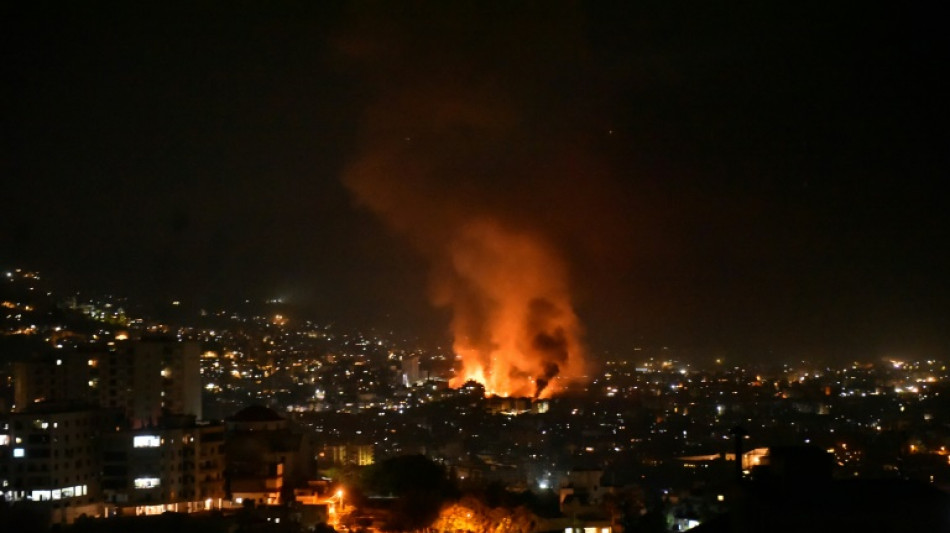
Israeli strikes pound Hezbollah's south Beirut bastion / Photo: Fadel ITANI - AFP

 Australian PM says OpenAI hacked government health website

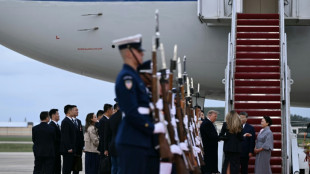 Xi arrives in US to personal Trump welcome
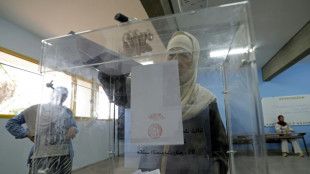 Morocco elects new parliament amid social frustration, youth discontent
 Scheffler and Burns to face Im and Lee in Presidents Cup opener
 Crushing wins for Lyon and Barca in women's Champions League
 Rio breaks record for rainiest September amid powerful El Nino
 At UN, tech chiefs urge caution in AI development
 Russian strikes kill seven in Ukraine, Zelensky vows winter campaign
 Venezuelan shot by ICE needs urgent medical care, mother tells AFP
 Zelensky says Putin using fighters from 47 countries in Ukraine war

 Klopp calls on Germany to 'rise above ourselves' as new era begins

 Russian strikes kill seven in Ukraine as Russia vows no 'pause' to war

 ArcPoint Expands Globally with Institutional Intelligence Platform for Modern Investors

 Ronaldo focussing on 'present' ahead of Wales test

 Outgoing UN chief makes final climate push at New York summit
 Grief and pain flow at hearing for Canadian suicide poison vendor
 Ireland boss Hallgrimsson says timing of Israel remarks 'not clever'
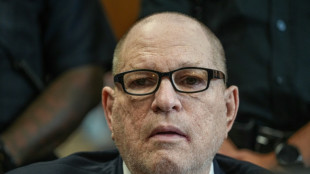 Weinstein resentenced to 15 years in prison for 2006 sex assault
 Fendi brings disco bling, Italian style, to Milan Fashion Week

 French court confirms rape trial for PSG and Morocco star Hakimi

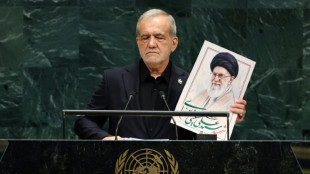 President tells Trump that Iran will never 'bend at the knee'

 أليكس بودي والبروفيسور الدكتور شتيفان هاوبت يتفقان على التعاون من أجل مجموعة فنية أسطورية في رومانيا

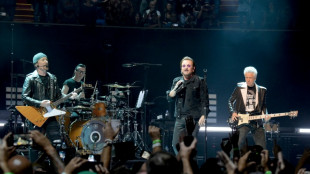 U2 at 50: Irish rockers reveal anniversary album

 Алекс Боді та проф. д-р Стефан Гаупт домовилися про співпрацю щодо легендарної колекції мистецтва в Румунії

 Alex Bodi și prof. dr. Stefan Haupt încheie un acord de cooperare pentru o colecție de artă legendară în România
Israeli fighter jets bombarded the southern suburbs of Lebanon's capital Beirut overnight into Saturday, sending panicked families fleeing massive strikes that were reportedly targeting Hezbollah chief Hassan Nasrallah.
Israel said it was attacking Hezbollah's headquarters and weapons facilities, while US and Israeli media reported that Nasrallah was the target, although a source close to the group said he was "fine".
The explosions that shook southern Beirut were the fiercest to hit the Iran-backed movement's stronghold since Israel and Hezbollah last went to war in 2006.
After heavy shelling sounded across the Mediterranean city on Friday, Israel issued fresh warnings for people to leave part of the densely populated Dahiyeh suburbs before dawn on Saturday.
Hundreds of families spent the night on the streets, seeking shelter in downtown Beirut's Martyrs' Square or along the seaside boardwalk area.
Syrian refugee and father of six Radwan Msallam said they had "nowhere to go".
"We were at home when there was the call to evacuate. We took our identity papers, some belongings and we left," he told AFP.
The Israeli army declined to comment on Nasrallah but claimed on Saturday to have killed "Muhammad Ali Ismail, the commander of Hezbollah's missile unit in southern Lebanon, and his deputy" as well as "other senior officials".
Hours earlier at the UN General Assembly, Israeli Prime Minister Benjamin Netanyahu vowed to keep fighting Hezbollah until the country's border with Lebanon was secured.
"Israel has every right to remove this threat and return our citizens to their homes safe," he said.
Hezbollah began low-intensity attacks across the border a day after its Palestinian ally Hamas staged its unprecedented attack on Israel on October 7.
Israel has in the past days shifted the focus of its operation from Gaza to Lebanon, where heavy bombing has killed more than 700 people and sparked an exodus of around 118,000 people.
- Nasrallah -
Israeli military spokesperson Daniel Hagari said on Friday that a "precise strike" hit Hezbollah's "central headquarters" located underneath residential buildings in Dahiyeh.
A source close to Hezbollah said the initial wave of strikes levelled six buildings.
According to a preliminary toll from Lebanon's health ministry, six people were killed and 91 wounded.
In the Haret Hreik neighbourhood, an AFP photographer saw the blasts left craters up to five metres (16 feet) wide. Ambulances careened into the area, while families scrambled out.
A second wave of attacks on the same southern suburbs followed on Saturday, as the Israeli military said it warned civilians to get away from three buildings in the heart of Dahiyeh.
Israel also announced strikes on the Beqaa area in eastern Lebanon and Tyre in the south.
US and Israeli media reported that Israel's strikes on Beirut aimed to kill Hezbollah leader Nasrallah.
Rarely seen in public, Nasrallah enjoys cult status among his Shiite Muslim supporters and is the only man in Lebanon with the power to wage war or make peace.
After a relentless night, the strikes appeared to stop around 6:00 am (0300 GMT), though fires were still smouldering in several areas.
"I felt like the building was going to collapse on top of me," said Abir Hammoud, a teacher in her 40s.
After the wave of strikes on Beirut, Hezbollah claimed a rocket attack on kibbutz Kabri in northern Israel, "defending Lebanon and its people".
The Israeli military said sirens sounded in the north.
- 'Deadliest in a generation' -
Israel this week raised the prospect of a ground operation against Hezbollah, prompting widespread concern for an all-out regional war.
"We must avoid a regional war at all costs," UN chief Antonio Guterres told world leaders, while appealing again for a ceasefire.
In Israel, too, many were weary of the violence.
"It is incredibly exhausting to be in this situation. We don't really know what's going to happen, there's talk of a ground offensive or a major operation," said Lital Shmuelovich, a physiotherapy student.
In New York, Netanyahu also addressed the war in Gaza, saying that Israel's military would continue to fight Hamas until it achieved "total victory".
Diplomats have said efforts to end the war in Gaza were key to halting the fighting in Lebanon and bringing the region back from the brink.
Hamas's October 7 attack resulted in the deaths of 1,205 people, mostly civilians, according to an AFP tally based on Israeli official figures that include hostages killed in captivity.
Of the 251 hostages seized by militants, 97 are still held in Gaza, including 33 the Israeli military says are dead.
Israel's retaliatory military offensive has killed at least 41,534 people in Gaza, most of them civilians, according to figures provided by the Hamas-run territory's health ministry. The UN has described the figures as reliable.
- 'Change the rules' -
The Lebanon violence has raised fears of spillover, with Iran-backed militants across the Middle East vowing to keep up their fight with Israel.
Netanyahu took aim at Iran in his UN General Assembly address, saying: "I have a message for the tyrants of Tehran. If you strike us, we will strike you."
He added: "There is no place in Iran that the long arm of Israel cannot reach, and that's true of the entire Middle East."
Analysts have said Iran would try to resist being dragged into the conflict.
But following the Beirut strikes, Iran's embassy in Lebanon said: "This reprehensible crime... represents a dangerous escalation that changes the rules of the game."
Iran's President Masoud Pezeshkian later condemned the strikes, branding them a "flagrant war crime".
burs-lb/jsa
D.Khalil--SF-PST