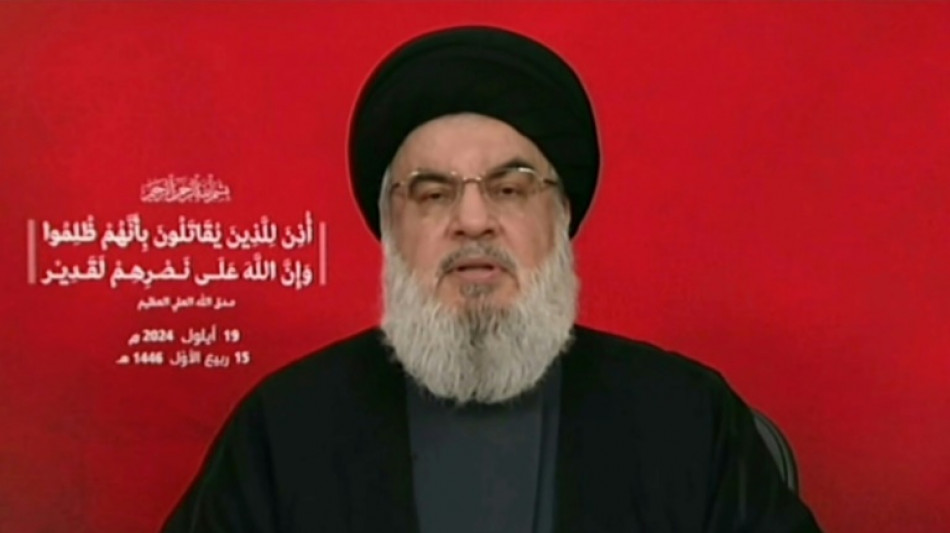
Hezbollah's Nasrallah: powerful leader living in hiding / Photo: - - Al-Manar/AFP/File

 Australian PM says OpenAI hacked government health website

 Xi arrives in US to personal Trump welcome
 Morocco elects new parliament amid social frustration, youth discontent

 Scheffler and Burns to face Im and Lee in Presidents Cup opener
 Crushing wins for Lyon and Barca in women's Champions League
 Rio breaks record for rainiest September amid powerful El Nino
 At UN, tech chiefs urge caution in AI development
 Russian strikes kill seven in Ukraine, Zelensky vows winter campaign
 Venezuelan shot by ICE needs urgent medical care, mother tells AFP
 Zelensky says Putin using fighters from 47 countries in Ukraine war
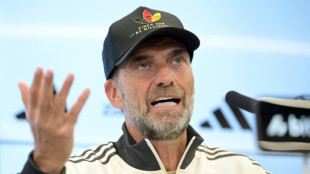 Klopp calls on Germany to 'rise above ourselves' as new era begins
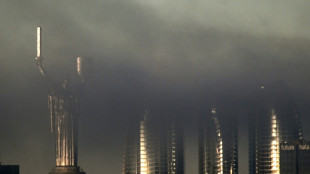 Russian strikes kill seven in Ukraine as Russia vows no 'pause' to war

 ArcPoint Expands Globally with Institutional Intelligence Platform for Modern Investors
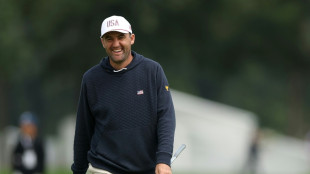
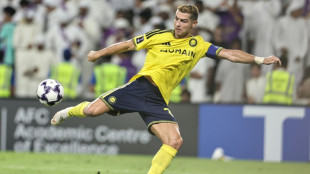 Ronaldo focussing on 'present' ahead of Wales test

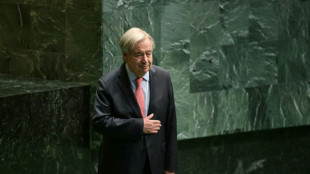 Outgoing UN chief makes final climate push at New York summit
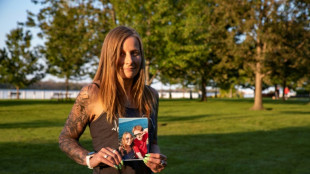 Grief and pain flow at hearing for Canadian suicide poison vendor
 Ireland boss Hallgrimsson says timing of Israel remarks 'not clever'

 Weinstein resentenced to 15 years in prison for 2006 sex assault
 Fendi brings disco bling, Italian style, to Milan Fashion Week
 French court confirms rape trial for PSG and Morocco star Hakimi
 President tells Trump that Iran will never 'bend at the knee'
 أليكس بودي والبروفيسور الدكتور شتيفان هاوبت يتفقان على التعاون من أجل مجموعة فنية أسطورية في رومانيا
 U2 at 50: Irish rockers reveal anniversary album
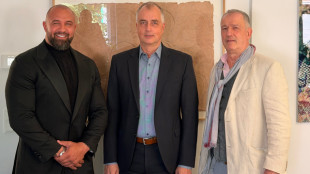 Алекс Боді та проф. д-р Стефан Гаупт домовилися про співпрацю щодо легендарної колекції мистецтва в Румунії
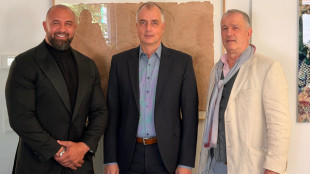
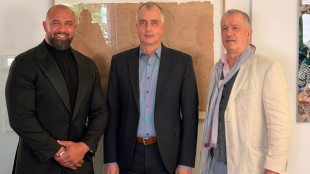 Alex Bodi și prof. dr. Stefan Haupt încheie un acord de cooperare pentru o colecție de artă legendară în România
Hezbollah chief Hassan Nasrallah is the only man in Lebanon with the power to wage war or make peace, but he leads a life in hiding to avoid assassination by his movement's arch-enemy, Israel.
A wave of Israeli strikes on Friday hit Hezbollah's main bastion in south Beirut, and Israeli broadcasters said Nasrallah was the target.
A source close to Hezbollah denied the reports, saying that he was "fine".
Nasrallah enjoys cult status among his Shiite Muslim supporters, is equipped with a formidable arsenal far bigger and more modern than the national army's, and holds sway over Lebanon's institutions.
Nasrallah has rarely been seen in public since his movement fought a devastating 2006 war with Israel.
In 2011, the leader showed up at a religious procession in Beirut's southern suburbs and briefly greeting supporters before addressing the crowd on video from an undisclosed location.
In a 2014 interview with Lebanon's pro-Hezbollah newspaper Al-Akhbar, Nasrallah said that "the Israelis are pushing the idea... that I live far from people, that I don't see them or communicate with them."
He said that he regularly switched sleeping places, but denied that he lived in a bunker.
"The point of security measures is that movement be kept secret, but that doesn't stop me from moving around and seeing what is happening," he said.
Nasrallah is still occasionally photographed alongside other leaders of Iran-backed armed groups in the Middle East.
Very few people are believed to know where he lives. Officials and journalists who met Nasrallah in recent years described tight security measures that prevented them from knowing where they were being taken.
The vast majority of his speeches in the past two decades have been recorded and broadcast from a secret location.
- Supporting Hamas -
A gifted public speaker, 64-year-old Nasrallah is a master of cadence, swinging from humour to belittle his enemies to rage to fire up his 100,000-man militia.
The bearded, bespectacled cleric is never seen without traditional robes and the black turban that marks him out as a descendant of the prophet Mohammed.
He is married and has four surviving children.
He was elected secretary general of Hezbollah in 1992, aged just 32, after an Israeli helicopter gunship killed his predecessor Abbas al-Musawi.
Hezbollah is the only group that refused to give up its weapons after Lebanon's 15-year civil war ended in 1990, and Nasrallah insists that Israel remains an existential threat.
Since Hezbollah's Palestinian ally Hamas attacked Israel on October 7, Hezbollah has battled Israeli troops almost daily along the Lebanon-Israel border.
- Political force -
Born in Beirut's impoverished northern suburb of Burj Hammud on August 31, 1960, he was one of nine children of a poor grocer hailing from the tiny southern village of Bazuriyeh.
Nasrallah studied politics and the Koran for three years at a seminary in Iraq's Shiite holy city of Najaf, before being expelled in 1978 when the Sunni-dominated government turned on Shiite activists.
He then became heavily involved in Lebanese politics and gained much of his early experience in the Shiite Amal militia during the civil war.
But he broke away from Amal when Israeli troops marched on Beirut in 1982 to become one of the founders of Hezbollah.
He acquired his cult status in Lebanon and across the Arab world after Israel withdrew its troops from south Lebanon under relentless Hezbollah attack in May 2000, ending 22 years of occupation of the border strip.
Nasrallah's years at the helm of Hezbollah, or Party of God, have seen the group expand from guerrilla faction into the country's most powerful political force.
Hezbollah is admired by many Shiites in Lebanon for supporting local charities, building up health and education services in its strongholds and assisting the needy among its supporters.
But in divided Lebanon, the movement is also widely hated, including by those who dream of a nation free from sectarianism and where the rule of law prevails.
Nasrallah's personal popularity soared across the Arab world after a UN-brokered ceasefire ended the 2006 conflict with Israel, before suffering a blow when he sent fighters to neighbouring Syria to prop up President Bashar al-Assad's regime in the war since 2011.
P.AbuBaker--SF-PST