China insists nuclear stance defensive after 'routine' ICBM launch / Photo: HANDOUT - Chinese People's Liberation Army News and Communication Center/AFP

 Iranian satire 'Head to Head' draws a veil over the men
 Archaeological 'breakthrough' could confirm origins of Paris
 Morocco elects new parliament with lowest turnout in nearly two decades

 North Korean IT contractor found remote work in New Zealand: agency

 Anthropic touts AI-led biology discovery
 Giants QB Dart to have season-ending surgery
 Venezuelan shot by ICE needs urgent surgery, mother tells AFP

 Giants QB Dart to have season-ending surgery: reports

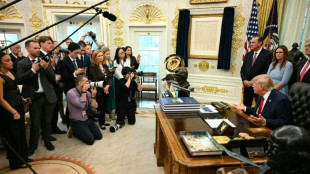 Judge urged to lift Trump's White House ban on media outlets
 Stocks fall on soaring bond yields, higher oil prices
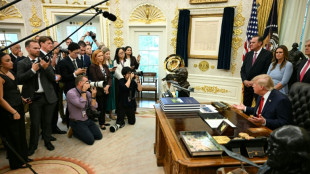 US judge weighing Trump's White House ban on media outlets
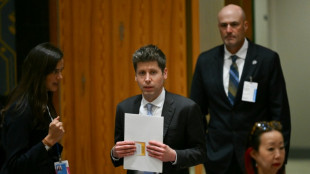 At UN, OpenAI's Altman calls 'for extreme care' in AI

 Hamilton gives thumbs up to Gulf GPs despite Iran conflict
 Leclerc admits going 'too far' in Hamilton shunt in Italy

 Row engulfs Dolly Parton's estate as manager accuses nephew of making threats
 Mandela Digital Extends Early Access Programme to 11 February 2027 Following Strong Response

 US seeks 11th Presidents Cup win in a row over global foes

 McDonald's to boost franchisees as inflation weighs on consumers
 Trump invites Putin to G20 summit in Miami

 Archaelogical 'breakthrough' could confirm origins of Paris

 ILO financial crisis takes centre stage in leadership race

 Stocks dip, oil soars despite Trump hailing "productive" Iran talks

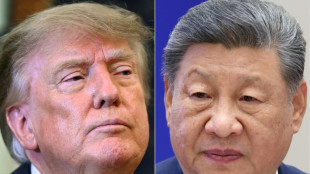 China's Xi to get rare airport welcome from Trump

 Turkey reassures investors over investment fund crisis
 Saka says England still have 'scar' from World Cup semi-final loss

China said on Thursday that its launch of an intercontinental ballistic missile (ICBM) into the Pacific Ocean was "legitimate and routine", insisting that its nuclear stance remained defensive after the rare test prompted an outcry from countries in the region.
Beijing announced the trial on Wednesday -- its first such test in four decades -- saying that the missile was carrying a dummy warhead.
The launch sparked protests from countries in the region, with China's neighbour Japan saying it had not been given advance notice and Taiwan expressing "solemn condemnation".
Beijing's defence ministry said on Thursday the test was "a legitimate and routine arrangement" that aimed to "test our weapon and training performance".
"China's nuclear policy is very stable, consistent and predictable," ministry spokesman Zhang Xiaogang told a news conference in Beijing.
"We strictly follow a nuclear policy of no first use of nuclear weapons and pursue a nuclear strategy of self-defence," he said.
He said China does not seek an "arms race" and had "promised not to use or threaten to use nuclear weapons against non-nuclear weapons states or weapon-free zones".
"China will continue to keep its nuclear capabilities at the minimum level required for national security," Zhang said.
- International outcry -
Japan said it had not been given advance warning of the launch. Taiwan, the self-ruled island that Beijing claims as its territory, expressed "solemn condemnation".
Australia said it was seeking "an explanation", while New Zealand called the launch "an unwelcome and concerning development".
French Polynesia President Moetai Brotherson said "the missile fell not far from... the Marquesas Islands", an archipelago that is part of its exclusive economic zone.
"The Chinese authorities previously notified their French counterparts of this test," the French High Commission said in a statement, adding that France would make its position on the test known.
The Pentagon also said the United States received "some advanced notification of this ICBM test", describing the notification as "a step in the right direction" that would help prevent "misperception or miscalculation".
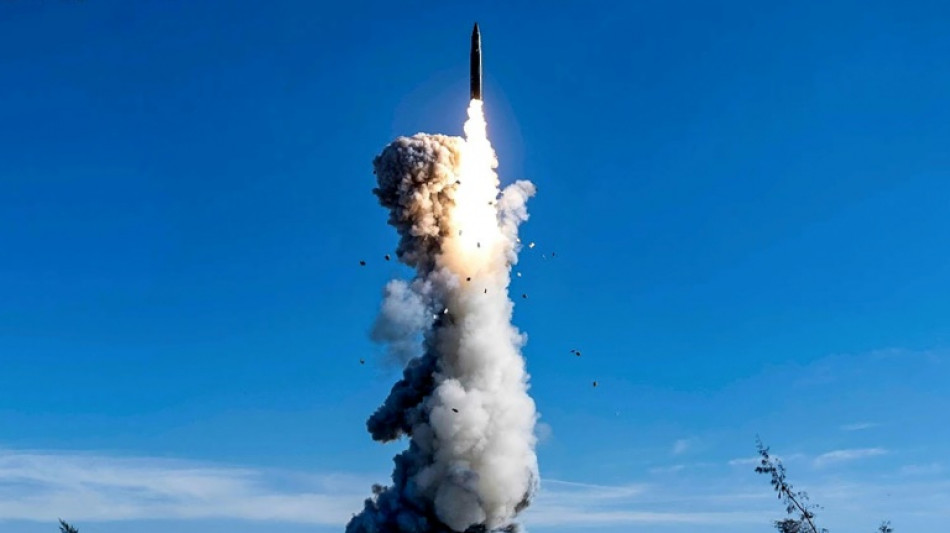
China's military released imagery of the missile on Thursday that showed the projectile soaring into the air in a plume of smoke from an undisclosed location.
Analysts said the imagery suggested the launch could be of a Dongfeng-31 AG intercontinental ballistic missile, unveiled during a military parade in 2017.
- Growing arsenal -
Beijing has stepped up its nuclear development and boosted defence spending in recent years.
The Pentagon warned last October that China was developing its arsenal more quickly than the United States had anticipated.
China held more than 500 operational nuclear warheads as of May 2023 and is likely to have more than 1,000 by 2030, the Pentagon said.
One analyst told AFP Beijing was "clearly trying to... signal that 'we are strong'".
"It sends a signal to the US and its allies... that China has the military ability to react in the event of any escalation of tensions between the United States and China," said Benjamin Ho, assistant professor at Singapore's S. Rajaratnam School of International Studies' China Programme.
burs-mjw/oho/pbt
G.AbuGhazaleh--SF-PST