Putin proposes broader criteria for using nuclear arms / Photo: Gavriil Grigorov - POOL/AFP

 Iranian satire 'Head to Head' draws a veil over the men
 Archaeological 'breakthrough' could confirm origins of Paris
 Morocco elects new parliament with lowest turnout in nearly two decades

 North Korean IT contractor found remote work in New Zealand: agency
 Anthropic touts AI-led biology discovery
 Giants QB Dart to have season-ending surgery
 Venezuelan shot by ICE needs urgent surgery, mother tells AFP
 Giants QB Dart to have season-ending surgery: reports

 Judge urged to lift Trump's White House ban on media outlets
 Stocks fall on soaring bond yields, higher oil prices
 US judge weighing Trump's White House ban on media outlets
 At UN, OpenAI's Altman calls 'for extreme care' in AI

 Hamilton gives thumbs up to Gulf GPs despite Iran conflict
 Leclerc admits going 'too far' in Hamilton shunt in Italy
 Row engulfs Dolly Parton's estate as manager accuses nephew of making threats
 Mandela Digital Extends Early Access Programme to 11 February 2027 Following Strong Response

 US seeks 11th Presidents Cup win in a row over global foes

 McDonald's to boost franchisees as inflation weighs on consumers
 Trump invites Putin to G20 summit in Miami

 Archaelogical 'breakthrough' could confirm origins of Paris
 ILO financial crisis takes centre stage in leadership race
 Stocks dip, oil soars despite Trump hailing "productive" Iran talks

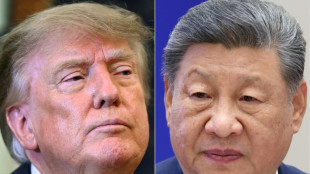 China's Xi to get rare airport welcome from Trump
 Turkey reassures investors over investment fund crisis
 Saka says England still have 'scar' from World Cup semi-final loss
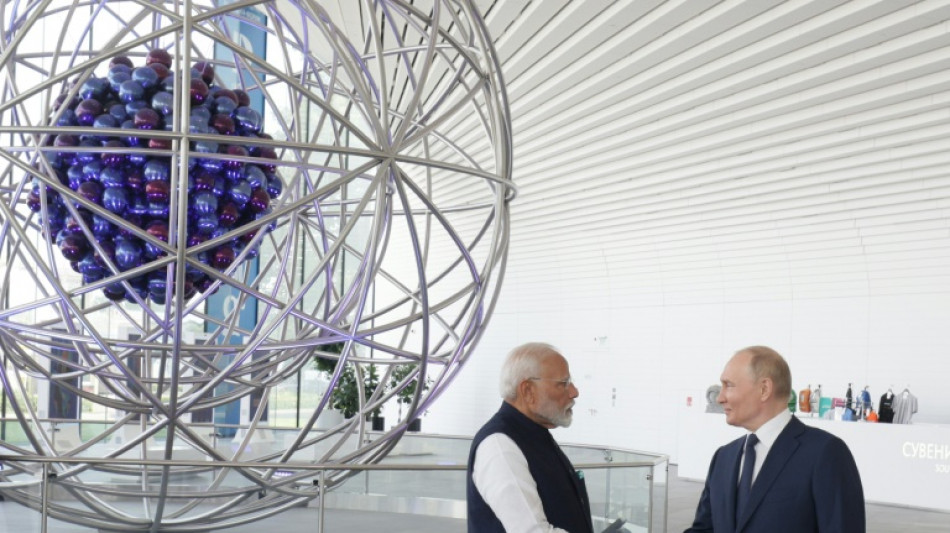
Russian President Vladimir Putin on Wednesday announced plans to broaden Russia's rules on the use of its nuclear weaponry, allowing it to unleash a nuclear response in the event of a "massive" air attack.
Under the proposed rules, Russia would also consider any attack by a non-nuclear country supported by a nuclear power as a joint attack by both.
Putin said it was necessary to adapt to emerging threats, and while he did not directly refer to Ukraine, the proposed measures appeared linked to Moscow's offensive launched in February 2022.
The changes, which Putin himself has the power to approve, come as Ukraine is seeking permission from Western allies to use long-range precision weaponry to strike targets deep inside Russia -- so far to no avail.
In a televised meeting with high-level officials, Putin detailed the proposed changes to the country's nuclear doctrine: the "utmost measure of protection of the country's sovereignty".
"We see the modern military and political situation is dynamically changing and we must take this into consideration," Putin said, citing "the emergence of new sources of military threats and risks for Russia and our allies".
Among the new measures, "it is proposed to consider aggression against Russia by any non-nuclear state" when this is carried out "with the participation or support of a nuclear power" as "their joint attack on Russia", Putin said.
This would seemingly apply to Ukraine, a non-nuclear state that receives military support from the United States and other nuclear-armed countries.
Putin said that proposed changes "clearly set the conditions for Russia to transition to using nuclear weapons".
"We will consider such a possibility once we receive reliable information about a massive launch of air and space attack weapons and their crossing our state border," the president added.
"I mean aeroplanes of strategic and tactical aviation, cruise missiles, drones, hypersonic and other aircraft," Putin said.
The president said the proposed changes also meant "we reserve the right to use nuclear weapons in case of aggression against Russia and Belarus", Moscow's close ally.
- 'Critical threat' -
He added that this included a situation in which another state "using conventional weapons, creates a critical threat to our sovereignty".
The president said that Russia's nuclear weapons were "the most important guarantee of security of our state and its citizens".
"It's important to predict how the situation will develop and accordingly adapt the clauses of the document on strategic planning to current realities," Putin said.
The proposed new doctrine has been prepared as a draft, while Putin needs to approve the text for it to enter force, TASS state news agency reported.
It was the first time that Putin had held such a meeting in public, TASS reported.
Only the president's opening remarks to officials seated around a long table were aired on television.
Putin said in his speech that such meetings on nuclear deterrence were scheduled twice a year.
The participants included former president Dmitry Medvedev, now deputy head of Putin's security council, as well as the defence and finance ministers and the heads of the FSB security service and SVR foreign intelligence service.
R.Halabi--SF-PST