Hezbollah's Fadi rockets: More power, little precision / Photo: Jack GUEZ - AFP

 Iranian satire 'Head to Head' draws a veil over the men

 Archaeological 'breakthrough' could confirm origins of Paris
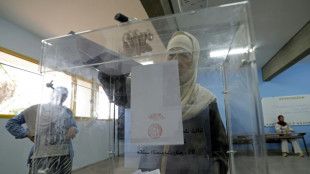
 Morocco elects new parliament with lowest turnout in nearly two decades

 North Korean IT contractor found remote work in New Zealand: agency

 Anthropic touts AI-led biology discovery
 Giants QB Dart to have season-ending surgery
 Venezuelan shot by ICE needs urgent surgery, mother tells AFP

 Giants QB Dart to have season-ending surgery: reports

 Judge urged to lift Trump's White House ban on media outlets
 Stocks fall on soaring bond yields, higher oil prices

 US judge weighing Trump's White House ban on media outlets
 At UN, OpenAI's Altman calls 'for extreme care' in AI

 Hamilton gives thumbs up to Gulf GPs despite Iran conflict

 Leclerc admits going 'too far' in Hamilton shunt in Italy

 Row engulfs Dolly Parton's estate as manager accuses nephew of making threats
 Mandela Digital Extends Early Access Programme to 11 February 2027 Following Strong Response

 US seeks 11th Presidents Cup win in a row over global foes

 McDonald's to boost franchisees as inflation weighs on consumers

 Trump invites Putin to G20 summit in Miami

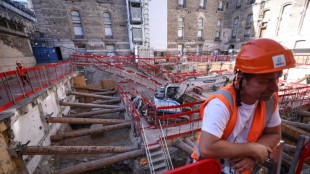 Archaelogical 'breakthrough' could confirm origins of Paris

 ILO financial crisis takes centre stage in leadership race

 Stocks dip, oil soars despite Trump hailing "productive" Iran talks

 China's Xi to get rare airport welcome from Trump

 Turkey reassures investors over investment fund crisis
 Saka says England still have 'scar' from World Cup semi-final loss

Fadi, a type of rocket used for the first time by Lebanese militant group Hezbollah against Israel, has more explosive power and range than rockets deployed previously, but lacks precision, experts say.
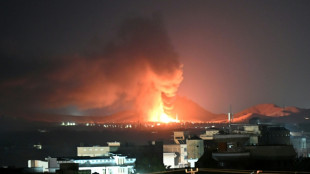
"In an initial response" to the explosions of pagers and two-way radios, Hezbollah on Sunday said it had "bombed the Rafael military industry complexes" in northern Israel with "dozens" of Katyusha, Fadi-1 and Fadi-2 rockets.
The Iran-backed group also said it had targeted the "Ramat David base and airport", around 45 kilometres (28 miles) from the border, twice overnight. It said it had used "dozens" of Fadi-1 and Fadi-2 rockets "in response to the repeated Israeli attacks that targeted different Lebanese regions and killed many civilians".
This was the first time Hezbollah had used Fadi rockets since Palestinian militant group Hamas attacked Israel on October 7 last year, sparking the latest war in Gaza.
According to the Iranian news agency Mehr, quoting Hezbollah, Fadi is a tactical multi-use ground-to-ground rocket.
The Fadi-1 version is six metres (20 feet) long, with a calibre of 220 mm and a payload of 83 kilograms (183 pounds).
The Fadi-2 that Hezbollah says it fired on Sunday has the same size, but has a 302 mm calibre, with a 170-kilogram payload and a range of 100 kilometres.
The non-guided Fadi is of a similar build to the 302-mm Syrian Khaibar rocket, which itself is based on the design of China's WS-1, said Elliot Chapman, a regional expert for British security firm Janes.
The rocket probably already featured in a video that Hezbollah broadcast in August showing combatants in wide, lit tunnels dug into rock, serviced by trucks and with a hatch and a launcher pointing to the sky, he said.
There has been no information as to whether the rockets are manufactured in Lebanon, or how many have been made.
- 'Probably used more frequently' -
But some estimates suggest that Hezbollah has an arsenal of thousands of unguided rockets, with ranges between 45 and 200 kilometres.
"The impact of this capability after Israel's airstrikes campaign is still unknown," Chapman said.
Hezbollah has been careful to avoid a full-on war with Israel, having used only smaller rockets in its regular shelling of northern Israeli targets.
Western governments now fear that this could change after last week's Israeli operations in southern Lebanon.
"Hezbollah has avoided major and serious escalations in its previous attacks," said War Noir, a military expert using a pseudonym and co-founder of the US site Militant Wire.
But as the conflict escalates, he said, and if Hezbollah can survive the intense Israeli airstrikes, "these heavy artillery rockets will probably be used much more frequently", including against targets deeper inside Israel.
- Israel's defences -
However, experts believe that Israel is able to defend itself against any coming onslaught, thanks to its air defence system -- the "Iron Dome" -- and other highly advanced weapons systems, combined with solid financial, technological and political support from the United States.
Hezbollah in 2021 claimed it had 100,000 combatants, twice as many as estimated by the IISS international strategic institute.
During manoeuvres in May 2023, Hezbollah showcased Iranian, Syrian, Russian and Chinese weapons systems.
According to the Israeli Alma security research centre, the Fadi rockets were named after Fadi Hassan Tawil, a Hezbollah militant killed by Israel in 1987.
His brother Wissam, who ran Hezbollah's special operations force Radwan, died in January in an airstrike on his vehicle.
Z.AlNajjar--SF-PST