
-
 North Korea to keep nuclear weapons 'forever': foreign minister
-
Malaysia's migrant return plan chills Myanmar Rohingya
-
 Markets mixed as China's Xi arrives for US talks
-
Pakistan confirms Afghan strikes after resident says Kandahar hit
-
 Swiss voters expected to shun stricter neutrality
-
Thousands missing, aid needs mount one month after Nepal's deadly floods
-
 Rapper-turned-PM faces first big test after Nepal disaster
-
Nepal flood victims look to PM Shah to press climate case at UN
-
 Tuchel seeks tonic to England World Cup 'scar' in Spain showdown
-
Trump admin says there were 8 suicide attempts on US aircraft carrier
-
 'Helps me cope': Catholic baptisms rise among French youth
-
Iranian satire 'Head to Head' draws a veil over the men

-
 Colombians in Santa Marta stay inside after violence wracks the city
-
Archaeological 'breakthrough' could confirm origins of Paris

-
 Iran airlines cancel flights as US sanctions hit
-
Morocco elects new parliament with lowest turnout in nearly two decades
-
 Meta launches camera-free AI glasses amid privacy pushback
-
North Korean IT contractor found remote work in New Zealand: agency
-
 Australian PM says OpenAI hacked government health website
-
Anthropic touts AI-led biology discovery

-
 Xi arrives in US to personal Trump welcome
-
Giants QB Dart to have season-ending surgery
-
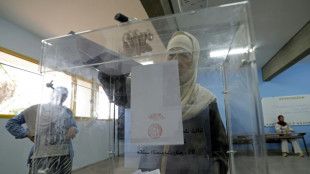 Morocco elects new parliament amid social frustration, youth discontent
-
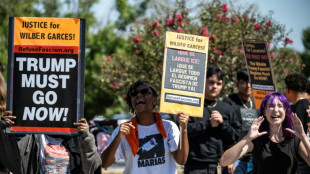
Venezuelan shot by ICE needs urgent surgery, mother tells AFP
-
 Scheffler and Burns to face Im and Lee in Presidents Cup opener
-
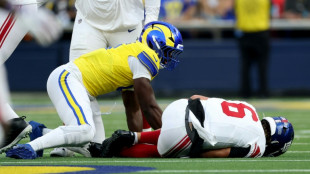
Giants QB Dart to have season-ending surgery: reports
-
 Crushing wins for Lyon and Barca in women's Champions League
-
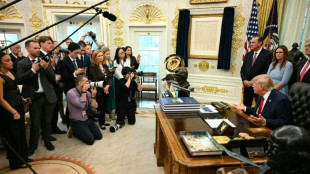
Judge urged to lift Trump's White House ban on media outlets
-
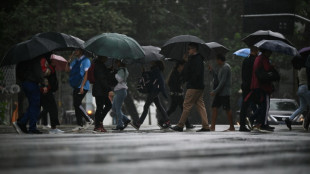 Rio breaks record for rainiest September amid powerful El Nino
-
Stocks fall on soaring bond yields, higher oil prices
-
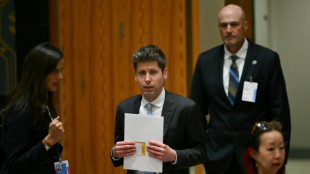 At UN, tech chiefs urge caution in AI development
-
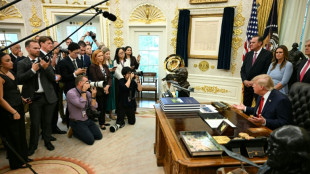
US judge weighing Trump's White House ban on media outlets
-
 Russian strikes kill seven in Ukraine, Zelensky vows winter campaign
-
At UN, OpenAI's Altman calls 'for extreme care' in AI
-
 Venezuelan shot by ICE needs urgent medical care, mother tells AFP
-
Hamilton gives thumbs up to Gulf GPs despite Iran conflict
-
 Zelensky says Putin using fighters from 47 countries in Ukraine war
-
Leclerc admits going 'too far' in Hamilton shunt in Italy

-
 Klopp calls on Germany to 'rise above ourselves' as new era begins
-
Row engulfs Dolly Parton's estate as manager accuses nephew of making threats

-
 Russian strikes kill seven in Ukraine as Russia vows no 'pause' to war
-
Mandela Digital Extends Early Access Programme to 11 February 2027 Following Strong Response

-
 ArcPoint Expands Globally with Institutional Intelligence Platform for Modern Investors
-
US seeks 11th Presidents Cup win in a row over global foes

-
 Ronaldo focussing on 'present' ahead of Wales test
-
McDonald's to boost franchisees as inflation weighs on consumers

-
 Outgoing UN chief makes final climate push at New York summit
-
Trump invites Putin to G20 summit in Miami
-
 Grief and pain flow at hearing for Canadian suicide poison vendor
-
Archaelogical 'breakthrough' could confirm origins of Paris

New Israeli strikes on Lebanon after 492 killed
Israel announced dozens of new air strikes on Hezbollah strongholds in Lebanon Tuesday, a day after 492 people, including 35 children, were killed in the deadliest bombardment since a devastating war in 2006.
Israel's overnight strikes on southern Lebanon came after it said it had killed a "large number" of militants when it hit about 1,600 suspected Hezbollah targets around the country.
Hezbollah said Tuesday it had launched volleys of missiles at Israeli military bases, hours after 180 of its projectiles and an unmanned aerial vehicle crossed into Israeli airspace, sending people in the city of Haifa running for shelter.
The Israeli military said more than 50 projectiles were fired into northern Israel in less than 10 minutes on Tuesday morning, most of which were intercepted.
In Lebanon, Monday's raids killed 492 people, including 35 children and 58 women, and wounded 1,645, according to the health ministry, which said "thousands of families" had fled their homes.
"Everyone is heading (to Lebanese capital Beirut) with their children and their belongings -- it's the first time we see such panic since 2006," said Lebanese journalist Nazir Reda, who was driving to his hometown near the Israeli border to get his family away from the violence.
Longtime foes Hezbollah and Israel have been locked in near-daily cross-border exchanges of fire for nearly a year, since Palestinian militant group Hamas staged an unprecedented attack on Israel on October 7.
Hezbollah, which has been fighting Israel for decades, and other Iran-backed militants in the region have been drawn into the violence.
Monday's bombardment of Lebanon was by far the largest, not just in the past year, but since the Israel-Hezbollah war in the summer of 2006.
That war killed 1,200 people in Lebanon, mostly civilians, and 160 Israelis, most of them soldiers, and devastated large swathes of Hezbollah's strongholds.
- 'Operation Northern Arrows' -
Israel has dubbed its large-scale raids on Hezbollah "Operation Northern Arrows" after announcing earlier this month it was shifting the focus of its firepower from Gaza to Lebanon.
World leaders have expressed alarm over the rapid escalation on the Lebanon front, with UN chief Antonio Guterres's spokesman saying he was "gravely alarmed" and the EU's top diplomat Josep Borrell warning "we are almost in a full-fledged war".
France and Egypt called on the United Nations Security Council to intervene, while Iraq requested an urgent meeting of Arab states on the sidelines of the UN General Assembly in New York.
The Pentagon said it was sending a small number of additional US military personnel to the Middle East after thousands were deployed earlier alongside warships, fighter jets and air defence systems.
A US official, speaking on condition of anonymity at the assembly, said that Washington opposed an Israeli ground invasion targeting Hezbollah and had "concrete ideas" on how to de-escalate the crisis.
G7 foreign ministers said in a joint statement that "no country stands to gain" from escalating conflict, warning of "unimaginable consequences" if a regional war broke out.
- 'Most difficult week for Hezbollah' -
Israeli army chief Herzi Halevi said Monday's strikes hit combat infrastructure Hezbollah had been building for two decades, while Defence Minister Yoav Gallant called Monday "a significant peak" in the operation.
"This is the most difficult week for Hezbollah since its establishment –- the results speak for themselves," he said.
"Entire units were taken out of battle as a result of the activities conducted at the beginning of the week in which numerous terrorists were injured."
Prime Minister Benjamin Netanyahu said Israel was acting to change the "security balance" in the north, wile Hezbollah said it was in a "new phase" of confrontation with Israel.
War in Gaza began with Hamas's October 7 attack on Israel, which resulted in the deaths of 1,205 people, mostly civilians, according to an AFP tally based on Israeli official figures that include hostages killed in captivity.
Of the 251 hostages seized by militants, 97 are still held in Gaza, including 33 the Israeli military says are dead.
Israel's retaliatory military offensive has killed at least 41,455 people in Gaza, most of them civilians, according to figures provided by the Hamas-run territory's health ministry. The UN has described the figures as reliable.
Since the start of the Gaza war, clashes along the Lebanon-Israel border have forced tens of thousands of people on both sides to flee their homes.
- Device blasts -
The violence between Israel and Hezbollah escalated dramatically last week, when coordinated communications device blasts that the militants blamed on Israel killed 39 people and wounded almost 3,000.
Then on Friday, an Israeli strike on southern Beirut, a bastion of Hezbollah, killed its elite Radwan Force commander, Ibrahim Aqil.
An Israeli military official, who cannot be identified, said the military is seeking to "degrade threats" from Hezbollah, push them back from the border and destroy infrastructure.
Lebanese Prime Minister Najib Mikati urged the United Nations and world powers to deter what he called Israel's "plan that aims to destroy Lebanese villages and towns".
He said he was cancelling a scheduled cabinet meeting to fly to New York to "make further contacts" with world leaders to try to end the violence.
burs-ser/kir
Y.Zaher--SF-PST