Lebanon device blasts: what we know about deadly attacks / Photo: Anwar AMRO - AFP

 As Moscow steps up attacks, Kyiv residents brace for harsh winter

 Comic inspires unlikely kabaddi dreams for Japan's Asian Games amateurs

 Thailand slams chaotic Asian Games organisation as 'musical chairs'

 North Korea to keep nuclear weapons 'forever': foreign minister

 Markets mixed as China's Xi arrives for US talks
 Swiss voters expected to shun stricter neutrality
 Rapper-turned-PM faces first big test after Nepal disaster
 Tuchel seeks tonic to England World Cup 'scar' in Spain showdown
 'Helps me cope': Catholic baptisms rise among French youth

 Colombians in Santa Marta stay inside after violence wracks the city
 Iran airlines cancel flights as US sanctions hit
 Meta launches camera-free AI glasses amid privacy pushback
 Australian PM says OpenAI hacked government health website

 Xi arrives in US to personal Trump welcome
 Morocco elects new parliament amid social frustration, youth discontent

 Scheffler and Burns to face Im and Lee in Presidents Cup opener
 Crushing wins for Lyon and Barca in women's Champions League

 Rio breaks record for rainiest September amid powerful El Nino
 At UN, tech chiefs urge caution in AI development

 Russian strikes kill seven in Ukraine, Zelensky vows winter campaign

 Venezuelan shot by ICE needs urgent medical care, mother tells AFP

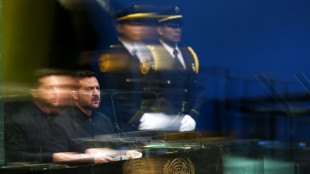 Zelensky says Putin using fighters from 47 countries in Ukraine war

 Klopp calls on Germany to 'rise above ourselves' as new era begins

 Russian strikes kill seven in Ukraine as Russia vows no 'pause' to war

 ArcPoint Expands Globally with Institutional Intelligence Platform for Modern Investors

Hundreds of pagers and walkie-talkies used by Hezbollah exploded across Lebanon in unprecedented attacks this week, killing 32 people and wounding more than 3,000 others.
The blasts spanning two days have dealt a significant blow to the Iran-backed militant group, which blamed its arch-foe Israel for the attacks and vowed revenge.
Hezbollah leader Hassan Nasrallah is set to address the nation later Thursday, with many expected to watch his speech closely for any clues about the group's response.
Here is what we know about the attacks.
- What happened? -
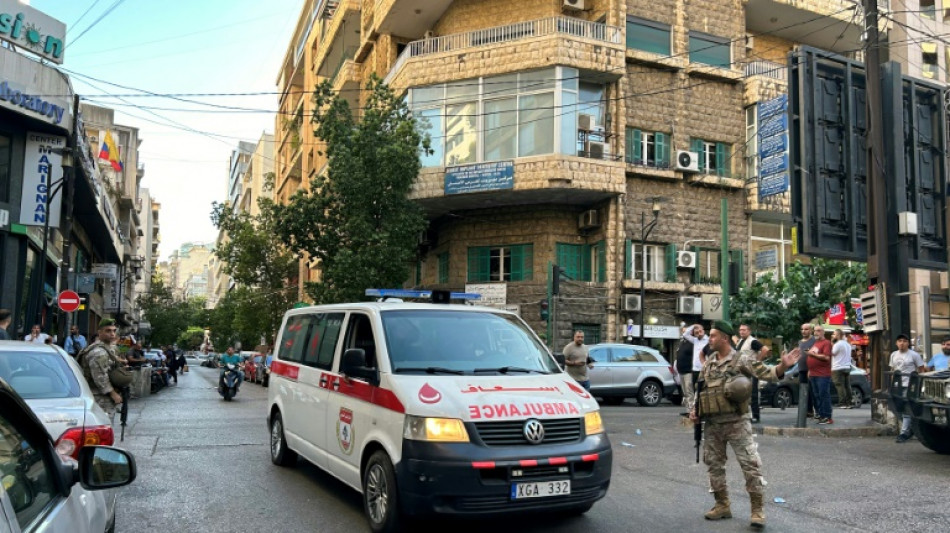
On Tuesday hundreds of pagers carried by Hezbollah operatives exploded at almost the same time in the group's strongholds in south Beirut, eastern Lebanon and the country's south.
Those blasts killed at least 12 people, including two children, and wounded up to 2,800 others, the Lebanese health ministry said.
A second wave of explosions, this time involving walkie-talkies, swept through areas controlled by Hezbollah on Wednesday, killing 20 people and wounding more than 450.
AFPTV footage showed people running for cover when an explosion went off during a funeral in the afternoon for Hezbollah militants in south Beirut who were killed the day before in the pager blasts.
Lebanese Health Minister Firass Abiad had told broadcaster Al Jazeera that the second wave of blasts was deadlier because the walkie-talkies were bigger than the pagers.
Hezbollah already had concerns about the security of its communications after losing several key commanders to Israeli strikes in recent months.
But the nature of the attacks has instilled a sense of panic, not just in Hezbollah's strongholds but around Lebanon.
- What has Israel said? -
Israel has not commented on the operation.
Prior to the first wave of explosions, however, it had announced on Tuesday that it was expanding the aims in its war with Palestinian militant group Hamas to include securing the northern front with Lebanon.
Following Hamas's October 7 attack, Israel vowed to bring home scores of hostages taken by Palestinian militants and to crush Hamas.
Since October, Hamas ally Hezbollah has also traded almost daily fire with Israeli troops along the Lebanon-Israel border.
Not formally declared a war, the clashes on the Lebanon front have killed hundreds in Lebanon, mostly fighters, and dozens including soldiers on the Israeli side.
They have also forced tens of thousands of people on both sides to flee their homes.
Israeli Defence Minister Yoav Gallant said on Wednesday, in reference to his country's northern border with Lebanon: "The centre of gravity is moving northward."
- How were the attacks carried out? -
Part of the effectiveness of the attacks stems from its unusual nature, which saw Hezbollah's communication devices turned into weapons.
Analysts said explosives had likely been planted in the pagers before they were delivered to Hezbollah.
The preliminary findings of a Lebanese investigation found the pagers had been booby-trapped, a security official said.
"Data indicates the devices were pre-programmed to detonate and contained explosive materials planted next to the battery," the official said, requesting anonymity to discuss sensitive matters.
A source close to Hezbollah, asking not to be identified, said the pagers were "recently imported" and appeared to have been "sabotaged at source".
After The New York Times reported that the pagers that exploded on Wednesday had been ordered from Taiwanese manufacturer Gold Apollo, the company said they had been produced by its Hungarian partner BAC Consulting KFT.
A government spokesman in Budapest said the company was "a trading intermediary, with no manufacturing or operational site in Hungary".
Japanese firm Icom said it had stopped producing the model of walkie-talkies reportedly used in Wednesday's blasts in Lebanon around 10 years ago.
- Was Israel behind it? -
Some Israeli media outlets and experts said the pager attack bore the telltale signs of a job by Mossad, the spy agency famous for exploits like the early 1970s revenge killings of those behind the deaths of 11 Israeli athletes at the Munich Olympics.
John Hannah of the Jewish Institute for National Security of America described the pager attack as "another stunning display of Israeli intelligence prowess".
Hannah said Mossad has demonstrated "a repeated ability not only to deeply penetrate its worst adversaries' most sensitive networks, but then execute operations of exquisite precision and lethality whenever it chooses to do so".
The incident comes nearly a year after Hamas's October 7 attack, which dealt a huge blow to Israel's intelligence services for failing to have stopped it from happening.
B.AbuZeid--SF-PST